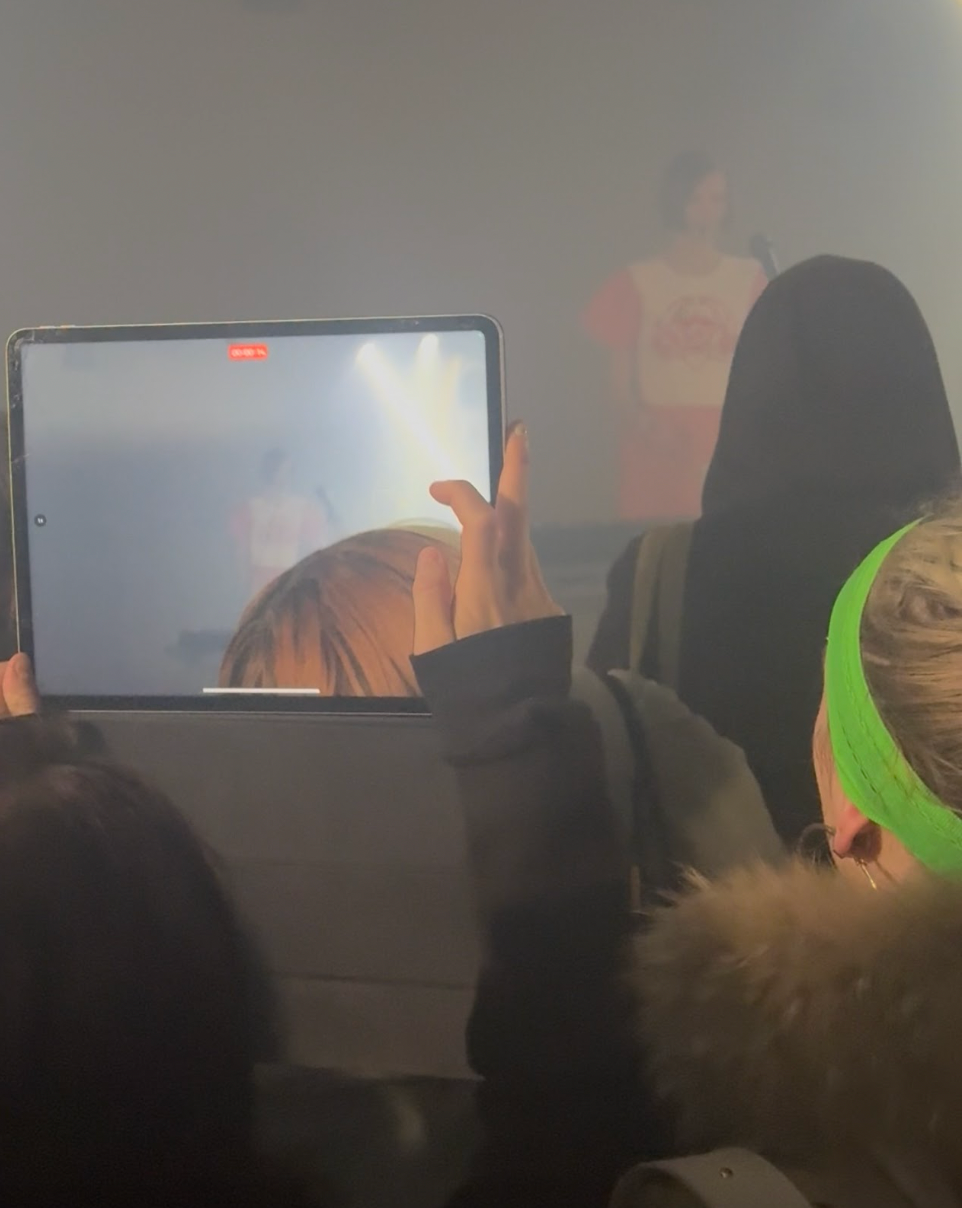
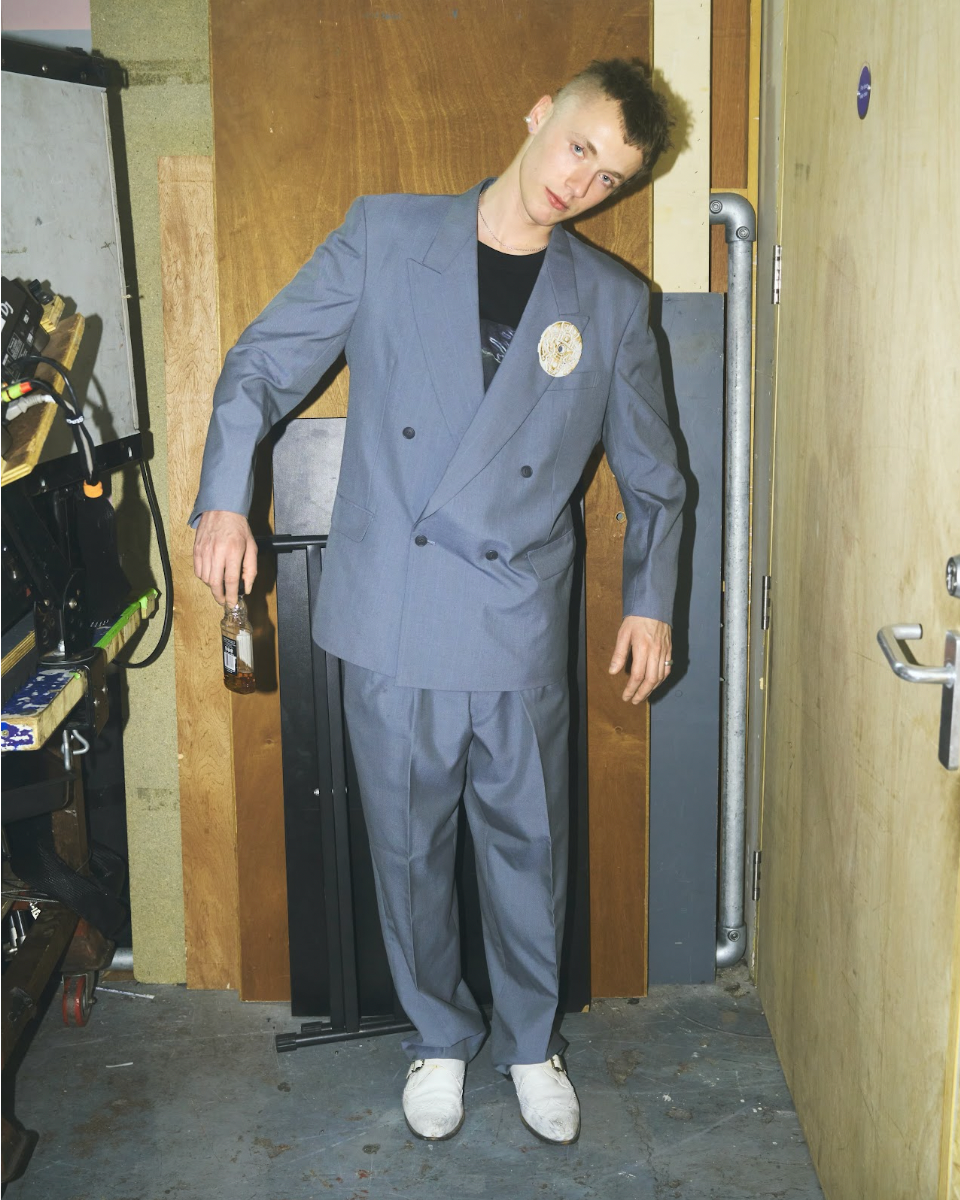
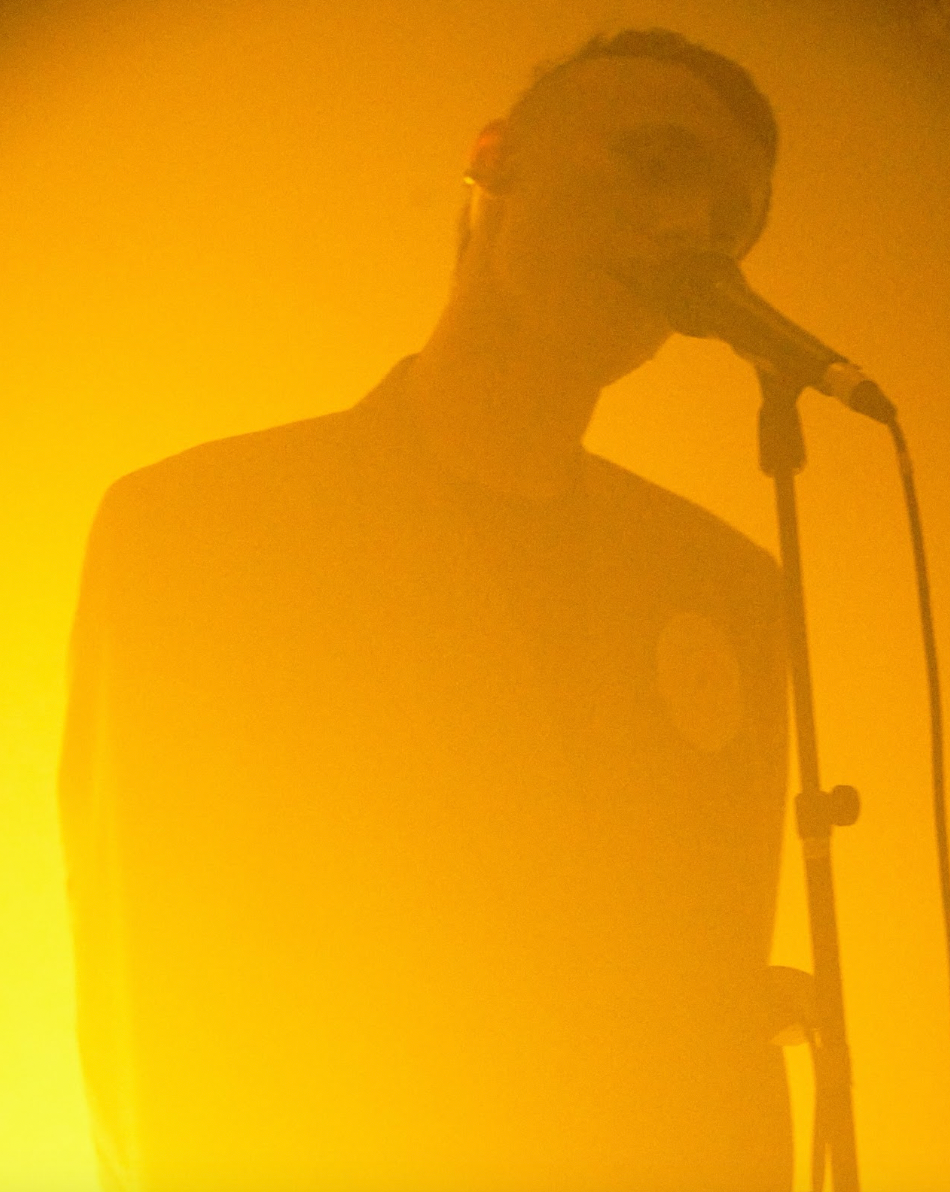
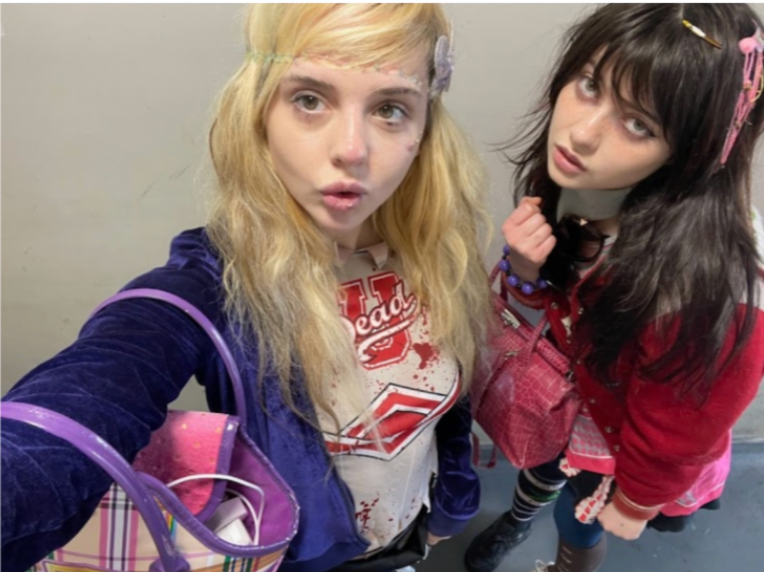
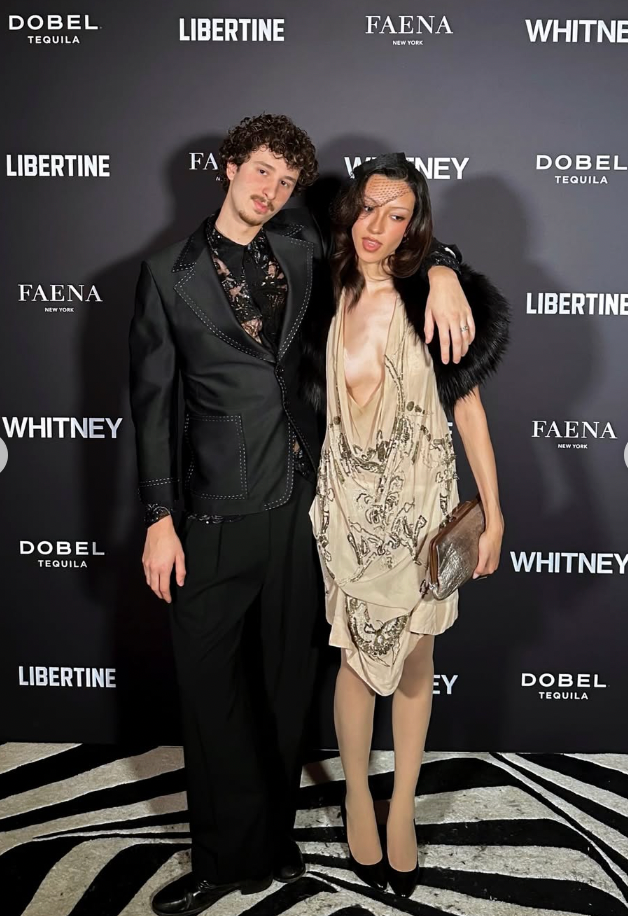
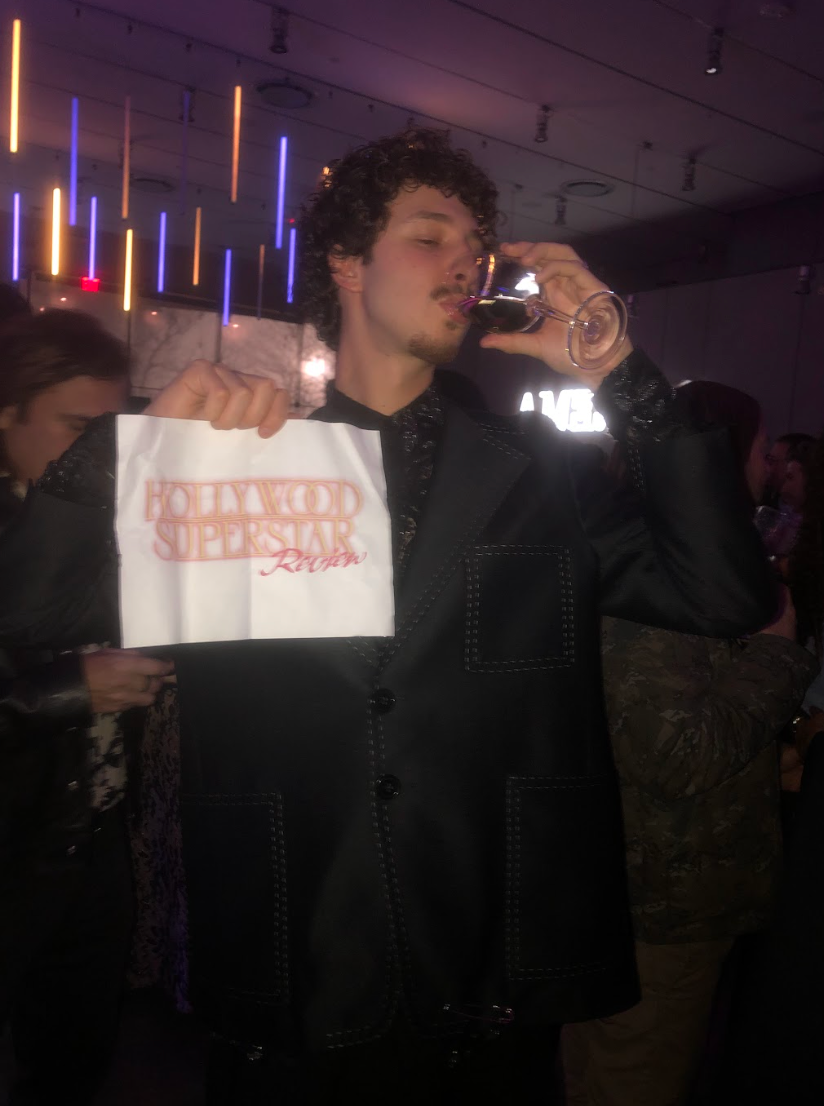
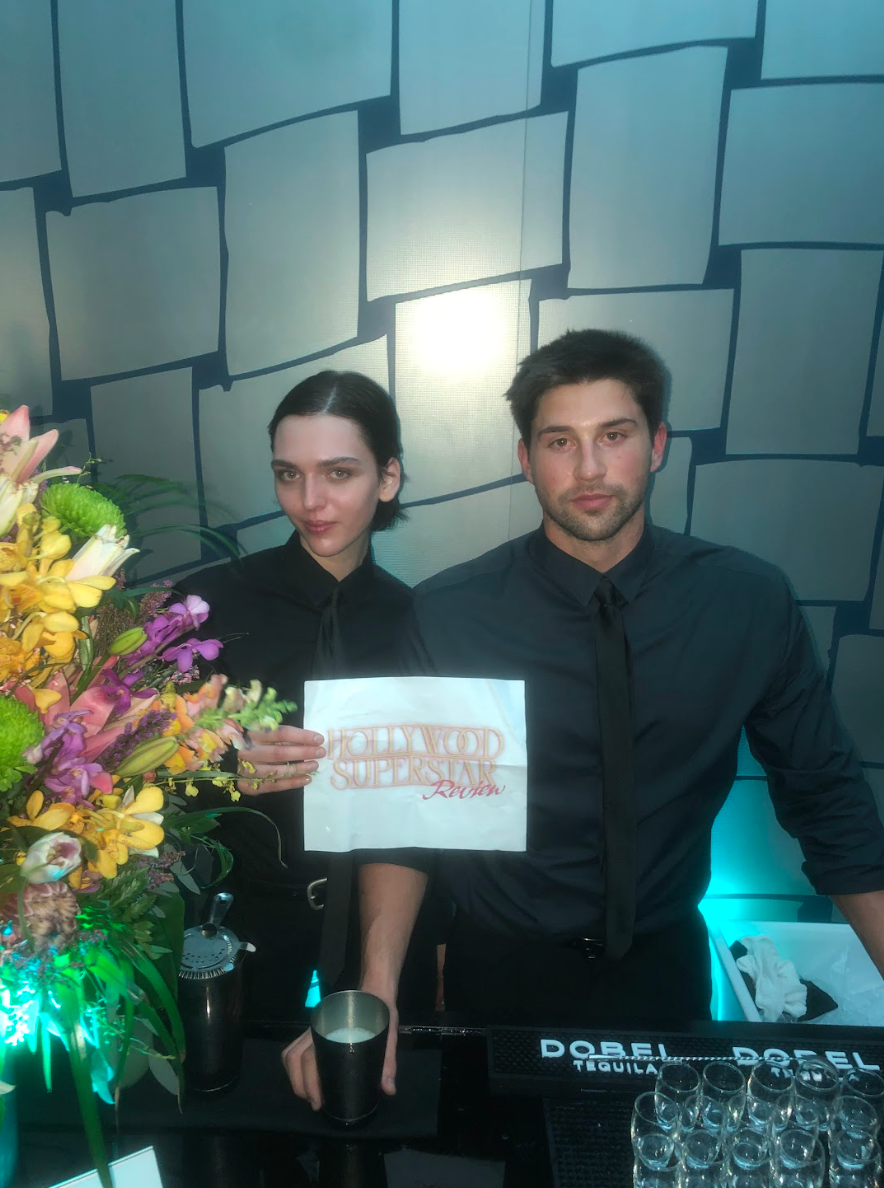
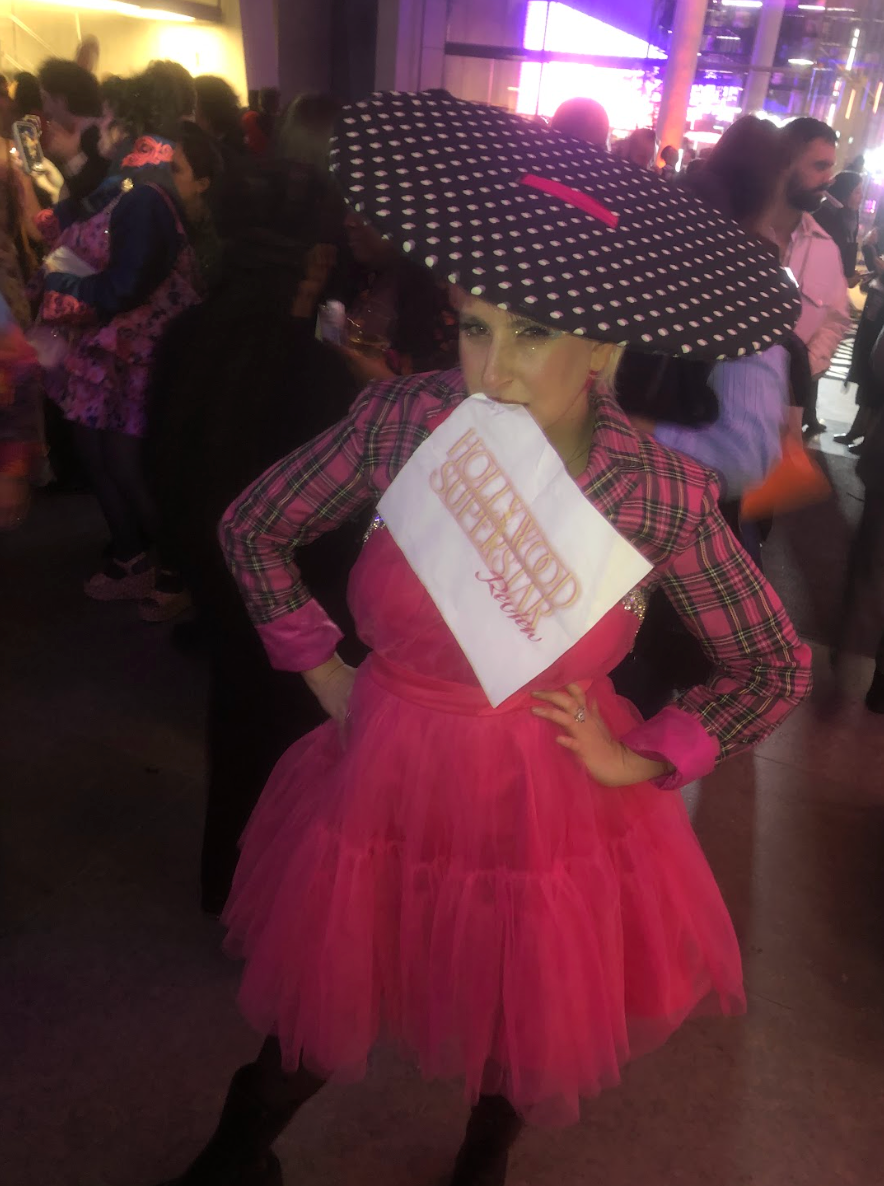
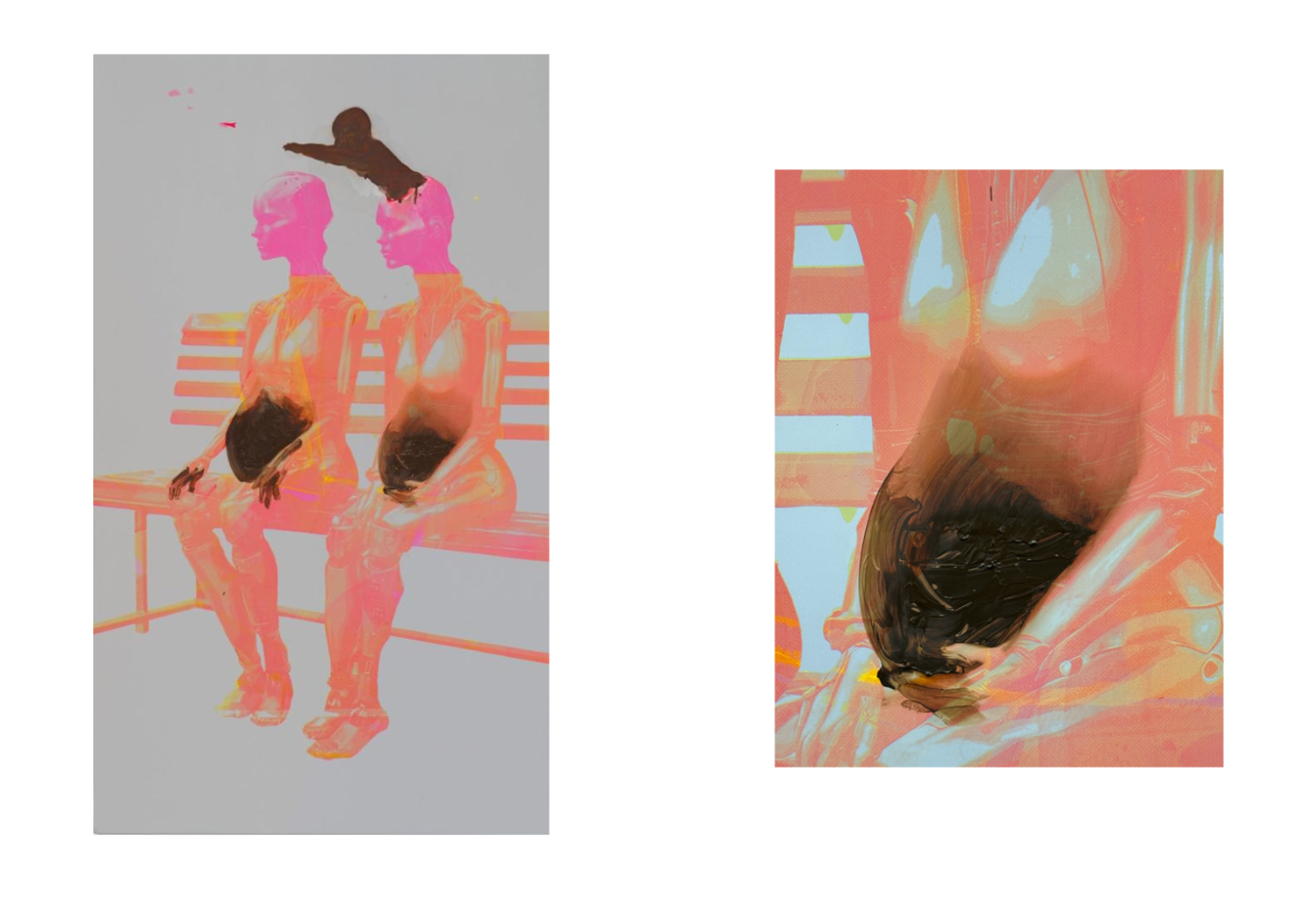
Hollywood Superstar Reviews London’s latest magazine-to-end-all-magazines, Alex Heard and Middleton Maddocks' satirical, “Fieullieton” (literal translation francais: "Little bit of Paper"). Since a little bit of paper cannot be on Instagram, it has instantly become the most authentic, interesting and fun site of London Art Criticism, fml. It was launched theatrically alongside PLPC's shadow puppetry and a performance from Memory of Speke. Our daring reporter Milly Bobby Brown congratulates the satirists but retains reservations about "performative adolescence".
Teenagers are in history lessons that they don’t want to be in, they don’t like the reading material and they don’t like the teacher, Milly Bobby Brown.
3.5 stars - Puppet Show and Memory of Speke
4 stars - Fieulleton Publication
We arrive at the basement of Bethnal Green Working Men’s club for the launch of Feuilleton, the new print-only publication edited by Middleton Maddocks and Alex Heard. Copies of Feuilleton, whose name is taken from the Arts and Gossip column in 18th-century French newspapers, are crammed into a vintage suitcase at the door. Exaggeratedly passé in style, mimicking Publications of the highest order (The Paris Review, Frieze) this edition features short fiction, essays, and poetry. Text is interspersed with false adverts for DIY galleries, blogs, local wine bars, and Goldsmiths University.
At about seven thirty, we hear from the editors in a letter that seeks to position themselves in relation to institutions, literary readings, commercial art, and the nebulous ‘scene’ that orbits them. “It's not just the woke art that is bad”, Alex reads , "although that's most of it.” Artists, like teenagers, have always forged identities in relation to what they are not.
With juvenile spirit, the launch launches into something lawless; they don’t seem to be able to get the tech to work. T.C. Hell debases children’s characters TinTin and Snowy, in a piece which exploits lapses in audible speech and ambiguous translations to fulfil the narrator’s masochistic fantasy. We hear poetry out of the mouth of a plastic Dalmatian named Cole Denyer, who struggles to get verses out between barking from a malfunctioning hidden speaker. Rachel Fleminger Hudson gives us a playful, girlish striptease. She is telling us about a very sexy lady. As her performance escalates, there is a negotiation of the sexual dynamic; her character forged through claims of aesthetic enjoyment.
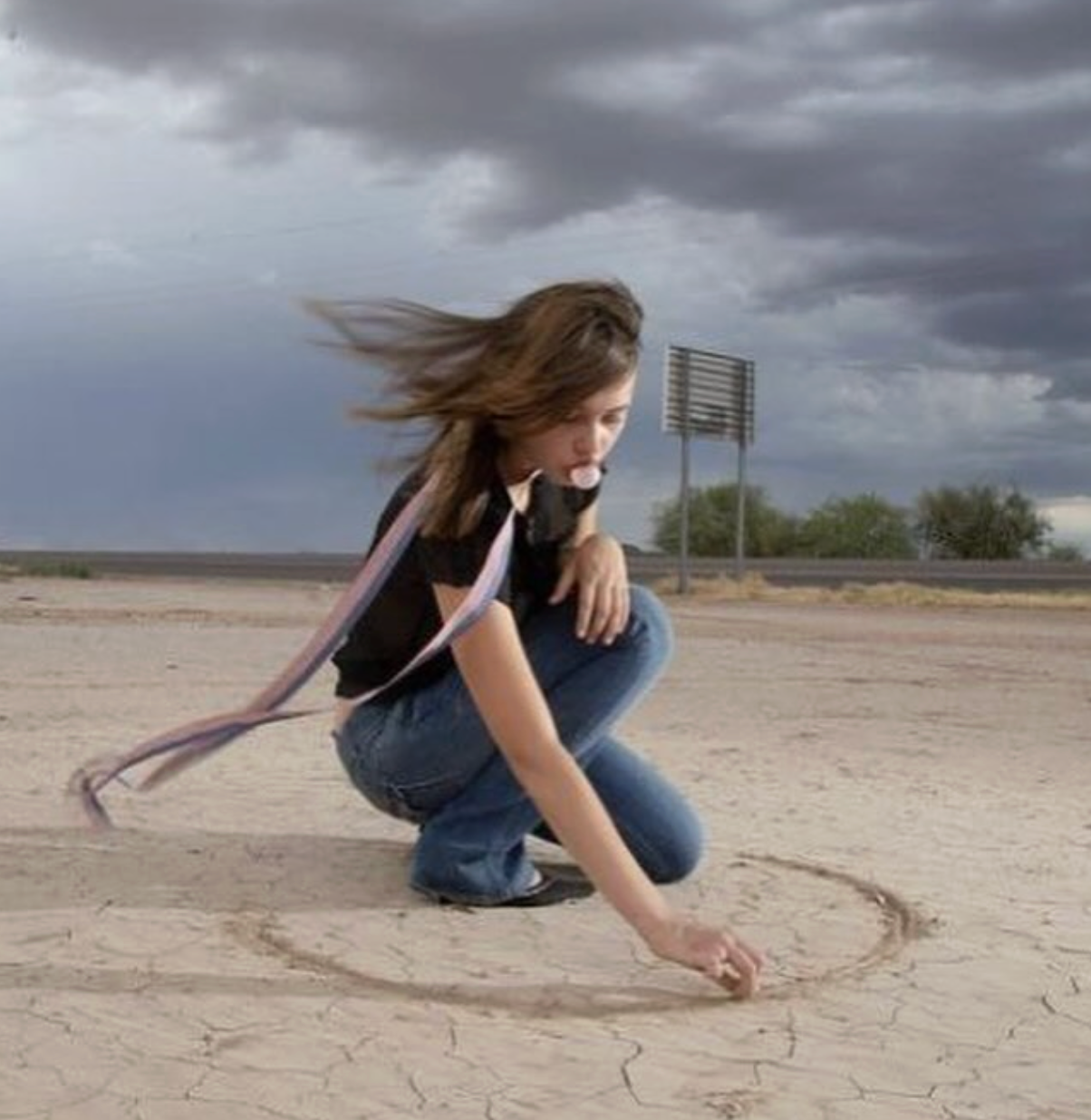
After escaping from the smoking area, we return for a shadow-puppet show / ambient road movie. PLPC’s performance takes us on a ride through the desert. Biker gangs, cop cars, and fuel trucks are shadows moving across the makeshift screen, overlaid with a textured soundtrack of chopped up dialogue and music by Memory of Speke. Evoking the slacker absurdity of Beavis and Butthead and the early MTV cartoons, reconstituted in the archaic but equally lowbrow/ populist medium of the puppet show. The result of an asdf movie watched in private. But now, given a full cheek-by-jowl theatrical treatment, watching is a uniquely collective experience. The crowd wave their phone torches at the outro.
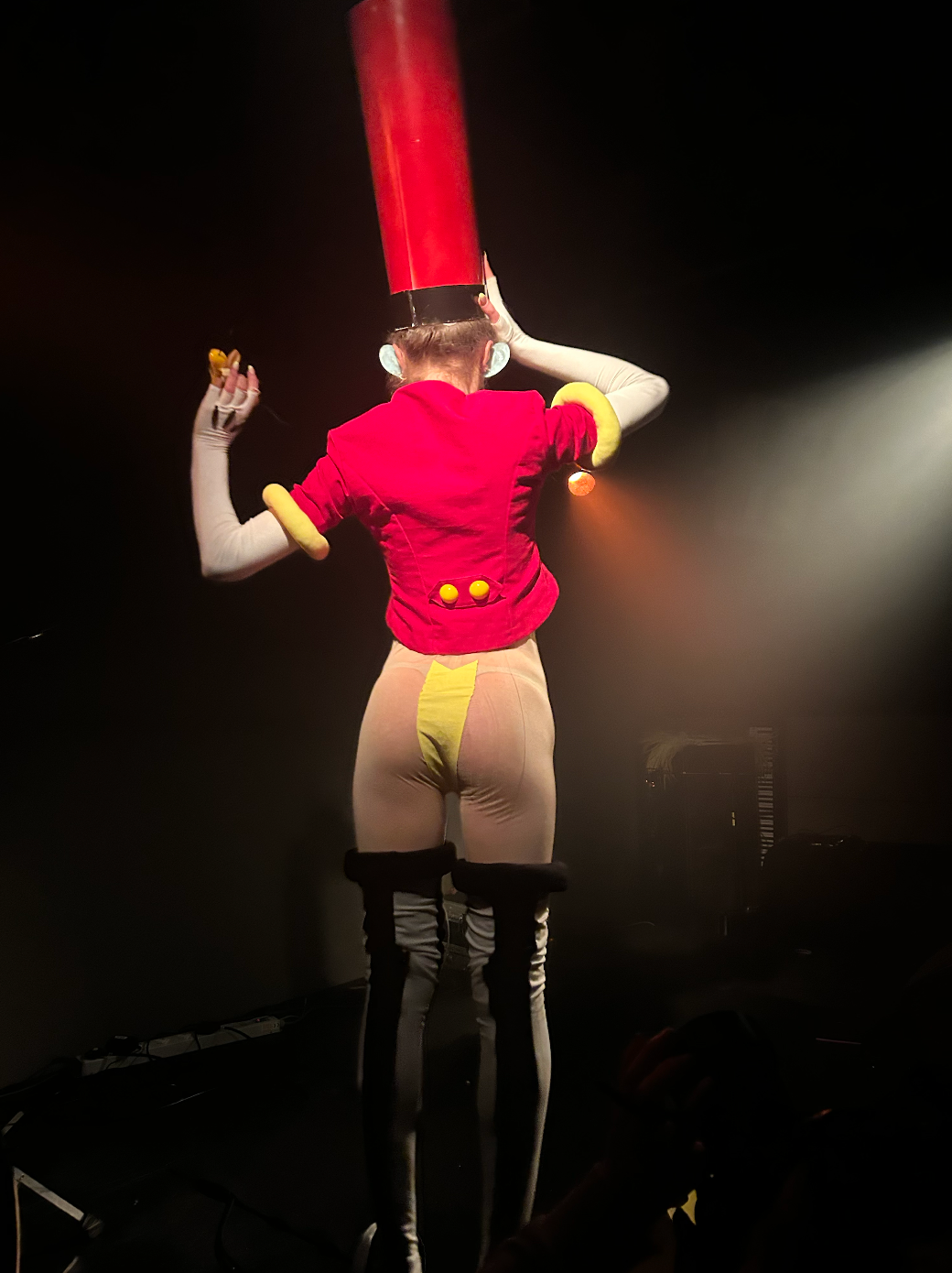
Memory of Speke’s later set weaves flamboyant narrative vocals with repetitive grooves. The band’s usual theatrical costumes are swapped out for jeans and shades, a distinctly Royal Trux-ian swag that fits with the cool-Americana of the shadow puppet show. Their catalogue is bouncy, tight-knit, theatre-kid bangers, straddling no-wave, new-wave and ska, in a performance that is perhaps too much of everything (instruments, genres, influences) to feel like anything new.
Coming away from the night, I am thinking about the current trend in art and music of reviving adolescence. Reading Feuilleton, I’m struck by the critical potential the figure of the adolescent actually holds. It is used here as a kind of post-historical device, to read inherited systems and aesthetic codes. Parody and subversion are ways of rebelling against an old order. Whilst Memory of Speke and PLPC also co-opt the aesthetics of childhood, both seem to function primarily to draw us into their own special universe. Struggling to articulate this key difference, I speak to a friend. He offered that “performative adolescence should always be about learning.” I think without this we risk regressing into the confusing blur of nostalgia.

Hollywood Superstar meets with Olivia Kan-Sperling, writer and New Yorker and editor at The Paris Review. Her writing has appeared in Heavy Traffic, The Paris Review, Art Review and Spike. Moat Recently, she has released Little Pink Book (2025) a softcore porn fantasy about a lonely barista-blogger in Shanghai, following her first novel Island Time (2022) a novel concerned with the psycho-geography of Kendall Jenner
This Artist Take should be read in full, continously, rather than in modicom
I understood the Artist’s Take prompt as “things that inspire me” and/or “things I like.” I realized I don’t have much to say about things I like and that the things that inspire me do so because they leave something half-empty / fill me with negativity. I also just like things because they are bad. Mulling over my taste, I often think of a line in Huysmans’s Against Nature: “𝒯𝒽𝑒𝓈𝑒 𝒷𝑜𝑜𝓀𝓈 𝓌𝑒𝓇𝑒 𝓈𝑜 𝒶𝒷𝓈𝓊𝓇𝒹, 𝒶𝓃𝒹 𝓌𝑒𝓇𝑒 𝓌𝓇𝒾𝓉𝓉𝑒𝓃 𝒾𝓃 𝓈𝓊𝒸𝒽 𝒶 𝒹𝒾𝓈𝑔𝓊𝓈𝓉𝒾𝓃𝑔 𝓈𝓉𝓎𝓁𝑒, 𝓉𝒽𝒶𝓉 𝒷𝓎 𝓉𝒽𝑒𝓈𝑒 𝓉𝑜𝓀𝑒𝓃𝓈 𝓉𝒽𝑒𝓎 𝒷𝑒𝒸𝒶𝓂𝑒 𝒶𝓁𝓂𝑜𝓈𝓉 𝓇𝑒𝓂𝒶𝓇𝓀𝒶𝒷𝓁𝑒 𝒶𝓃𝒹 𝓇𝒶𝓇𝑒.”
Huysmans’s hipster edgelord aesthete protagonist, Des Esseintes, has a very advanced contrarian aesthetic sensibility, especially as regards badness of all kinds. His turtle doesn’t match his rug so he encrusts it with jewels until it dies! This is a list of things I’ve obsessed over but feel badly about in different ways.
1. Rihanna
In 5th grade I read a New Yorker article about a woman who has written many hit songs for Rihanna. It described her process: singing random phrases into the microphone while scrolling through her notes app, into which she had copied language ripped from TV shows or advertisements encountered while walking around the city. That’s when I knew, I love words…(Equally inspiring to me: how Young Thug writes songs, which is, scrawl a shape on a napkin while on drugs, then “read” it in the recording booth while on drugs.)
So because since 5th grade I’m into language, I like that Rihanna has an album called Talk That Talk. Rihanna is always singing about saying stuff or even writing. “Birthday Cake” rocks and it’s an extended metaphor involving writing stuff in icing on her birthday cake. (“Come and put your name on it / Put your name on it / … Cake cake cake cake cake cake cake cake cake cake… / And it's not even my birthday / But you wanna put your name on it!”) Rihanna is not a singer, she is a speaker, the blown-out speaker in an Uber that is playing the radio that is playing Rihanna. This is the ineffable beauty, mystery, and melancholy of Rihanna, and I find it very moving, but I feel this good girl gone bad’s music is, mostly, bad as in not good.
I think Des Esseintes is fascinated by bad books because the worse something is, the more impressive the mental labor required to enjoy it. In my heart, I know I don’t “like” Rihanna except in some convoluted intellectual way, which makes me sad. So does Rihanna. Her best lyrics are: “Yellow diamonds in the light / Now we're standing side by side / As your shadow crosses mine / What it takes to come alive.” The senseless fragments of her club song lyrics hopelessly grasping for meaning yet failing to achieve any kind of real emotional resonance is very poignant to me.
2. Edouard Levé, Autoportrait
It got back to me that someone—“this guy”—said my work is a “narcissistic self-affirmation project.” My writing is like always an explicit interpretation/homage to other people’s writing/art/etc!! But yeah I have written about my life sometimes?? (I’m generously assuming this is a genuine critique of my writing and not how I dress FashionNova on instagram.) Obviously all art is partially a narcissistic self-affirmation project, because it means forcing your stupid interiority into an immortal object, then asking other people to care about it. Certainly everything that goes “against nature” is a hubristic human enterprise...but usually only one half of humanity is reprimanded for any of this. Less glaring instances of misogyny are honestly so sad and painful and crushing to me, but towards this unknown (not even interesting to narrow down which guy it was) reader, I feel condescension and abstractly pissed off, which is very very inspiring! I wonder whether “this guy” likes the autofictional work of Huysmans…Mishima…Josef Strau…Proust… Or Edouard Levé, another male inspiration of mine:
Levé’s Autoportrait (English translation Lorin Stein) is a short book composed only of true, first-person statements about himself. The variability this simple constraint produces is stunning: the book is a time-lapse experience of content moving around in a very tight contour, meaning being created through rhythm and differentiation. Autoportrait is a new literary form, but also a tale as old as time…The truth and beauty of all autobiography is that it’s the most humbling form of literature: nothing mutilates your own subjectivity so much as reducing it to a text. It is also the most generous to the reader: nothing teaches you about your own subjectivity like the ruthless dissection of someone else’s.
But in order to learn about yourself you unfortunately first have to learn a lot about Edouard Levé, who seems like a typical guy and asshole. You learn the facts of his life, but also, more interestingly, that he believes an accurate self-portrait can be rendered only in facts. Facts, he clarifies, are unchanging truths. So he can write about his eye color and what parts of women’s bodies he has come on, but not his feelings or future. Even more suspect to me, the implication that a person/ality can exist in a void—the longer Levé’s monologue goes on, the stranger it becomes that all of these confessions lack an addressee. In a text that strives towards unsparing realism, Levé has accidentally constructed a conspicuous fiction: that he exists in a world of one.
Anyways I thought it would be a fun exercise to invent my own protocol of speech to write what I would consider a “true” portrait of myself. I did butmy autoportraitwas actually agonizing, a hysterical self-negation project!!
3. Euphoria
Des Esseintes also likes the other type of bad: everything that is morbid, perverse, and disturbing. One of his favorite artists is 17th century Dutch engraver Jan Luyken, whose prints show “𝒷𝑜𝒹𝒾𝑒𝓈 𝓇𝑜𝒶𝓈𝓉𝒾𝓃𝑔 𝑜𝓃 𝒻𝒾𝓇𝑒𝓈, 𝓈𝓀𝓊𝓁𝓁𝓈 𝓈𝓁𝒾𝓉 𝑜𝓅𝑒𝓃 𝓌𝒾𝓉𝒽 𝓈𝓌𝑜𝓇𝒹𝓈, 𝓉𝓇𝑒𝓅𝒶𝓃𝑒𝒹 𝓌𝒾𝓉𝒽 𝓃𝒶𝒾𝓁𝓈 𝒶𝓃𝒹 𝑔𝒶𝓈𝒽𝑒𝒹 𝓌𝒾𝓉𝒽 𝓈𝒶𝓌𝓈, 𝒾𝓃𝓉𝑒𝓈𝓉𝒾𝓃𝑒𝓈 𝓈𝑒𝓅𝒶𝓇𝒶𝓉𝑒𝒹 𝒻𝓇𝑜𝓂 𝓉𝒽𝑒 𝒶𝒷𝒹𝑜𝓂𝑒𝓃 𝒶𝓃𝒹 𝓉𝓌𝒾𝓈𝓉𝑒𝒹 𝑜𝓃 𝓈𝓅𝑜𝑜𝓁𝓈, 𝒻𝒾𝓃𝑔𝑒𝓇 𝓃𝒶𝒾𝓁𝓈 𝓈𝓁𝑜𝓌𝓁𝓎 𝑒𝓍𝓉𝓇𝒶𝒸𝓉𝑒𝒹 𝓌𝒾𝓉𝒽 𝓅𝒾𝓃𝒸𝑒𝓇𝓈, 𝑒𝓎𝑒𝓈 𝑔𝑜𝓊𝑔𝑒𝒹, 𝓁𝒾𝓂𝒷𝓈 𝒹𝒾𝓈𝓁𝑜𝒸𝒶𝓉𝑒𝒹 𝒶𝓃𝒹 𝒹𝑒𝓁𝒾𝒷𝑒𝓇𝒶𝓉𝑒𝓁𝓎 𝒷𝓇𝑜𝓀𝑒𝓃, 𝒶𝓃𝒹 𝒷𝑜𝓃𝑒𝓈 𝒷𝒶𝓇𝑒𝒹 𝑜𝒻 𝒻𝓁𝑒𝓈𝒽 𝒶𝓃𝒹 𝒶𝑔𝑜𝓃𝒾𝓏𝒾𝓃𝑔𝓁𝓎 𝓈𝒸𝓇𝒶𝓅𝑒𝒹 𝒷𝓎 𝓈𝒽𝑒𝑒𝓉𝓈 𝑜𝒻 𝓂𝑒𝓉𝒶𝓁. 𝒯𝒽𝑒𝓈𝑒 𝓌𝑜𝓇𝓀𝓈 𝒻𝒾𝓁𝓁𝑒𝒹 𝓌𝒾𝓉𝒽 𝒶𝒷𝑜𝓂𝒾𝓃𝒶𝒷𝓁𝑒 𝒾𝓂𝒶𝑔𝒾𝓃𝒾𝓃𝑔𝓈, 𝑜𝒻𝒻𝑒𝓃𝓈𝒾𝓋𝑒 𝓌𝒾𝓉𝒽 𝓉𝒽𝑒𝒾𝓇 𝑜𝒹𝑜𝓇𝓈 𝑜𝒻 𝒷𝓊𝓇𝓃𝒾𝓃𝑔, 𝑜𝑜𝓏𝒾𝓃𝑔 𝓌𝒾𝓉𝒽 𝒷𝓁𝑜𝑜𝒹 𝒶𝓃𝒹 𝒸𝓁𝒶𝓂𝑜𝓇𝑜𝓊𝓈 𝓌𝒾𝓉𝒽 𝒸𝓇𝒾𝑒𝓈 𝑜𝒻 𝒽𝑜𝓇𝓇𝑜𝓇 𝒶𝓃𝒹 𝓂𝒶𝓁𝑒𝒹𝒾𝒸𝓉𝒾𝑜𝓃𝓈, 𝑔𝒶𝓋𝑒 𝒟𝑒𝓈 𝐸𝓈𝓈𝑒𝒾𝓃𝓉𝑒𝓈, 𝓌𝒽𝑜 𝓌𝒶𝓈 𝒽𝑒𝓁𝒹 𝒻𝒶𝓈𝒸𝒾𝓃𝒶𝓉𝑒𝒹 𝒾𝓃 𝓉𝒽𝒾𝓈 𝓇𝑒𝒹 𝓇𝑜𝑜𝓂, 𝓉𝒽𝑒 𝒸𝓇𝑒𝑒𝓅𝒾𝓃𝑔 𝓈𝑒𝓃𝓈𝒶𝓉𝒾𝑜𝓃𝓈 𝑜𝒻 𝑔𝑜𝑜𝓈𝑒-𝒻𝓁𝑒𝓈𝒽.” That’s how I feel watching Euphoria! Except Euphoria is more than morbid; it is evil. Think of a greedy Hollywood man, or woman, sitting at a big desk, cutting deals, with Eckhaus Latta, with drugdealers pushing fentanyl, making teens ADDICTED to pain, making teens want to rape, wear Eckhaus Latta, and kill themselves… I wish sometimes to create a work as powerful as this.
4. Dallas, Texas (George Bush Meditation Garden)
I went here with my boyfriend on his business trip. I was excited because everyone said Dallas—at least, the parts of Dallas to be seen on a boyfriend’s business trip—was the most boring place ever. I love places like Dallas because I am perverse and take pleasure from forcing a thing to give something up to my perspective against its will [[narcissistic self-affirmation]]. A curious detail, an accidental angle!—it feels good to see something no one has ever seen before. What’s there to say about Paris? But as it turns out, it’s hard to say anything about Dallas, too. It’s hard to see it in the first place. A city that has nothing hidden is the hardest to see, and Dallas has no secret from me. It is not a secret that the city’s symbol is literally the fucking Exxon Pegasus.
I went to the George Bush Presidential Library and there was nothing to photograph that would be like, “holy shit…?” Everything seemed obvious and good, like universal human rights. As a contrarian I’ve always thought Bush was subtly charming and funny, but after driving around his neighborhood in Dallas I know for real how bad being a Republican is, and how being a normie is no joke at all, because they are so fucking rich and run not just Dallas but everything. Actually, Dallas is a Democrat city with a gay rainbow crosswalk area, exactly like my hometown, which made it even worse. Dallas has a thriving LGBTQ community. In fact,Dallas seemed like a place of perfect equality. Nothing rose to attention or sank below it: an even field.
At one point I did a reverse orientalism exercise where I imagined “a Chinese person” taking note of the phrases repeated in gilded lettering across the mirrored skyscrapers and white wooden signs decorating businesses around the city, trying to come up with the occidental’s Auspicious Moment Good Fortune Golden Dragon Trading Company—something like: ᴜɴɪᴛᴇᴅ ᴍᴏɴᴛɪᴄᴇʟʟᴏ ᴘʀᴇᴍɪᴜᴍ ᴘᴀᴛɪᴏ ꜱᴏʟᴜᴛɪᴏɴꜱ ꜱᴇᴄᴜʀɪᴛɪᴇꜱ & ꜱᴏɴꜱ ʀɪᴠᴇʀ ᴄʀᴇᴇᴋ ʙᴀʀ & ɢʀɪʟʟᴇ ɪɴᴠᴇꜱᴛᴍᴇɴᴛꜱ ꜱᴛʀᴀᴛᴇɢʏ ᴏɴ ᴘʟᴀᴢᴀ ꜱᴛʀᴇᴇᴛ. But then I remembered it’s not my imagination—I technically am “a Chinese person” :(
At 5PM I walked out of the Presidential Library into the glaring sun of the George Bush Meditation Garden. The park achieves what a French theorist wrote about Chinese painting: the ideal landscape displays a perfect blandness; the eye should catch on nothing. Sitting in the George Bush Meditation Garden I realized that, in real life, perfect blandness is terrible feng shui. It is upsetting to walk around in a Chinese scroll painting, not to mention the pages of an in-flight magazine. I mean everything in Downtown Dallas looked exactly like the photos of Dallas printed on ultra-thin-shiny-paper in those magazine inserts, which are basically just real estate catalogues, that fall out of free regional newspapers or the coffeetables of hotel lobbies and bring news of local vineyards and interior design firms that look exactly like the local vineyards and interior design firms in the fake magazines trying to boost the economies of every other United State. When you’re in a car it’s okay because this flat city passes by like a movie, but actually walking around in a 2D-looking place like that gives you a kind of media-dimensional-vertigo that would have a stupid name in a Christopher Nolan movie: “the bends” or something. “It’s all wrong,” diCaprio would say, “See that?” And he’d point at a tell-tale sign like two fire hydrants placed too close together. Then he’d start getting “the bends,” a torturous mental-physical state that comes from being in the wrong dimension for too long. Dallas Syndrome is just Paris Syndrome for people with a narcissistic self-affirmation problem, like hipsters. You’re not supposed to find Paris in Dallas, Texas. I like to do what I am not supposed to. But Dallas didn’t let me!
For example, “George Bush Meditation Garden” is funny, and that’s why I had to invent it. In reality, the garden was named after a different white male politician whose name did not clash so obviously with the idea of Eastern spiritualism and therefore would not make for good writing; I cannot remember the two words at all.
5. Robert Duncan, “Often I Am Permitted to Return to a Meadow”
I love this poem so much! I love a lot of things so much, but this is the only thing that is to me like a prayer. If you’re always going around being inspired by things (taking and using them for your own narcissistic etc etc) then what is left that is holy? I think this poem can only be holy because it’s aesthetically alienating to me; the language seems intentionally archaic (it’s 1960), which I usually find embarrassing, contrived, and definitely irreconcilable with my “pop” sensibility. Therein lies the disconnect that creates a negative space, a blank space,an emptiness “so near to the heart / an eternal pasture folded in all thought / … created by light / wherefrom the shadows that are forms fall.” The meadow is inspiration :) and this place of inspiration sounds like death.
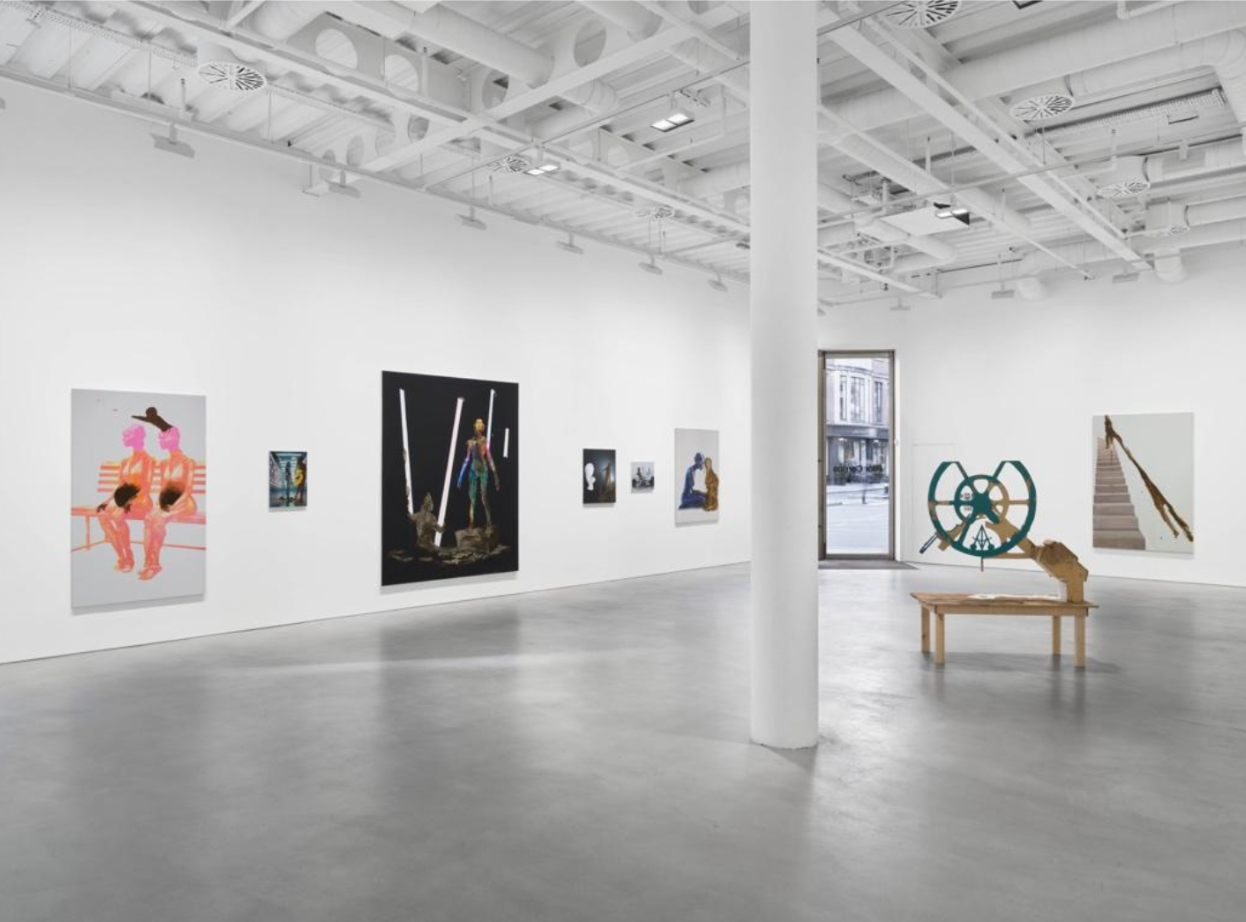
Thirteen Images recalled the RA Summer Show in sentiment only. There was far less garish neon-coloured floral prints (Florals? For Summer? Ground breaking). From the smallest work, Robin Miro’s Hanger (2024), to the largest, I.W. Payne’s Something is rotten in the state of Denmark (2025), nothing felt gratuitous and no detail felt overshadowed, irrelevant or forgotten. It painted a picture of taste within a certain London milieu: artists who are not always full-time artists and whose practice is invariably informed by those limitations. The opening was as packed as a house party. A retrospective survey, but for now, across performance, design, photography, sculpture and drawing (there were a few paintings). The show was held in an empty flat, spanning four antechambers: kitchen, front room, dining room, and bathroom.
Gonna make a call back to Hollywood Superstars ‘17 Trends at Art Basel’ that noted the prevalence of the “Fine Graphite Fetish” at the fair. In this economy (a market barely holding on, driven by weakness, tech bros and Silicon Valley), they’re what’s most likely to sell. Ellen Poppy Hill’s No Point in Making Myself Comfortable (2024) is a mixture of Edward Burra’s post-cubist figures and early Disney animations. Her work as a fashion designer evidently influences her illustrative work - there is a level of caricature that only the sartorial eye can achieve.
The curved, jumping caricatures are drawn on newsprint. Hill’s handling of pencil has a Lee Krasner-esque vibration: moving between scratchy, thin lines and intense, stacked shading. Building on the theme of caricature, Roberto Ronzani’s Miles Davis, 1980s (2025), like Hill’s work, incorporates fantasy with fine marksmanship. Gen Z artists, in comparison to their direct seniors (millenials) have made greater use of cartoon semiotics in their practice, drawing on a nostalgia for a time when animation graphics were a light-hearted reality visualizer, not just visual computer-generated fluff, Pepe or Wojack. I wouldn’t go so far as to use the moniker of “post-internet”. These works emerge from a place of self-containment, an analogue love of the medium of mark-making.
The contrast of works like Miles Davis and Momo Tibes “Once Upon a Time in Babelsberg” (2025), which frames a screenshot of a YouTube clip from Mockingjay (2015), part of the Hunger Games Trilogy, highlights the diversity of form in Thirteen Images. Now the art world is post-history, genre and form collapse. Screenshots emit the same palpable relatability and society-mocking rabalaisian humour as a pencil illustration. Really was post-internet, though!
``
Some items generated the feeling of a 1980s World of Interiors slightly spooky childhood playroom (non-derogatory). In I.W. Payne’s cut-out silhouettes, a male and female stand facing one another; their bodies integrated with speech bubbles upon a single MDF panel. The panel itself is covered with a large, multi-coloured polka dot pattern (not in a preteen, pedophilic Lucila Safdie style, but rather a mumsy, West London kitchen, Kath-Kidson-esque style). This theme continues in Anna Plowden’s Miladena Mirror (2025) in which a set of doll-sized blue organza underwear is pinned, Lepidopterologist-style, within a floating acrylic shelf. Miladena Mirror is reminiscent of Rosemarie Trockel’s three-dimensional collages, or perhaps the meticulously made-to-order Mary Janes that Hans Bellmer constructed for La Poupée, 1932-1945. I wondered if Robin Miro’s Hanger was a compliment to this piece - both works are akin in their rendering of sartorial objects in miniature. Baby Reni (a moniker for a designer, artist and apartment gallery) presented two pieces. Girlypop (2025) depicts a child’s white dress on a padded clothes hanger alongside a faux-naïve drawing on an apple shopping bag. Babi Reni’s Foundation saw a mannequin hand jut out from the wall, covered in foundation from a bottle cradled in its palm. The latter two works solidified the developing theme in Thirteen Images: Child’s Play or the ludic spirit.
Charlie Osborne’s work 2 Cariads Dw i wedi Syrthio mewn cariad efo ti (2024) could have been more centralised in the hang. A digital print of a blurred image is stretched on canvas, with much in common to the sample images you find in Snappy Snaps frame displays. A man and a woman, one with a 2012-Greenpeace-style headband, smile at the camera and lean into one another. Its title, in Welsh, translates to “Two darlings, I have fallen in love with you” and completed the romantic, blog-esque ideation I, as viewer, had projected onto the piece.
Osborne’s work with blurred imagery is part post-human, part mid-2010s nostalgia. It surmises how it feels to love while also forgetting oneself amid the battle against face-recognition technology and the harvesting of memory. It also looks like a Tumblr rebloggable image circa 2013, the soft distillation of form reminiscent of the focus adjustment on a YouTuber bloggers digital camera: “Hi! it’s X, and I’m here to talk about heartbreak and data harvesting”. I want to know what it was about this time that matters now - a time when the mask of liberalism was slipping, but still in place, the image carries a nïavety that online cultural production, today, does not.
Hollywood Superstar wonders if this “salon” style should continue in perpetuity - a space where one can sample taste and refract it back to a crowd “IRL” rather than “online”. I’d like to liken this show to the Paris salon of 1767, at the Louvre, which Denis Diderot criticized and praised for its great contribution to (to use an anachronistic term for his time) aesthetic discourse. In writing for Correspondance Littéraire Diderot marked the early development of art criticism, from image to word (ekphrasis) and then from word back into image. Instagram stories are the modern day iteration of eighteenth-century ekphratic writing. Thirteen encouraged Cheek-to-Cheek interactions with artwork only previously seen on an Instagram grid - forcing opinions out of the digital circle-jerk and into the remit of house-party conversing.
“Even if all the works of Europe's painters and sculptors could be brought together, our Salon would not be equalled. Paris is the only city in the world where such a spectacle can be enjoyed every two years.”
I’d like to think that London, and Thirteen Images has the potential for catalysing a series of beginning of equally reactive, or summarising, survey exhibitions. More aesthetic discourse, please, the critique of great work eventually aids the development of new formalisms.
Blog
/ 24 August 2025 / By: Rebecca Isabel Consolandi
The Wit of the Staircase is the name of Theresa Duncan’s blog on TypePad.com.
From the French phrase ‘esprit d’escalier’, it refers to the perfect witty response you think up after the conversation or argument is ended. The answer you cannot make, the pattern you cannot complete till afterwards, suddenly comes to you when it is too late.
And I am now replying too late, 18 years to be fair... perfectly aligned with l’esprit d’escalier: The Last note on The Wit of the Staircase is from Monday, 31 December 2007. A cheer to a “New Beginning”:
So here I am, in the middle way, having had twenty years -
Twenty years largely wasted, the years of l'entre deux guerres -
Trying to use words, and every attempt
Is a wholly new start, and a different kind of failure
Because one has only learnt to get the better
of words
For the thing one no longer has to say, or
the way in which
One is no longer disposed to say it. And so
each venture
Is a new beginning, a raid on the inarticulate, With shabby equipment always deteriorating In the general mess of imprecision of feeling, ## ## Undisciplined squads of emotion. And what
there is to conquer
By strength and submission, has already
been discovered
Once or twice, or several times, by men whom
one cannot hope
To emulate - but there is no competition - There is only the fight to recover
what has been lost
And found and lost again and again: and now,
under conditions
That seem unpropitious. But perhaps neither
gain nor loss.
For us, there is only the trying. The rest is not
our business.
--T. S. Eliot East Coker Four Quartets
Have you ever seen the movie eXistenZ? Directed by David Cronenberg in 1999, it features as main character the iconic Jennifer Jason Leight under the pseudonym of Allegra Geller. Picture a complex, beautiful blonde woman, whose job is game design and who entertains a relationship with an equally beautiful man played by Jude Law.
Now keep this plot in mind, but to “Allegra” substitute “Theresa”, to “Ted” substitute “Jeremy” and to fiction substitute reality.This blog post, Would I Ever Kiss a Scientologist?, tells the story of a real-life game designer and her resultant suicide.
Cronenberg’s movie ends with two killings, "Death to transCendenZ!!!"; our dispatch starts with two suicides, The Golden Suicides.
With no exclamation marks at all.
Today is Sunday, 27 July 2025. It’s 00:30 and I am sitting on my couch, laughing at myself with Theresa Duncan, just not the right one. I bought this book via Amazon sure about the fact that it was a hidden gem of hers, and I also mentioned it to Taylor (Hi Taylor), who also bought it and two days later sent me this message:
Re-browsing the book I noticed what my blind trust didn’t make me notice before: poems are from 2010. Theresa Duncan took her own life on Sunday, 10 June, 2007.
Turns out this other woman, who answers to the name of T.D., also corresponds to her facial features, having meshed blonde hair and light blue eyes. What a hodgepodge.
This is the starting point of my dispatch, a book I purchased and read, thinking it was from the Theresa Duncan on the right. I am one of the latest truly romantic human beings, and this is a love story. My very favourite field.
Year 2007, 10th Street and 2nd Avenue, Manhattan’s East Village, New York City.
A pretty, young-ish pioneer of blogging and video game auteur responding to the name of Theresa Duncan, age 40, overdosed in her infamously bohemian apartment.
For the sake of the Walgreens enthusiast: on the nightstand there was a bowl full of Benadryl pills, a bottle of Tylenol PM and a glass of champagne. For the sake of lovebirds: there was also a note saying “I love all of you”.
During the night, about a week later, witnesses on Rockaway Beach saw a man take off his clothes and wander into the Pacific Ocean: the light of the following day revealed his wallet, a note and his identity: Jeremy Blake, 35, video artist and Duncan’s boyfriend for over a decade.
They were one of those show-stopping couples of New York, both ridiculously gifted and good looking. She had an intimidating blond head of hair and a pantagruelic mind; he was an art star featuring the Whitney among his lengthy list of credits. Most importantly, they both had love. The most prized possession.
Their passion for their internal world was matched only by the paranoia of their outlook. The two would describe plots by the government, people tailing them and breaking into their home. Friends, who tried to dissuade the couple from their fantasies - that seemed to be ripped from a Tom Clancy novel - were met with anger and exclusion.
After their “Golden Suicides” people latched a lot around the possible causes of this tragedy. Sources mentioned a shared codependent paranoia regarding Scientology, and one of their leading men, the singer-songwriter Beck: easier to swallow than other absurd theories, I chose this to be my favourite and most relevant one. Reason why is I asked out a friend to the closest Scientology church.
I double-blink when I see the eight-pointed cross taking the entire construction hostage on the left. Immediately below, in vermilion red sans-serif font, reigns the word ‘Scientology’. This new building, the biggest in Italy, was inaugurated in 2015, 31th October, Halloween day… dare I say trick or treat?
As soon as we approach the gate going thru it shamelessly it begins to close behind the back of the car. Safe to say we back up at light speed. In the nearby parking lot, without any gate to worry about, we park and hop off. Ten meters and we are in: ten seconds and we get approached by a woman in a white shirt asking the point of our visit with a bedazzling smile on her face. With equally bedazzling smiles we reply, ‘we are in to be into’. Follow the white rabbit.
A sliding door opens onto a tunnel whose red shade is thicker and more stomach-churning than the one chosen for the façade sign. To get to the monster's stomach, you have to go through its mouth first.
All I can remember is being swallowed by a red vortex. Sofas, carpets, chairs, candles, flowers and vases: I am now in some war field where the blood left from a mass murder has soiled the walkable and breathable space. According to the official data begging for attention from the screens all over, more than 6.5 million people have joined the movement. I see why there isn't a single spot uncovered.
While the guide explains to us how the infinite screens and controllers displayed in a serpentine shape all around the space work, as if we had never faced some basic commands, my hungry eyes roam around. Water and fire patterns overflow from the fonts on book covers and from the cheap AI paintings on the walls: mouth-watering waterfalls, endless fields of lavender and corn, groups of smiles as big as whole faces, proud to have said no; no to drugs, no to shapes other than triangles, yes to L. Ron Hubbard!
Above a rail of burning books, a dark bordeaux stain splattered on a marbled table: “See a thought.” I immediately point at it, asking for an explanation. When the elephant is in the room, either you ride it or it stomps on you; not today that I got a new haircut.
My guide makes me hold two aluminium cans and asks me about a person and a situation. Vaguely. This “ultra technology” should capture my aura frequencies and register my body response to that thought. I later, via google, find out the specific object is called 3 E Meter and it is an intellectual historical property of the Institution.
The needle oscillates and she can’t wait for me to see it. I don’t.
The needle of my energy also oscillates and I ask for a coffee. Out from the monster’s mouth, across the courtyard, behind a white door, downstairs, in the gut of the system: the canteen. Hidden from the daylight, a disturbingly and desolating vast room with a cashier rechargeable through the insertion of a coin; 2 bucks for a diet coke, a smarter version of the coffee I asked for: quick, take away, uncontaminated. And of course, red.
Lots of lost faces around, looking at me looking at them looking at my red lipstick. I sense they might be hypnotised from this very specific shade and that's why they all keep coming back to this place. If this Scientology site was a perfume that would be Hypnotic Poison by Dior: red, bordeaux, timeless and poisonous. As a woman in red lipstick. Would I ever kiss a Scientologist?
I’m not gonna write what I’ve seen during the very last moments of permanence under the surface of the visible, into the very core of the place, where the stomachs are fed and the minds starved. My guide made sure I wasn’t taking pictures and escorted me upstairs, back from the dead, alive again. I’d say I haven’t been digested, more like bulimicly puked out.
In this certain way, I must say a Scientologist saved my life. And my wallet.
I wish Theresa could write the same, on her blog, like it was all a game of hers in which she has been trapped for too long. Paraphrasing Cronenberg’s Allegra: "Death to transCendenZ!!!".
Alive again, at the enthusiastic speed of an exclamation mark.
Our very own correspondent goes to see Dean Kissick speak to Rosanna McLaughlin on the eve of her book launch, the surreptitiously named “Against Morality”.
Rosanna McLaughlin, a two-time published author known for her heavy flow of surgical takes dissecting poignant topics within art criticism, is back with another banger. McLaughlin, rocking Vans and flannel, channels a combo skaterboi Lydia Tár and young Paglia.
Her latest work Against Morality takes on the art world’s current mandate to platform only artists whose work centres the tenets of DEI: “I am of X identity, and that experience is like Y, about which I have made this art.” McLaughlin is saying this is the basic axiom that everyone from the Barbican to David Zwirner wants to see in their programmes, which results in press releases comparing George Rouy to Francis Bacon.
McLaughlin calls this tenet “liberal realism”. It weaponises the conceptual inseam of Soviet Realism, where a set of moral virtues, hard work and self-sacrifice, prescribed the aesthetic model for a country’s propaganda. McLaughlin complains that Western art institutions have entered their own era of authoritarianism, which, to her, is just when you are, like, very particular about something. Much like the title of her book, Against Morality, the use of such blatantly sensationalist language to describe a still very niche phenomenon within a small societal margin feels a bit like a broke, left-field musician’s last-ditch attempt at writing a breakout pop song. It is pop-punk and hard to watch.
Interviewing her about this is, of course, cultural marksman, Spike magazine’s golden era’s golden boy and human Grok, Dean Kissick. Amid McLaughlin’s very subdued and very British attempts at transmuting her agginess at the art establishment, Kissick’s job is to ask the smart, complex and nuanced questions about her work.
“Are you a liberal?” Kissick begins.
“Dean has spent too much time in America, it seems,” McLaughlin snaps back quickly, to merry laughs from the audience. “Are you?”
“Yes, of course I am a liberal,” Kissick replies honestly, hoping his contrarianism is a knife. Instead, the audience erupts in genuine cheer.
And now we are locked into this slurry of ever-swelling internet slop. Kissick reads from a review of Against Morality published in Frieze that is mostly about his cannonball, “woke-destroyer” of an essay, “The Painted Protest”.
He unloads his personal beef and brotherly love with Jerry Saltz, all of it over DMs. He quotes the messages.
McLaughlin remains politely transfixed in her place.
“I have this beef in the DMs with Jerry Saltz,” says Kissick.
“You know, Adam Curtis really wants to talk to me,” says Kissick.
McLaughlin tries to make a decent pastoral point about how anti-racism, anti-ableism, anti-etc. are great principles to apply in interpersonal relationships, but, when expected of art production, prevent us from letting difficult ideas exist within the moral greyscale. She does try to make that point, but with her populist book title behind her, glistening in giant yellow letters like a chicken shop menu, and Kissick trying to start a wildfire with his mouth, no one takes that seriously.
Time for the Q&A:
1. A complaint about how, apparently, DEI art is anti-Beauty (in the Platonic sense). Example cited? The Renaissance. A question that could have been asked only by a twink and my Russian mother.
2. An actually good question about why, according to McLaughlin, art institutions have sought to prioritise IDPol-based art (mine). Largely unanswered. A joke is made about how egg pots at Pret had a Pride flag stuck on top of them this past June.
3. At this point, something actually fun happens. A man, from here on known as the Unabomber, pipes up. He accuses McLaughlin and Kissick of opportunism and says that they both secretly know the only art worthy of mention is formalist, so should they pack up their discourse business, or maybe, even better, kill themselves.
I am by no means paraphrasing.
We pour out into the rest of the ICA, where the discourse, said on stage to be “over-legislating art production”, continues.
As the Unabomber (a friend of Kissick’s) towers over me, emanating high-powered yap and the general vibe of an over-tuned cello, I clock an immutable truth. While the art industry may move in swings and roundabouts to accommodate the flow of capital, the actual artists and art groupies (critics) will be forever guided by the instinct to repel the latest set of expectations. To evade understanding in favour of getting drunk on the feeling of otherness they experienced in their suburbs. Of New England, or of London.
Is it like this? No, it is actually more like that. Like that? Well, actually, now that you said it is like that, it has become like this. And, just like that, I am once again intentionally stuck co-loitering with the hurt children of the contrarian bohème.
I snap back into reality from these life realisations and yell at the Unabomber, “Maybe Proust wasn’t the ultimate formalist, but just the ultimate worst editor?”.
Hollywood Superstar wants to know when the London millennial gallery circuit is going to catch up with the stylish, curatorially erudite and munificent women of Hamburg’s art world?
Presenting reportage from Hamburg from local writer Eva Paden. Chess Club, a Superstar-favourite gallery and wunderkind, invited several Londoners to participate in a 96-hour-long festival alongside other international artists. Amanda, Chess Club’s grand dame, has a curatorial strategy that is as much about enmeshing scenes as it is about strategically positioning works within a space. The festival was organised alongside duo-run AKA studios, another curatorial off-space in the city.
Both AKA and Chess Club aim to foster new connections, including this Anglo-German alliance, which saw a highly specific selection from the UK underground’s writers, performers, painters, photographers, and filmmakers. This was a group of people - a cohort (?) - already familiar with each others’ practices, flown out to reap the delights of European art funding.
While the rest of the art world takes its summer break, 96 hours provides a platform. The festival avoided the drabness of most not-for-profit events (bad techno-DJ empty dancehall filled with serious inauthenticity and a distinct lack of appeal to any artistic participants) by sampling directly from London’s subcultural petri-dish. 96 Hours was filled with live cultures as opposed to culturally disparate artists flown in to fill a bland, identitarian quota. This is not a reference to Kissick’s Harper’s lament but instead a product of direct experience with satellite fairs and off-spaces at Art Basel and Frieze.
96 hours” demonstrates a willingness on behalf of the state-funded Hamburg milieu. A desire to invest in the non-commercial, non-aligned, un-represented art emerging from London that the privately funded (demonstrably by the looks of HMRC tax reports) small-gallery world always ignores to their detriment. Publicly funded institutions, too. Except Raven Row. We love you Raven Row.
Critic Eva Paden reports on the curation, vibe and general atmosphere of this artworld novelty: a non-commercial festival. As Paden writes: “Hosting is the new mode of curating”.
In chess, the move known as “pawn promotion” elevates a pawn which reaches the opposite end of the board to a queen, the most powerful figure of the game.
“96 hours of summer” is a new initiative of Hamburg it-girl collaboration: Chess Club x AKA studios. Chess Club, a downtown gallery run by Amanda Charlott Weimer, and AKA studios, a rave-ready exhibition space/studio housed in a warehouse, run by the two local artists, Noemi Liv Nicolaisen and Mia Lotta Joedecke. Both venues know how to host and are notorious for turning exhibitions into full-blown happenings, each having previously been invited by the Kunstverein in Hamburg to co-host their afterparties. Both venues were given generous city funding for the festival; this allowed the contingent be to opened up, an international cohort was invited, including a large UK contingent, to prop up the 4-day long program:
Thursday: Exhibition Opening at Chess club, with music by Loi
Friday: Exhibition Opening at AKA studios, followed by three performances (Clara Schmidt, Alex Thake (as Hope Slattery), Sasha Lukashenkova and an afterparty with 20Stitches, Speckman, Cielo.mp3, Europa and Schuu.
Saturday: Decompressurization Act II, a play by Emma Bombail and Layo Mussi. Listening room with Soli City, back at Chess Club.
Sunday: Closing day! Summer party at AKA studios with a BBQ. “An informal wedding“ reading program by Charlotte Masha Bialas and concerts by Iku and Charlie Osborne.
I arrive at Chess Club. It’s already day three - around the 40th hour of the 96-hour festival. We’re in the heart of Hamburg’s shopping district. A paved street surrounded by restaurants, the opera nearby and Alsterhaus around the corner. I spot a group of people outside Chess Club, still awake and glowing from the party the night before. Some dart into one of the neighbouring restaurants for takeaway, and there’s an amicable nod from the staff, who are, after a year and a half of the gallery, familiar with Amanda and her crew.
I spot Pauline Schey and Theresa Weisheit outside, friends of Amanda who run Frankfurt-based experimental listening bar “score__”. We sit down on Chess Club’s kitschy, deep-red carpet, a remnant of the buildings former life as a 1980s cowboy boot store, to watch Soli City’s set. Surrounded by dried flowers, humming into his e-flute saxophone, Soli looks like a woodland fairy in an urbane, folk-revivalist Midsummer Night’s Dream. The scene feels melancholic. I’m hit with a strange nostalgia. For what, I’m not sure, but the feeling is sensible: Chess is soon closing its current iteration at Colonnaden. During it’s run, the gallery became a place for artistic hangouts, fostered a community. It has hosted shows, catalogue launches and performances alongside live music events. I usually avoid goodbyes, but as my friend S. once said, they’re meant to be celebrated with friends. That’s what this feels like: an informal, sentimental farewell.
Alex Thake, a Frankfurt based artist, is sat beside me. She explains how her reading, which took place at the AKA opening, was a “Don Quijote story told through Candy Darling”. It reminds me of a TikTok reel I saw about “5 books where you can’t trust the narrator”. She explains her idea of the unreliable narrator. It sticks with me - how we reconstruct events through fragments, memory and second-hand impressions. Nozomi Ngceni’s sculpture HCC² (2025) captures a similar subjectivity. Her xerox black-and-white prints rest on a flat surface, supported by staircase-like structures on both sides. Reflected in the space by the idiosyncratic mirrored ceiling, and loosely balancing on another mirror, the sculpture is endlessly repeated: “A mirrored image that exists in a multitude of dimensions“ Nozomi writes in her artist statement. It’s an homage to the space; the end is the beginning is the end. This is not a final goodbye though - Amanda will continue to do shows elsewhere. Still, there's something about this particular red-carpeted place which will be hard to replicate.
Hung on the conrete wall, I spot Portrait of Lydia (2025) by Callum Hansen, a London-based photographer. The work plays on the black-and-white motif, depicting a woman lying in her underwear, hands crossed almost protectively in front of her while meeting the camera’s gaze. Hansen captures the tension between the openness in her eyes and her defensive posture: a negotiation of intimacy one could only allow from lovers, intimates. “This is Lydia!” Amanda points out, a mutual friend from London, and I take a step closer. She tells me that the artist re-photographed the original plate many times. Through a layering process involving various types of paper, the surface has taken on a dream-like texture, textured by soft scratches and abrasions. These marks are almost distracting. It gives the image a falsely engineered “vintage” feel - a quiet nod to the nature of the medium, it’s tendency to age and how that dilutes or exacerbates the physicality of memory. While it’s conceptually introspective, it carries a strikingly expressive dedication to emotion. If I’m being totally honest, I would say it’s the kind of photo someone would take with them to war.
On Sunday, I arrive at AKA’s courtyard. It’s nestled between the former halls of a 19th-century listed electricity station. Like the aftermath of a Baroque Bacchanale, people lie sprawled, entangled upon huge pillows. It smells of hot dogs, and I assume somebody's parents are managing the barbecue. I want to see the show, so I head inside.
In Aka’s vast warehouse space, every work is either BIG or made of many small pieces. First, I gravitate towards the work of Clara Schmidt, a recent graduate of HFBK (University of Fine Arts Hamburg). Her retail-esque Gossip Harbour (2025) is a sculptural composition made of hundreds of tiny collectables, neatly found together on the shelves for a brief moment. Other works also have stage-like or display-ish qualities, like British-born, Berlin-based artist Hannah Rose Stewart’s Bench Stage (2025) which is used later as a stage for Iku’s and a London-based performance artist Charlie Osbourne’s concert. Instead of building a post-industrial-white-cube-art-space, AKA invites their guests to have fun with the vast halls. Artworks function as props, setting AKA up as the auto-fiction-party girl’s version of Warhol’s factory. Rosa Lüder’s enlarged-early-2000s-flip-phone-gemstones that embellish the windows of the space complete this aesthetic of celebration and playfulness.
A beam of llight emerges from one of AKA’s smaller backrooms. Callum Hansen’s film Memorial Rounds (2024) is projected onto cracked walls. The film shows a camera vlog in first person. Skull bong, car drifting, play-fights; raw emotion and diy-material produce a film of highly intense, adolescent feeling. It fits the space. His quasi-coming-of-age-music video is a rebellious, romanticized non-conformative image of an anti-hero aesthetic. The film is fragmented by two pianists performing Beethoven’s “Moonlight Sonata”. Beethoven died long before youth culture became a thing, but I assume he was something like a proto-rockstar of his times, which makes me wonder what the coke of the 17th century was like.
Amidst all this century-spanning teenage chaos, I sense that the works by Loerdy Wesely and Floss Crossley & Theo Mackenzie offer a more conceptual (ironically or otherwise) counterpoint. One wall works formal and structural discipline form a quiet, calming geometrical rhythm. I look at the title: Señor Hunter Bidens Collection of Victorian Literatuur an unlikely combination of words. The artwork uses paper, and its materiality, as its prime communicator. Paper represents two facets of the artists’ lives. For Crossley, it bears the notation of customer’s orders - her artist bio details that she is a small plates waitress - and is printed with the words of her vocational reading, taken on shift breaks Nabokov’s Lolita.
Passing Australian artist Zach Rockman’s painting of punk-looking-1970’s-like-mugshots, I head back down the stairs to join the Informal Wedding. “You & Me” by Disclosure plays. Two people walk down the make-shift aisle, and the seated crowd starts clapping. They wear soft cotton dresses made in the early 2000s, fringy light brown Patrizia Pepe Vinted finds, polka dots and stripes. Both the romantic sentiment and specific styling contrast the upstairs works, like with sculptor and painter Nicolai Olesen‘s black, sharp, angular sculpture. Flora Lenzmann’s pronunciation of “Lavender Lady“ stays with me for days.
Ozzy Osborne died during the installation of 96 hours of summer. Amanda and I spoke about his passing and how his death set a certain tone. At first, I didn’t understand why (“Millennial low IQ“ - Robin Ogunmuyiwa) but I believe the hippie-heavy metal Peter Pan, Ozzy, became something of a spiritual guide for the extended weekend: Nobody here wants, or can, be alone.
I can’t help but wonder if hosting has become the new mode of curating/exhibiting. While Amanda says the festival is about “making memories together“ Noemi (Aka studios) speaks of the event as “a cultural handshake“ (a more pragmatic interpretation). Either way, it feels like a stage for the kind of community it seeks to create:
“Oh no! No one who was great in this world will be forgotten; but each was great here in their own special way, and each was great in relation to the greatness of what they loved.”
-Søren Kierkegaard, Sickness Unto Death from Sasha Lukashenkova’s performance on Friday at AKA studios
– Starring: Tobias Bartenschlager, Charlotte Masha Bialas, Emma Bombail, Floss Crossley, Callum Hansen, Iku, Mia Lotta Joedecke, Sem Lala, Flora Lenzmann, Sasha Lukashenkova, Rosa Lüders, Theo Mackenzie, Nozomi Ngceni, Noemi Liv Nicolaisen, Nicolai Olesen, Charlie Osborne, Zach Rockman, Roberto Ronzani, Clara Schmidt, Hannah Stewart, Alex Thake, Lilli Thiessen, Amanda Weimer and Loerdy Wesely.
Worldpeace DMT is not a solo project or a collective. It's a shapeshifting acoustic project. A brass band. A performance that manifests in differing forms in a variety of venues; a solo acoustic project at Gonzo’s NYC, a seven-person instrumental band at EU; RE at the Cause, and a live brass band at Ormside.
Hollywood Superstar met up with Worldpeace DMT on the eve of their first album release: The Velvet Underground & Rowan. The new album has a happy-go-lucky sound, straight out of the early noughties, repackaged into a self-reflective cacophony of positivity alongside 60s, folky inflections. Hollywood Superstar first saw Rowan Miles - one half of duo The Femcels - perform at The Cause as part of the seven person Worldpeace DMT ensemble. Looking like Michelle Philips of the Mamas and Papas she added a whimsy to the set, a magically careering, sweetened melody that balanced out the night's headliners, EesDeeKid, FakeMink and Bassvictim. Listening to The Velvet Underground & Rowan simulates a serotonin level forgotten in the mire of the post-2016 drainer epidemic. One-and-a-half minute songs like Hey Marshmellow featuring electronic adventure time sounds with screamo vocals - it's post-hyperpop poptimism, or indiepop revival.
In May, Hollywood Superstar saw Worldpeace DMT perform a solo acoustic set at Gonzo's, NYC, a recording studio turned events space in St. Marks Square. The night was a beatnik, new-age, eccentric come absurdist mix of performance, poetry and live music curated by Cormac Mac. It featured performances by Charlie Osborne, Skjold Rambo, Born Weekend and Worldpeace DMT. Before his set, Hollywood Superstar found Worldpeace DMT busking in the badly lit, leopard print carpeted green room to an audience of Londoners and New Yorkers. He bought a welcome aura of 70's cult-leader (I feel like there were girls at his feet?) meets 00s bushwick hipster, or brit-pop frontman, in a time of indiesleaze electro and sadboi bedroom pop.
This interview was conducted at the Worldpeace DMT headquarters - a bedroom in "East Road" - filled by music equipment and a single Beastie Boys poster. The interview started at 11pm after Worldpeace DMT, played a rap song that he and his housemates had mixed earlier that day. It’s a half-uplifting, half-comedic rap song about how their friend should quit stripping and believe in herself. The lyrics of the song, X's Defiance ft. Friendo x Soldierr x heavy rain… have a kind of nïave sweetness and an uplifting melody that matches, or balances, the ethos of happiness at the core of World peace DMT.
Phoenix rising from the ashes
but she loves to shake her ass
shake that ass for some cash
throw a stone and break that glass
East Road is a house-come-recording studio, which makes sense, because World peace DMT is way more than a solo project. It’s a collaboration within a scene that lives together, plays together and informs each other's production. Ike Clateman, producer and one-half of Bassvictim joins us mid-interview, coming up the stairs from the bedroom/studio directly below. He tells me that World peace DMT is a conductor, more than anything, he controls the cacophagny.
Rowan Miles and World peace DMT (2025)
Across two hours, Worldpeace DMT tells Hollywood Superstar about his lore, resistance to the Radio 6 Music pipeline and the need for optimistic major chords.
Hollywood Superstar
Do you mind just recapping the last hour? My headphones were recording Aidan and Thomas playing GTA downstairs.
WPDMT
Yeah, that's ok. I really enjoy talking about myself.
The Beach Boys play
HS
You mentioned that the music you used to make was sadder and that now you’ve started making more upbeat stuff - why?
WPDMT
Meeting Rowan gave me permission to make a different kind of music to what I ws usually drawn toward. A lot of the music we both loved and grew up on I’d kept shelved for a long time. She gave it a new context, which helped me find a way to approach it. When I was younger everything had to be moody. Songs come out much brighter now.
HS
You said that Worldpeace DMT is like a wedding band for hire, adaptable, happy to do anything.
WPDMT
It is - it’s a gun for hire. I wouldn’t do anything - but if someone proposed an idea like writing library music, an orchestral performance or a Bassvictim acoustic album, as Worldpeace DMT, then you know - I’d be happy to help facilitate.
HS
To generalise pop music is often seen as more optimistic and upbeat while music coming from the underground proportionally feels darker and more aggressive. Your music is fun and bright but a far cry from the mainstream.
Worldpeace DMT
I’m not trying to whitewash everything with happy clappy music. I like dark music. I just think that at this point, in this scene, for whatever reason, Worldpeace DMT caught people off guard.
HS
I know people were caught off guard at the cause - they weren't expecting the aesthetic of Worldpeace DMT - it didn’t match what the crowd was looking for after FakeMink and Eesdeekid.
IKE CLATEMAN
It’s just a melodic sensibility that's very foreign to contemporary ears. Right now, Leo’s sound is happy dub reggae mixed with weird space sounds. He uses cowboy chords and Rolling Stones, like, major rock chords that people don’t do nowadays. I don’t know why that sensibility went out.
Charlie Osborne and Worldpeace DMT performing at Gonzo's, NYC. (2025)
HS
You said you and Rowan would always be the only ones playing retro music at parties, and everyone hated it.
WPDMT
Rowan bought me back to enjoying music I hadn’t thought about for a while. I first met her at Ormside with Ike when I was less confident. I thought she was really cool. Like, someone who wouldn't want to talk to me. Eventually, we got to working together and created this weird universe of our own. While it sounded traditional, it felt exciting and fresh, diferent from the other sounds being out out.
The way in which we work is that if somethings funny then its good - if we laugh, then we use it. Whether its a vocal take, an idea for a song or a lyric or a cover or whatever. We are always just trying to make each other laugh - once we’ve done that we’re like, lets do it.
Worldpeace DMT performing with Rowan Miles* (2025)
IC
I guess you could imagine it as a meme in the beginning. They were making music and if it made them smile, it was good. It doesn’t mean its comedy rock. It’s honestly surprising your able to do this as a British person. I feel as though its a sense of sincere irony that i've only ever seen americans be able to do.
IC
Anyone in LDN making music right now you wanna flame?
WPDMT
Well, I exist in a complete microcosm of my own friends and right now I’m happy there.
HS
Worldpeace DMT is a product of its environment - the way it was created was from everyone around you, right? You guys are always working on each others projects, producing etc.
WPDMT
Yeah well it came about from a last minute name I decided on for a show we did in Glasgow. I made some songs and Ike was hyped about it and suddenly people were into it also - there was a collection of ten or so people who really helped. I do the work, write most the songs and do my best to make it happen. But for some reason everyone -
IC
Rallied around it. Decided it was a thing that needed to happen.
WPDMT
Sometimes i feel like i’m just a conductor, for others. I’ve got one album coming out with Rowan, and we’re working on a second at the moment. Who knows what will happen. I want to do film scores and live action brass performances. I’d like to do everything.
WorldPeace DMT performing with 300skullsandcounting (2025)
HS
How did that play into the album - that mentality?
WPDMT
I'd always been a musician since I was young, but starting Worldpeace DMT I got more confident. It’s almost like a Pack-a-Punch on Nazi zombies in COD, the gates were open and I just could make whatever music I wanted. Finishing it was hard 'cause I had to mix it, but once I found the root of it’s identity it more or less wrote itself. I knew the character, I just had to play him.
You know, there are so many fucking projects, like ** REDACTED* like, can you tell me what ** REDACTED’s fucking identity is? I feel like Worldpeace DMT has an identity, I’m proud of that.
HS
Well, can you tell me what Worldpeace DMT identity is?
WPDMT
I can tell you what it isn’t. I don’t want to be part of the landfill of BBC 6 Music. Like the thumbs up, verified, whatever. I live in a house with three American people. I have few English friends and an irrational disdain for the music scene in the UK right now. Worldpeace DMT is a crusade against that. I can see them coming for me from a mile off. They're like "Oh, this guy". He should join the crew. Fuck that. Fuck all that. Fuck it. I’m speaking like that to ward myself off because that's the stream, the kind of road that is most likely to try absorb me and I’d rather be out on my own.
HS
What do you want your music to be? How do you want people to feel when they listen to it? If not BBC Radio 6 coded - then what is it?
WPDMT
If I can make music which has a function in people's lives, so that they can listen to it when they have a bath, or wake up in the morning, on the bus home or with their friends. Then, I'm happy.
Entering the Brixton venue to see Nettspend, arguably the most prolific artist in the underground scene, a smell hits my face like a suckerpunch. It’s disgustingly bad. I’ve known about Nettspend since the Triller edits showcasing snippets of his music in 2023. Today, he sells out high-capacity venues filled with 14-year-old children. As hundreds of teenagers swarm the venue, I realise my guest and I are the only people over twenty.
The Merch stand has UK exclusive Early Life Crisis goods, the name of Nettspend’s new album. T-shirts were £45, and hoodies were priced at £90. Not too bad for merch, but I know I could also buy a pair of Balmain jeans aftermarket for that price. Nevertheless, I left the show with a t-shirt and a hoodie, flexing on all the teens. Call it exposure therapy.
An Unknown DJ opened for Nett. His name sounded similar to the greatest ever names in hip hop - KillerKam - he also happens to be the worst DJ I’ve ever seen live, constantly pausing songs to calm the 13-year-olds in the crowd. The mixing was terrible, but this doesn’t bother me too much, as I’m still trying to get over the fact that I'm inside a literal NettSpend sweatbox.
The music stops, and the DJ utters the words, “I have a couple of special guests for you.”
A WRAITH000 Beat starts playing and out comes EsDeekid for his hit song Phantom featuring Rico Ace. The crowd erupts for a median time of 1 minute. Following this, they stand still, like awkward emo kids, until the next bass drop. The audience was really the most experimental thing about this whole event… they felt almost trained by a higher power, hypnotised, hyper-responsive. Nettspend is that power, I guess.
The next song plays - it’s every TikTok fashion head's no.1 played anthem: LV SANDALS featuring Fakemink/9090Gate, EsDeekid and Rico Ace. The crowd once again erupts when they see a dripped-out Fakemink pop up with some of the loudest vocals I’ve ever heard. It was blistering. I was standing at the back, and a kid who I’d say was around 16 wearing a Motley Crue T-shirt screamed “FAKEMINKKKK" at the top of his lungs.
Realistically, I wasn’t expecting anyone there to have even heard a song by Motley Crue beyond OSBATT chains and “Is Coraline good?” feng coded Instagram stories. The cultural significance behind this is truly beautiful to me…it shows that the underground coalesces with dadrock. The likes of Nettspend, Nine Vicious, Che, Fakemink, Leakionn and prior names such as Polo Perks using old Rock samples or even Crystal Castles has really bridged the gap for teens in the 2020’s as the likes of Young Thug bridged the gap for Country & western music and trap for me in 2017 with Family Don’t Matter featuring Millie Go Lightly.
After the smoke settles, the crowd listens to 30 minutes of pure classical music. Random choice, but it has a calming effect. Nettspend comes out to his song “Stressed” produced by Ice Spice’s right-hand man, RIOT. He’s dressed in a tatted up T-shirt with the word “codependent” (each letter rendered in a different brand logo ) made by @questionable.life.decisions, black pants which were probs Celine or smth and snakeskin boots. Cool as anything, he controls the crowd in waves by bass drops and vocal tone changes. It was mesmerising. He stops the concert for about 3 minutes to make sure the crowd aren’t crushing the people at the barrier, and that’s when I hear someone utter the words “The way he checks if everyone is okay is so tuff bro 🥀”. The crowd was so internet-savvy that I felt, even as an internet addict myself (posting 2-3 TikToks a day, a keyboard warrior) I was already behind the younger generation.
Fakemink makes his second appearance. He plays songs Mink & Easter Pink. I’ve seen Fakemink about 5 times, and every time he seems more unclear about how he wants to perform: shouting every other lyric, catching his breath for the next 2 lines. Unpopular opinion, but I like the way he performs. Compared to the Lo-Fi designer rap he makes, it's full of energy.
Fakemink finishes his two songs, and Nettspend shoots “I love you, Mink” into his autotuned mic. It’s like he wants to make sure the crowd know he affiliates himself with people like Fakemink. It seems with the underground scene that if something isn’t said explicitly, it will become salacious, as underground fans love Drama. They’ll hear one thing and run with it, and next thing you know, Mazzy & Nettspend breakup lore is the only thing showing up on my for you page.
The mindless self-indulgence hit Shut Me Up starts playing through the speaker, followed by Nettspend's biggest song off the album BAD ASS FCKING KID. The crowd gains life. Ending his set with DRANKDRANKDRANK and That One Song that Deftones took down for the sample. I felt it was a fitting end to leave on. DRANKDRANKDRANK* was the first Nettspend song I heard, off the famous Triller video that made him pop off. I found it first, though, as always.
This wave of underground is unstoppable, and even if you try not to pay attention, you’ll have Fakemink come out as support for Drake at Wireless…
Hollywood Superstar chats to cryptid specialist and internet folklorist, Superstar Günseli Yalcinkaya. Her recent epic features include “How Art Went Quantum” (2025, Art Review)) and "The Internet Enters Its Age of Aquarius” (2025, Spike). She recently lectured at Vienna Digital Culture Series on the collision of accelerationism and psychedelic renaissance. Günseli's regular contribution to internet studies, both popular and academic, has no-doubt informed much internet “discourse” in the 2020s (while singlehandedly maintaining Dazed’s alignment to anything truly “alternative”). Hollywood Superstar mined her brain for culture, knowing it would be esoteric.
Artist Take with Günseli Yalcinkaya
HIGH WEIRDNESS, ERIK DAVIS
I don't believe in gatekeeping so, in case you ever need a comprehensive history of weirdness, Erik Davis is your guy. He's the same author who wrote Tech Gnosis, another one of my favourite books of all time, but this book in particular really hits for reasons that will begin to feel self-explanatory the further down you get in this list. I love ED because he gives off major oracle energy in his writing, but his physical vibe is giving Californian pothead. I like this juxtaposition when it comes to writers, anyone who's too polished clearly hasn't lived. Besides, I love a freak who's done their research.
PAREIDOLIA (aka seeing faces in inanimate objects)
Me and my friend Dan have a running chat where we will send each other random objects that appear to have faces, because they're funny. I read somewhere that pareidolia was once considered a symptom of madness, but that doesn't really work in the digital age when most of us find it easier to tap away at little screens than to have a normal human conversation. Also, the tendency to find patterns in random data makes us adopt a similar role to the shaman way back when people observed symbols to better infer the spirit realm, which I enjoy because it forces you into an animist pov. With AI and robots, we're coming back full circle, it seems.
Anyone who knows me knows that I fucking love puppets, they're magical as hell. I particularly like The Dark Crystal because I read somewhere that Jim Henson spent his entire career making Sesame Street and The Muppets so he could make enough money to fund his first feature length film. When he finally did it, some of the executives walked out of the screening room, which I find very sad. Sometimes, I think about how the same guy who dreamed up The Dark Crystal was also behind Kermit's 'It's Not Easy Being Green' solo in Sesame Street... Anyway, I rewatched TDC a few months back and I don't really get what's going on, but that's not the point. The animatronics go hard, so do Brian Froud's character designs. According to co-director Frank Oz, Henson's intention was to "get back to the darkness of the original Grimms' Fairy Tales", as he believed that it was unhealthy for children to never be afraid. Makes you think.
THE HEDGEHOG SONG (1967) THE INCREDIBLE STRING BAND
Love this song. It's about a guy who doesn't have a girl to love and feels all depressed when suddenly he meets a funny little hedgehog, who sings him a song – it all sounds very happy, but it's a bit sad, too, and timeless.
One of the best films on (or off) this planet. I have a weird nostalgic connection to this film, which extends to memories of being a child visiting family in Istanbul and staying up late, being transfixed by the sight of the alien singing opera on the space cruise. Now that I think about it, Milla Jovovich as Leeloo was probably one of my biggest influences growing up, along with Brian Molko from Placebo. Plus, the John Paul Gautier fashion is insane, I love all the costumes with a passion.
CRYPTIDS
Image of the Loveland Frogman
Trevor Paglen once told me that cryptids are to me what aliens are to him and he's totally right. I've written about cryptids more than probably anything else, so I'll spare you the details here. To me, they're the perfect gateway to exploring some of my favourite research topics – fictioning, reality constructs, government disinformation, control systems, medieval bestiaries... all the good stuff. My favourite cryptid is the Loveland Frogman for no reason other than the fact that he looks all tiny and pixelated in most of the 'sightings', it's very cute. Besides, I used to be a people pleaser until I realised that being a cryptid is way better.
Essay
/ 9 July 2025 / By: Rebecca Isabel Consolandi
Dispatch from the opening of New Cult-Like Images or Come il patto tra adulti diventa un trattato di strategia affettiva, the Fifteen figures tableaux a show by the Italo-Lebanese duo, Desirée Nakouzi De Monte and Andrea Parenti, A.K.A Collezione Nancy Delroi and Wilhelmina Merante and Leyla Riggio.
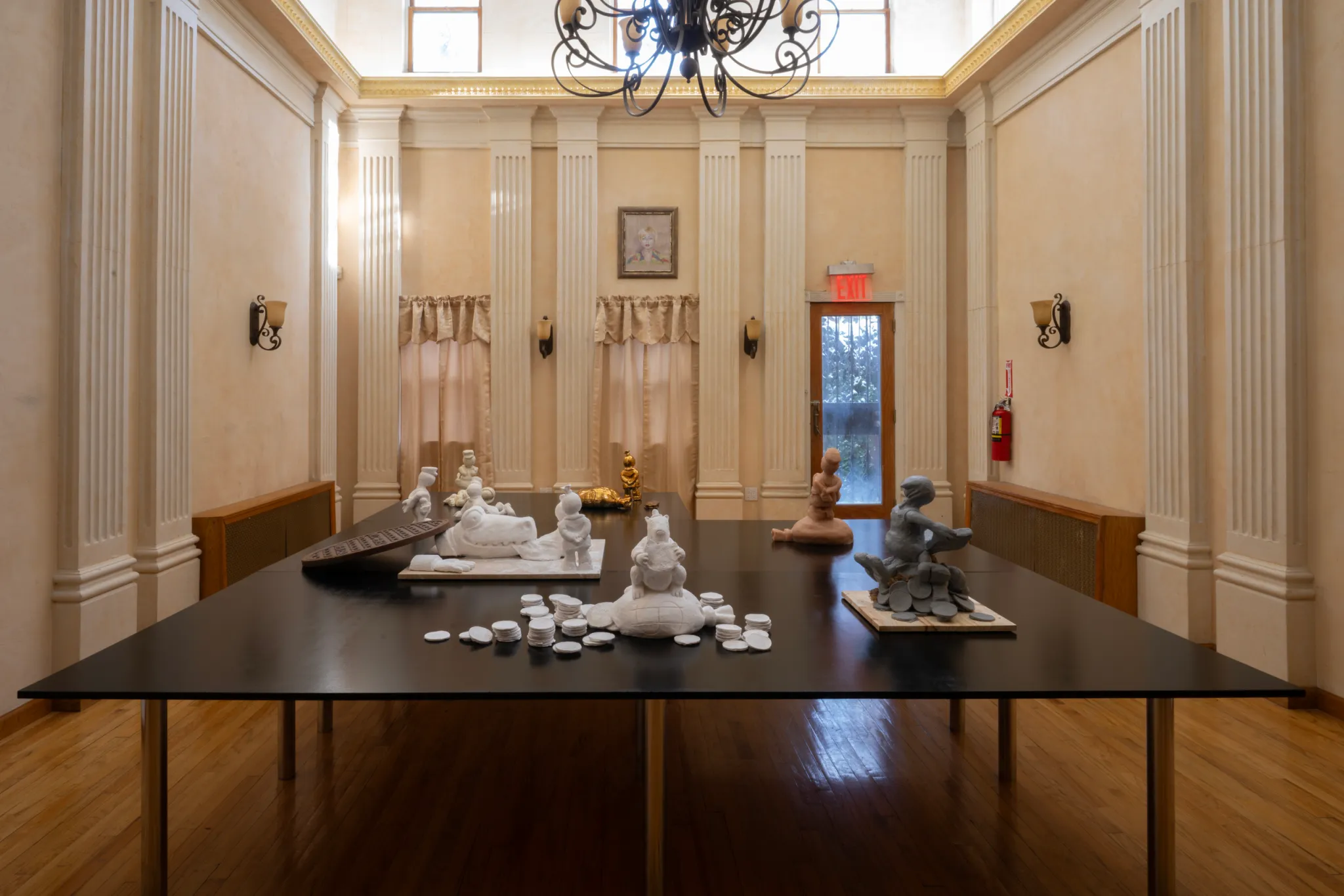
New Cult-Like Images saw a staged scene, or tableaux, by Nancy Delroi alongside a series of debut sculptural installations by Merante and Riggio. The staged scene was the centrepiece, doubling as the set for a series of documented neo-realistist filmed moments involving the audience, premiering throughout the following week on a four-monitor CRT display. These unscripted films expand the ongoing film cycle of episodes, scenes, frames and dialogues launched recently by the duo, including You Kill Me Second & Anna Smoking Cigarettes.
On view by appointment until 9 July, it represents a pact between (four) adults, un trattato di strategia affettiva (a treatise on emotional strategy) a New Cult founded on the rhythm of wood, metal, FRP material and plywood. Today, as always, we celebrate despair by painting crosses and drinking red wine.
—
June 23 2025, 8 O’clock: Usual Monday evening, Milan is deserted. When walking down the streets, from the barely illuminated shop windows, mannequins dressed to the nines wink at passers-by; a couple of them look for a cigarette. I can't help but stop for a chat: a woman in military uniform and another individual in gauze, “Future”, insist on accompanying me towards the opening. I long for company - I also need a lighter.
Once there, beyond a wooden gate, a closed metal gate. Beyond that metal gate, more gates and wooden windows, and then, a room filled with undressed to the nines mannequins seated at a banquet table. Too busy alcohol-sinking, they do not turn around as I enter; their desolate body fat percentages are floating in a kind of ED arrogance permeating everyone’s pores and sanity.
The space is staggered by some cheap plywood furniture pieces, arranged as if there is something to hide: a body, a love affair, the true and ultimate meaning of Contemporary Art... for sure not the pornographic side of it, everyone in there is naked and careless.
On the walls, the works of Merante and Riggio, so-called “Metal Paintings”. Full and empty spaces signalling where to hold and where to release the breath: Greek Cross, Red Cross, Medium Shot of a Skeleton, A Rectified Rib Cage, Geometric idol, Rampant bird…
I need the lighter again, but, turning around, I no longer find my two friends: it seems the diners have grown in number, from 15 to 17; I read on the furnished paper sheet: Tableaux of fifteen figures, Every third thought shall be my grave...
I count up to three and Désirée appears, introducing me to the boudoir, specifying that in an hour there would be a performance where something would happen…finally. The Fiber Reinforced Polymer mannequin table seems now a bit inactive, plagued by appetite loss, the hunger drowned with previously overflowing glasses of wine and the lungs stuffed with too many smokes. Forks are lined up along the surface, untouched, like an obstacle course. Or a pew line.
A round, yellowish atmosphere sickens the room, sources of light are a resembling Bauhaus chandelier and a bunch of spotlights burning the air - I later notice a small rectangular skylight in the ceiling - perhaps where the Rampant bird entered from. 20 feathers counted, intact. Despite its flapping of wings, there is no breathing in there. Smells like Mephedrone.
In the previous room I had skipped initially four adults in black shake hands and prepare drinks blended with ice and berries. I wonder if they have agreed on it or it’s just mandatory for artists to wear total black outfits.
A row of unlit televisions reflects guests talking. A girl eating blueberries, then Andrea smoking a cigarette at the door. From the dark screens, the room multiplies, making me think about Borges' Labyrinth – I hope no one tries to enter the television looking for meanings.
After an indefinite period (punctuated only by the emptying of the wildberries tray on the central table), some real-life actors animate the inanimate room: dirty looks, bad words, and gratuitous violence towards those who arrived first and occupy the stage. Forks fly. It's cheesy.
The Ikea furniture of the early 2000s begins to exude squalor: we are all involved, but no one is there. We have lost our hunger and desire, too. No one feels like it but everyone crowds in, it's a feast of empty plates. An orgy of wet cigarette butts. The Rampant Bird gets a wing wound and flies away. The other sculptural paintings remain stoically unbothered,o not moving a muscle except for their tongues, with which they climaxingly spit out “pathetic yet deliberate compositions”.
The four adults are no longer taking part in the action: one for each corner they film the scene, silently sticking to their black clothes choice.
We are harming no one but ourselves; no difference between what was happening previously in the first and the second room: drinking, smoking, and talking about the guests on the opposite side of the wall. We sink together.
If I had not come with someone, I would, having being exposed, feel uncomfortable. LuckilyI recognise Militancy and Future, bending over the table, being bullied.
The latter is now missing an arm.
Images Courtesy of the Gallery, Author and Aitana Blasco