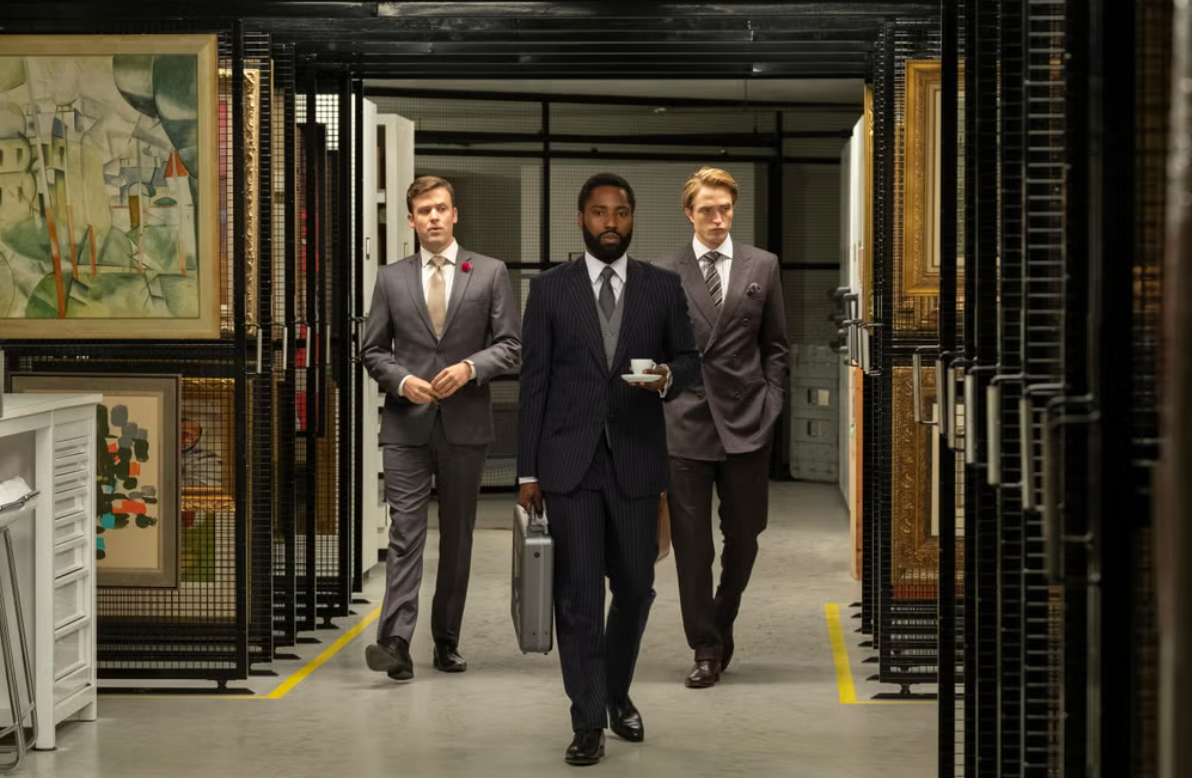
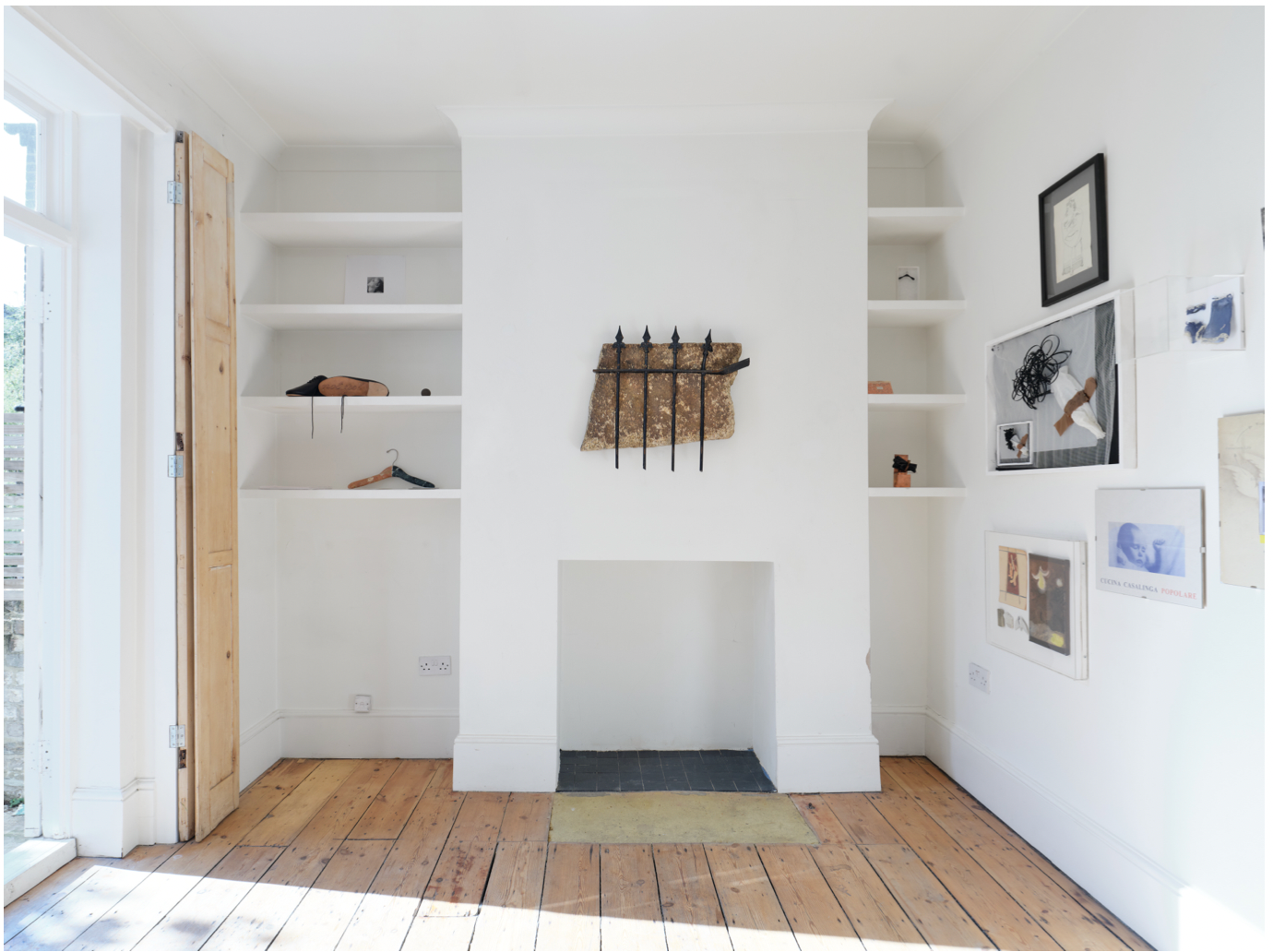
The apparatus of Her Selected Works struck me: railings holding the artworks and the postcards on the rack display as you walk in. They kind of carried the show.
I was under the impression that the works on show were a part of Carlotta’s “collection”. I.e. She was a collector and the works she had purchased were a product of her taste. The curatorial angle is that these are works which could have been collected and kept in storage, so their arrangement is like a hide-and-seek of meaning. As a curator, these works are still, invariably, part of her taste - but it would have been a relief to know that some kind of circular economy existed between the chic state-funded central european art world and the significantly less financially supported London artistic circuit. It would be great if this exhibition signalled that some kind of a) collecting and b) economic transfer had taken place. Gave the vibe of the scene in Tenet (2020) where he breaks into the tax-free hyper-secure non-dom art storage facility. Untaxable offshore funds.
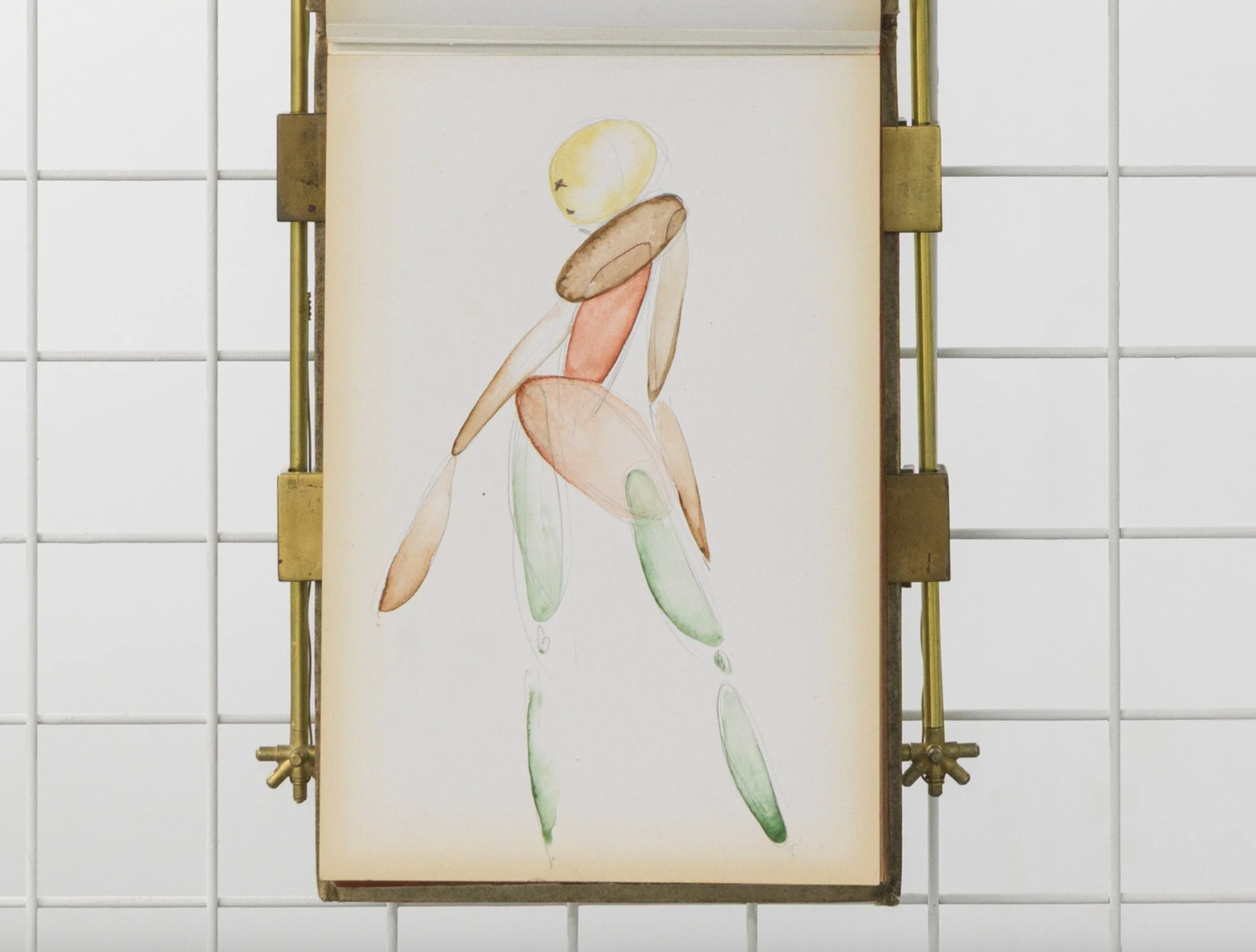
Andreas Schmid’s work Figure Nr 1, 2025 was a highlight: a conttraposto cubist figure whose frame is constructed from various watercoloured ovals is painted on antique card. Schmid constructed a frame for the card, akin to an Ilizarov apparatus, which holds the folds upright with brass poles and screws. Daniel Zeballos’ it’s dark train of thought with too many carriages, 2025 a fine graphite drawing on torn paper, has been seemingly drawn, then torn and re-assembled. This play between material, texture and tromp l’eoil is also present in Gritli Faulhaber’s Ohne Titel (La Solitaire, Zitronengelb) (2024) where 70’s wallpaper-appliqué surrounds the silhouette of a 1920’s flapper. The work was previously shown as part of Les Garçonnes at Gauli Zitter, Brussels, where I think it was better served, contextualised by Faulhaber’s other paintings that muse on the relationship between decorative pattern and depiction of the human form, ala Alois Riegl.
A Deconstructed archive-on-display-type-beat is very cool but actually super hard to execute in principle, especially if the works displayed form a cat and mouse of meaning that is not ever fully deciphered. It would have been great to have some more presence - even heavy handed - from the eponymous "collector".
Review
/ 15 September 2025 / By: La Cicciolina
/
★
★
★
★
If this was a review based upon taste - the show would not score so high. But actually, its hard to fault. Soft Opening‘s curation and programming tend to be pretty exquisite, boasting a museum-level attention to detail that smaller/newer galleries itend to overlook.
No one would forget the catwalk-like structure built for Gina Fischli’s April 2024 show, Love Love Love, or the stainless steel industrial floating frames that housed Maren Karlson’s ectoplasmic graphite drawings for Staub, Storeng. At Soft Opening, it is usually a “no notes” situation, which cannot be said for everyone in the clean-goth-come-gallerist circuit.
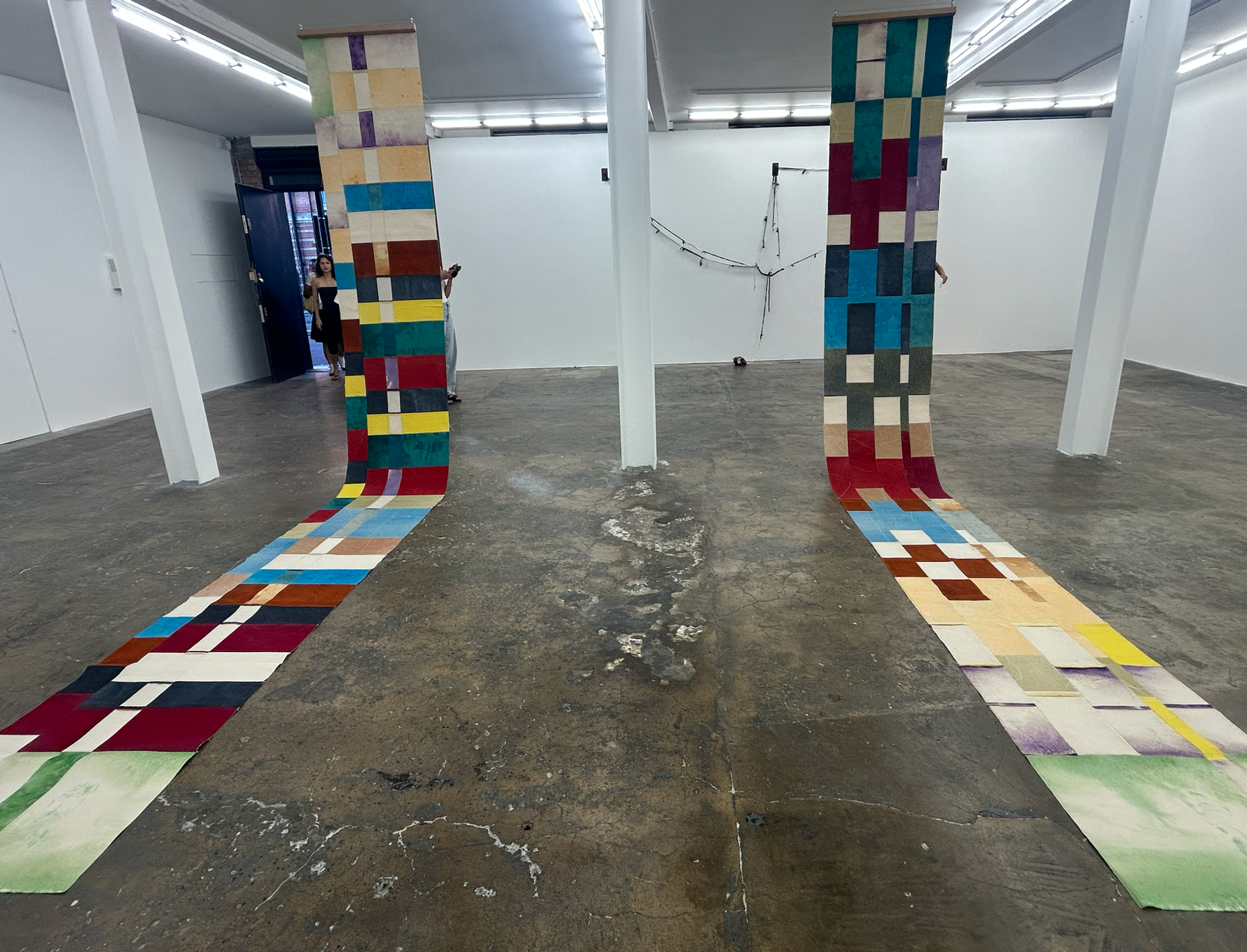
In Rough Draft two stretches of stitched canvas hang in the centre of the gallery. Bars and Blocks (Janky Hankies) (L) and ® droops onto the floor three-quarters down, the underside of their stitched panelling clearly on display. You can examine up close Samuel’s building of patchy coloured canvas, sometimes bleached, sometimes block colour. One half of the title, “Janky Hankies” refers to the colour-coded signalling system popular in West Village gay communities of the 70s and 80s. It could mean “top” or “bottom” or - according to Bob Damron’s Address Book (1980) key sexual information:
Left Worn Brown Bandanna = Scat Top
Left Worn Mustard Bandana = Has an 8” plus
Legible at the edge of (R) and (L) is a faint imprint of the artist's foot. Is this historical, homo-social colour coding, paired with his bodily imprint, a biographical component (personal or otherwise).
(R) and (L) imitate strip quilting—a form of piecework quilting originating in Gee’s Bend, Alabama, which was pioneered by a community isolated by systemic racism. In Gee’s Bend, compositions were fabricated using salvage cloth, ultimately resulting in arrangements that rejected both convention and symmetry. Rather than following pre-existing patterns, Gee’s Bend quiltmakers group their works into categories: ‘Abstraction & Improvisation’, ‘Pattern & Geometry’, ‘Housetop & Bricklayer’, ‘Lazy Gal’ and ‘Work Clothes’ - Samuel’s title “Bars and Blocks” references this arrangement.
Samuel builds on the idea of fabric as an everyday communicator of repressed codes, sexual or otherwise…fabric as an identifier, a symbol, an illicit message. Even the display of ® and (L) imitates a code of the past - each spring, the quiltmakers of Gee's Bend would “air the quilts” as a way of exhibiting an otherwise private, domestic object.
In 9 Lives a wall drawing of a nonagon is filled with nine other nonagons in various shades of green chalk. The sketchy wall drawing contributes to the relevance of the exhibition's moniker, Rough Drafts, but also mimics a talisman, beacon, or mural. Hence, I guess, the hermetic reference. The number Nine is also a magic alchemical number which, according to the press release, apparently harnesses “the ephemeral nature of site specificity to enact a tension between resolution and transition”. Gee’s Bend Quiltmakers and alchemy: that’s the esoteric art-history knowledge holy grail.
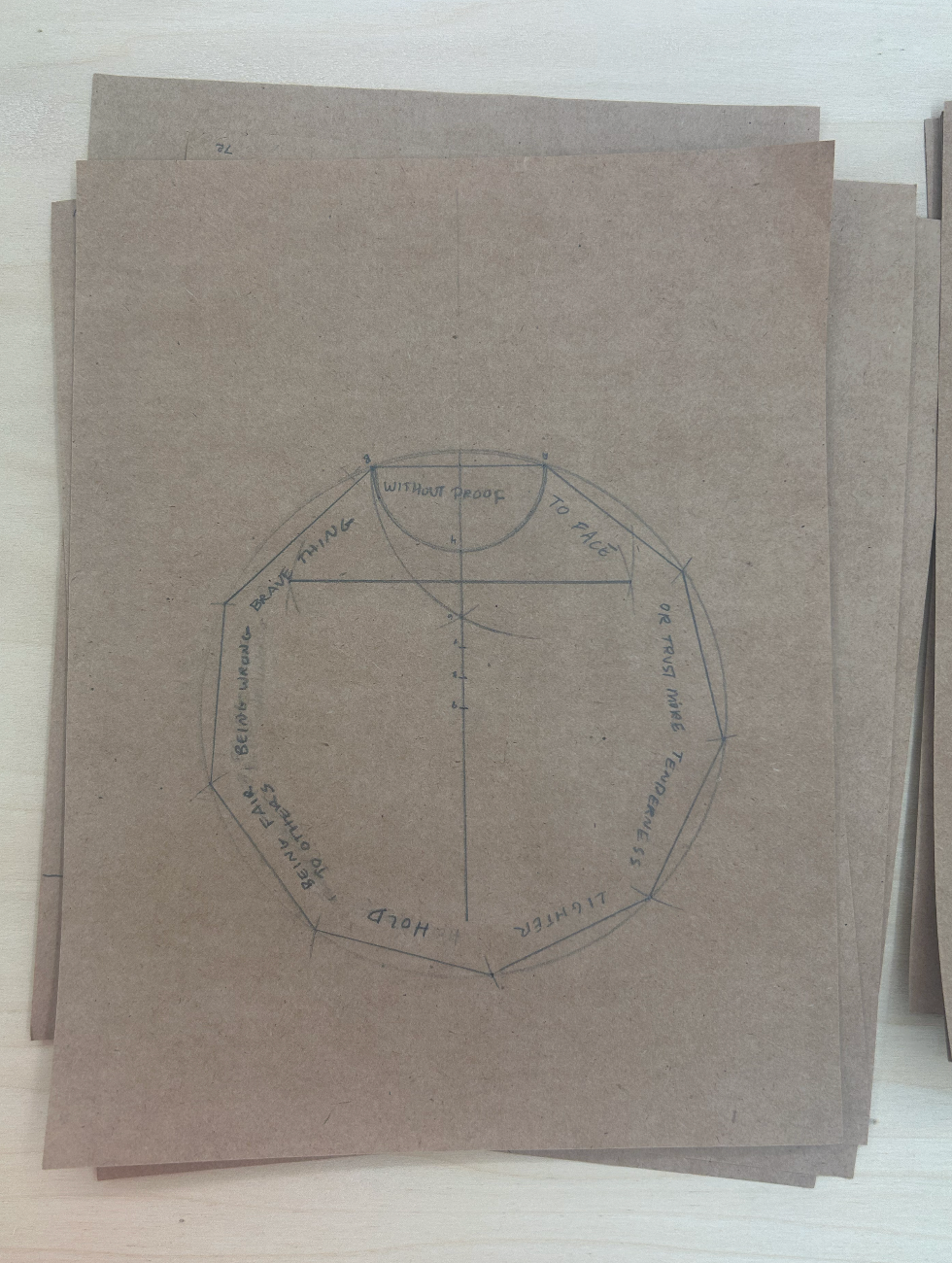
The pièce de résistance of the show was 3 Stacks. Thirty stacks of brown, well-handled A4 sheets were placed upon a custom-built timber desk, each containing a variety of diagrams, collages, marks and a biscuit in its wrapped labelled "DIA COOKIE". It resembled a children’s workspace, or Aby Warburg’s Mnemosyne if he went to steiner school. The nïave, or frantic, gestures of 9 Lives are echoed in the pieces installation. As the night went on the papers found themselves increasingly scattered across the floor. Leafing through these pages felt strangely utilitarian —the opposite of the usual East End gallery space filled with unattainable concepts. Samuel’s work makes me feel like I'm lying on a quilt and catching the stitches with my hands.
3 Stacks has the feeling of rummaging loosely through papers with little purpose other than to feel them flutter.
I wish that all objects had been able to be touched, as quilts are intended. Call me craft centric.
Review
/ 15 September 2025 / By: Green BIrkin
/
★
★
★
★
½
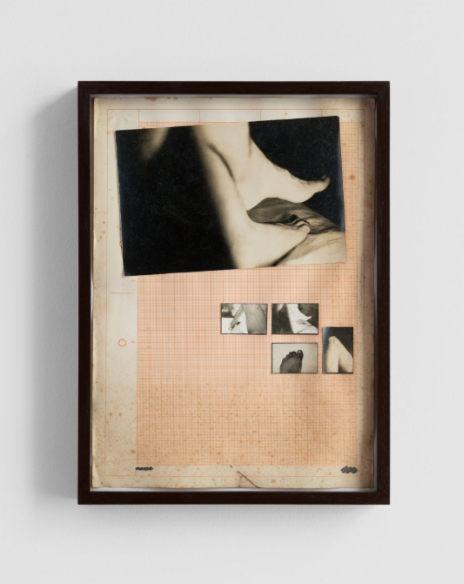
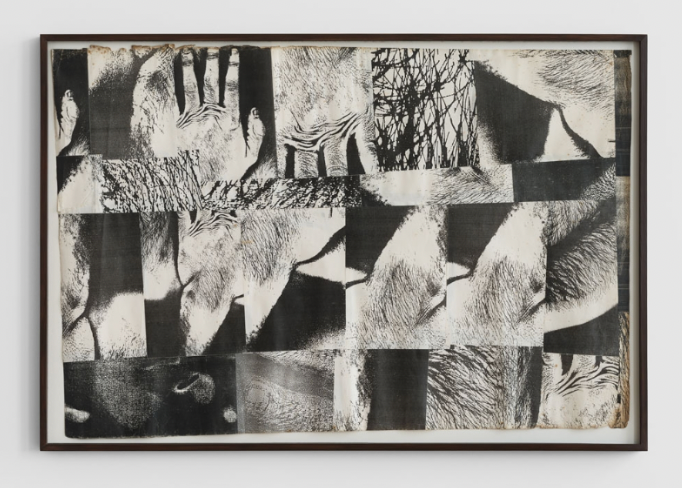
Just as I was starting to get tired of the same shade of beige that seems to wash over every 15 Orient show - I was granted a great show of Hudinilson Jr's exploration of material, queerness, assemblage, abstraction, movement. Above all, a sense of the artist’s own historicity.
One thing about this show I enjoyed was Hudinilson Jrs. use of the Xerox copier in conjunction with bodily movements, that were then integrated into drawings, collages, etc.
Throughout the show it felt like I was involved in understanding his process, research, and culmination of it all, to a body of work that felt heavily considered. A good show for the gays.
Review
/ 15 September 2025 / By: Green Birkin
/
★
★
½
"Reclaiming space,”
“a tribute to New York's layered art ecology,”
“a statement of presence”.
There is a reason why the press release reads as horribly as it does, and that's due to a majority of the works falling short of aligning themselves with any of the aforementioned phrases. Perhaps due to the emptiness of these phrases (used ad-infinitum) in today’s art-speak lingo.
I’ll give credit where it’s due, work by artists like Amanda Ba, Cannibal (2025), Tucker Van der Wyden Spiral 3 (2024), Eli Tamarkin Girls (2024), Kembra Pfahler Wall of Vagina II (2004/2018), Aramando Nin, Maggie Lee, Sassy (2024) - great.
Obviously, you throw the New York kids a bone with works from Dash Snow, Young Men with a Future (2007) and Mike Kelley, Extra Curricular Activity Project Reconstruction (2004-5). Predictable.
Yet, unfortunately, if you have also watched this show via an Instagram story post and decide to see the works in person, you’ll walk away with an appreciation of perhaps a few names, but mostly an appreciation for art that is not on display at Market Street.
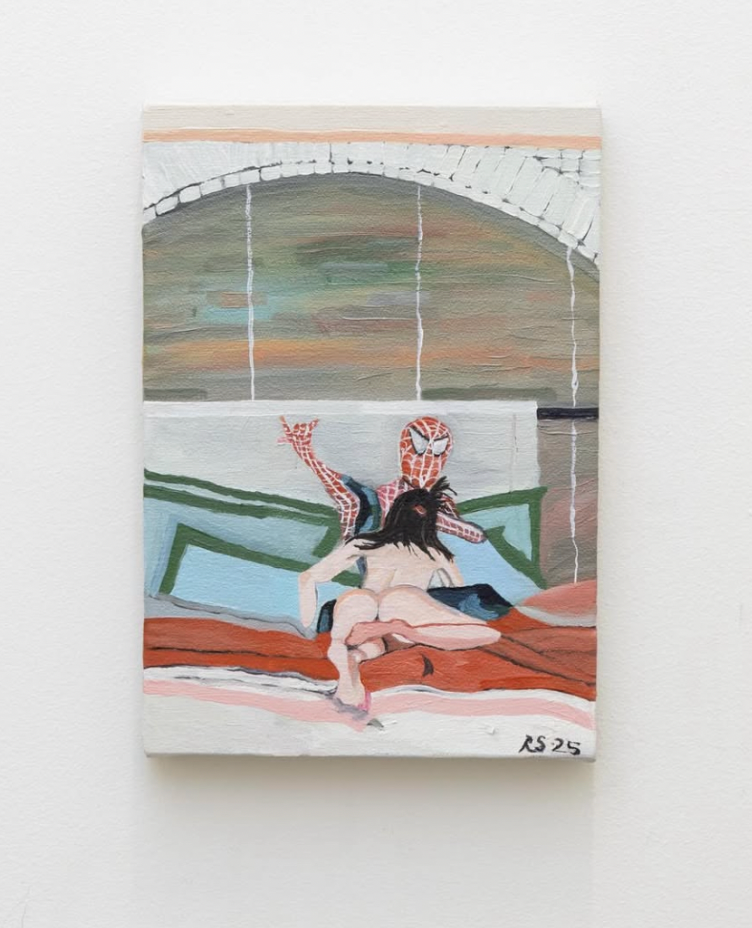
It’s a predictable show with predictable work, and if you were going to paint Spider-Man getting his dick sucked, at least spare oil paint and use acrylic.
A lot of these works play into the aspect of a “storefront spectacle” as the gallery describes, so much so that Revolve reads more as a “pop-up” store than an exhibition. The works inside are akin to the miscellaneous, mass-produced items for sale in American Candy stores and Soho tourist traps: their bright, eye-catching colours admonish viewers for their short attention span.
I always found it interesting how “art people” dressed.
Body Count - an exhibition by Miriam Simanowitz and Thibault Aedy - imagines individual style as it looks online rather than “IRL”. London-contemporary-young-up-and-coming art scene {that incorporates fractals and subcultural visuals hailing from Camberwell, Goldsmiths, CSM, UCL and UAL et al until ad infinitum] may appear as though they have been transplanted from the 2010s. The reasons for this are twofold: a desire to return to a pre-META Utopia and the all-too rapidly ageing Generation Z. The first work in the show, Miriam Simanowitz’s Mise En Scene (2025), supposedly mocks this dress code.
Simanowitz squeezed her friends’ pelvises, elbows, and spines to gauge the size of their bones before recreating them in metal and covering them in plaster. The result is an almost unrecognisable, disturbingly uncanny deviation from real life. To dress them, Simanowitz opted to trawl Vinted - an app that has overtaken Zara in volume of sales in France, due to the success of its algorithm. Instead of pushing curated resellers, it lulls you into a sense of feigned individuality, seeking out gems in a middle-aged woman’s redundant All Saints collection. In the exhibition, the mannequins wear scuffed-up suede Isabel Marant heels, beaten ballet flats with peeling soles and discoloured slouchy leather bags. Simanowitz included sequinned dresses, bows straight out of 2010, cutey tumblr esq staples and flat caps worn ironically, set against equally ironic slogan t-shirts and hoodies. One black hoodie proclaimed the words “NOT A STEREOTYPE” in white bold writing with a keffiyeh strewn over the top.
Mise en scene fell victim to itself, in the sense that to anyone outside of the bubble of 2010s artschool dress codes, the artwork does not necessarily translate. To employ Roland Barthes' object language, the effect of committing to the total look of a period on the surface connotes an awareness of current trends. However, the metalanguage, or denotation, signifies cultural capital. The result, in my opinion, is a uniform that is not in line with a classical subcultural dress code. I.e, genuine expression. Rather, it appears like a scene, but one that feigns individual style in the absence of genuine ideas.
Past Mise En Scene is where Miriam and Thiabault diverge from sceneology, and the real point of Body Count is unveiled. Here, it borrows far more from the playbook of the 1960s body art movement, but from a contemporary lens, exploring new ways to open up sex as the artistic subject.
Thiabault’s study is rather an abstraction, as he seeks to create “reductions of the body” in “abject subject matter.” Apparently, Thibault’s mum has influenced this fascination with gut health, often bringing out the Bristol Stool Chart for reference. I’ll let you Google that one. Blood in my Stool (2025) is a play on words and form. Thibault seems fascinated with introspecting the relationship to the impenetrable internal world or our insides that we try to decipher or connect to. For example, lying on the floor is a large cylindrical rubber-coated tube that has the appearance of an intestine, but the idea is best encapsulated in the work Suppositoires, a curtain that consists of the anally insertable medications, which he suggests are “more popular on the continent.”
If Thibault explores how the internal body is negated, Miriam’s work appears on the opposite end of the spectrum. It is the first time in a long time that I have walked into a gallery space and been shocked, and to achieve that in our digitised world, I think, deserves commendation. Without spoiling the performance, three screens depict different rooms, one of which is where Miriam plays Mrs Claus. The performance duration is 2 hours, involving around 20 men she knew to varying extents, though some were found via Instagram. Part of the performance was live-streamed on Instagram, which led to a surprisingly productive analysis between the men about their parts in the performance and real life. The experience seemed to have shifted the way they viewed their roles. But more than anything, it was about the dilemma it had caused internally for them, and how they were perceived. The first question they asked one another was, “Did you see people online?” This moved onto “If you start looking with intention, it’s like- okay. But you become conscious again of people watching you after a while.” And “The natural response is more interesting than the more formative response.”
In short, Body Count is best when it’s corporeal.
Review
/ 7 September 2025 / By: Milie Bobby Brown
/
★
★
★
½
Hollywood Superstar Reviews London’s latest magazine-to-end-all-magazines, Alex Heard and Middleton Maddocks' satirical, “Fieullieton” (literal translation francais: "Little bit of Paper"). Since a little bit of paper cannot be on Instagram, it has instantly become the most authentic, interesting and fun site of London Art Criticism, fml. It was launched theatrically alongside PLPC's shadow puppetry and a performance from Memory of Speke. Our daring reporter Milly Bobby Brown congratulates the satirists but retains reservations about "performative adolescence".
Teenagers are in history lessons that they don’t want to be in, they don’t like the reading material and they don’t like the teacher, Milly Bobby Brown.
3.5 stars - Puppet Show and Memory of Speke
4 stars - Fieulleton Publication
We arrive at the basement of Bethnal Green Working Men’s club for the launch of Feuilleton, the new print-only publication edited by Middleton Maddocks and Alex Heard. Copies of Feuilleton, whose name is taken from the Arts and Gossip column in 18th-century French newspapers, are crammed into a vintage suitcase at the door. Exaggeratedly passé in style, mimicking Publications of the highest order (The Paris Review, Frieze) this edition features short fiction, essays, and poetry. Text is interspersed with false adverts for DIY galleries, blogs, local wine bars, and Goldsmiths University.
At about seven thirty, we hear from the editors in a letter that seeks to position themselves in relation to institutions, literary readings, commercial art, and the nebulous ‘scene’ that orbits them. “It's not just the woke art that is bad”, Alex reads , "although that's most of it.” Artists, like teenagers, have always forged identities in relation to what they are not.
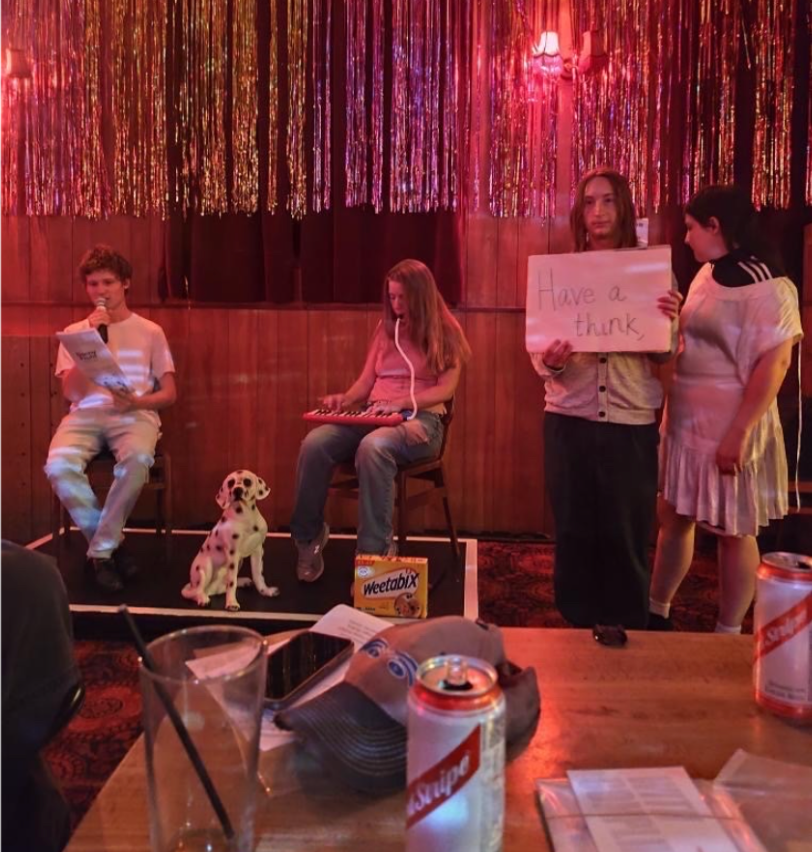
With juvenile spirit, the launch launches into something lawless; they don’t seem to be able to get the tech to work. T.C. Hell debases children’s characters TinTin and Snowy, in a piece which exploits lapses in audible speech and ambiguous translations to fulfil the narrator’s masochistic fantasy. We hear poetry out of the mouth of a plastic Dalmatian named Cole Denyer, who struggles to get verses out between barking from a malfunctioning hidden speaker. Rachel Fleminger Hudson gives us a playful, girlish striptease. She is telling us about a very sexy lady. As her performance escalates, there is a negotiation of the sexual dynamic; her character forged through claims of aesthetic enjoyment.
After escaping from the smoking area, we return for a shadow-puppet show / ambient road movie. PLPC’s performance takes us on a ride through the desert. Biker gangs, cop cars, and fuel trucks are shadows moving across the makeshift screen, overlaid with a textured soundtrack of chopped up dialogue and music by Memory of Speke. Evoking the slacker absurdity of Beavis and Butthead and the early MTV cartoons, reconstituted in the archaic but equally lowbrow/ populist medium of the puppet show. The result of an asdf movie watched in private. But now, given a full cheek-by-jowl theatrical treatment, watching is a uniquely collective experience. The crowd wave their phone torches at the outro.
Memory of Speke’s later set weaves flamboyant narrative vocals with repetitive grooves. The band’s usual theatrical costumes are swapped out for jeans and shades, a distinctly Royal Trux-ian swag that fits with the cool-Americana of the shadow puppet show. Their catalogue is bouncy, tight-knit, theatre-kid bangers, straddling no-wave, new-wave and ska, in a performance that is perhaps too much of everything (instruments, genres, influences) to feel like anything new.
Coming away from the night, I am thinking about the current trend in art and music of reviving adolescence. Reading Feuilleton, I’m struck by the critical potential the figure of the adolescent actually holds. It is used here as a kind of post-historical device, to read inherited systems and aesthetic codes. Parody and subversion are ways of rebelling against an old order. Whilst Memory of Speke and PLPC also co-opt the aesthetics of childhood, both seem to function primarily to draw us into their own special universe. Struggling to articulate this key difference, I speak to a friend. He offered that “performative adolescence should always be about learning.” I think without this we risk regressing into the confusing blur of nostalgia.
Hollywood Superstar meets with Olivia Kan-Sperling, writer and New Yorker and editor at The Paris Review. Her writing has appeared in Heavy Traffic, The Paris Review, Art Review and Spike. Moat Recently, she has released Little Pink Book (2025) a softcore porn fantasy about a lonely barista-blogger in Shanghai, following her first novel Island Time (2022) a novel concerned with the psycho-geography of Kendall Jenner
This Artist Take should be read in full, continously, rather than in modicom
I understood the Artist’s Take prompt as “things that inspire me” and/or “things I like.” I realized I don’t have much to say about things I like and that the things that inspire me do so because they leave something half-empty / fill me with negativity. I also just like things because they are bad. Mulling over my taste, I often think of a line in Huysmans’s Against Nature: “𝒯𝒽𝑒𝓈𝑒 𝒷𝑜𝑜𝓀𝓈 𝓌𝑒𝓇𝑒 𝓈𝑜 𝒶𝒷𝓈𝓊𝓇𝒹, 𝒶𝓃𝒹 𝓌𝑒𝓇𝑒 𝓌𝓇𝒾𝓉𝓉𝑒𝓃 𝒾𝓃 𝓈𝓊𝒸𝒽 𝒶 𝒹𝒾𝓈𝑔𝓊𝓈𝓉𝒾𝓃𝑔 𝓈𝓉𝓎𝓁𝑒, 𝓉𝒽𝒶𝓉 𝒷𝓎 𝓉𝒽𝑒𝓈𝑒 𝓉𝑜𝓀𝑒𝓃𝓈 𝓉𝒽𝑒𝓎 𝒷𝑒𝒸𝒶𝓂𝑒 𝒶𝓁𝓂𝑜𝓈𝓉 𝓇𝑒𝓂𝒶𝓇𝓀𝒶𝒷𝓁𝑒 𝒶𝓃𝒹 𝓇𝒶𝓇𝑒.”
Huysmans’s hipster edgelord aesthete protagonist, Des Esseintes, has a very advanced contrarian aesthetic sensibility, especially as regards badness of all kinds. His turtle doesn’t match his rug so he encrusts it with jewels until it dies! This is a list of things I’ve obsessed over but feel badly about in different ways.
1. Rihanna
In 5th grade I read a New Yorker article about a woman who has written many hit songs for Rihanna. It described her process: singing random phrases into the microphone while scrolling through her notes app, into which she had copied language ripped from TV shows or advertisements encountered while walking around the city. That’s when I knew, I love words…(Equally inspiring to me: how Young Thug writes songs, which is, scrawl a shape on a napkin while on drugs, then “read” it in the recording booth while on drugs.)
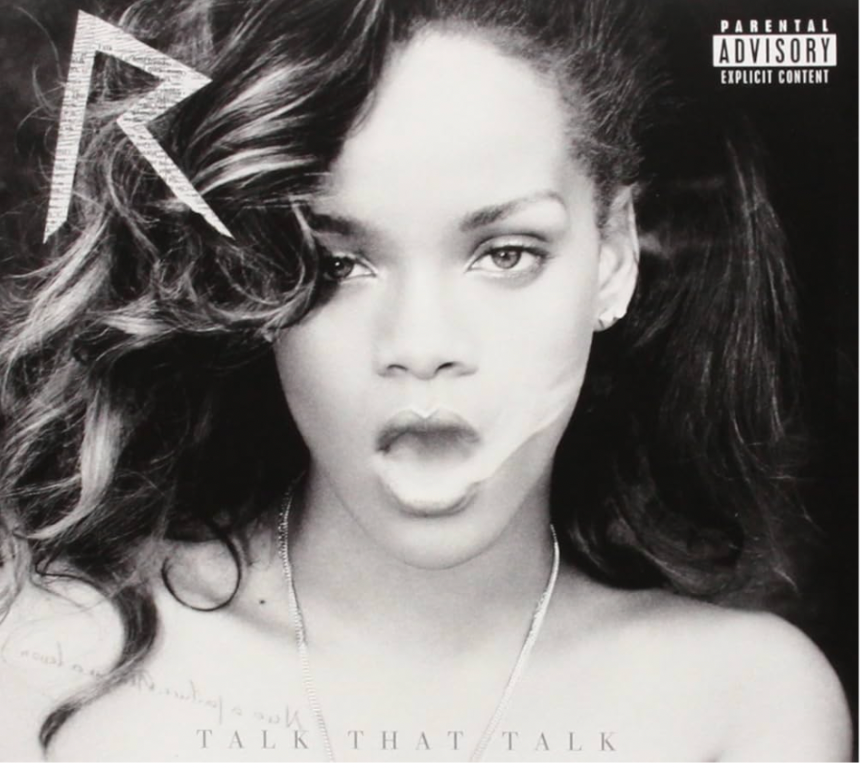
So because since 5th grade I’m into language, I like that Rihanna has an album called Talk That Talk. Rihanna is always singing about saying stuff or even writing. “Birthday Cake” rocks and it’s an extended metaphor involving writing stuff in icing on her birthday cake. (“Come and put your name on it / Put your name on it / … Cake cake cake cake cake cake cake cake cake cake… / And it's not even my birthday / But you wanna put your name on it!”) Rihanna is not a singer, she is a speaker, the blown-out speaker in an Uber that is playing the radio that is playing Rihanna. This is the ineffable beauty, mystery, and melancholy of Rihanna, and I find it very moving, but I feel this good girl gone bad’s music is, mostly, bad as in not good.
I think Des Esseintes is fascinated by bad books because the worse something is, the more impressive the mental labor required to enjoy it. In my heart, I know I don’t “like” Rihanna except in some convoluted intellectual way, which makes me sad. So does Rihanna. Her best lyrics are: “Yellow diamonds in the light / Now we're standing side by side / As your shadow crosses mine / What it takes to come alive.” The senseless fragments of her club song lyrics hopelessly grasping for meaning yet failing to achieve any kind of real emotional resonance is very poignant to me.
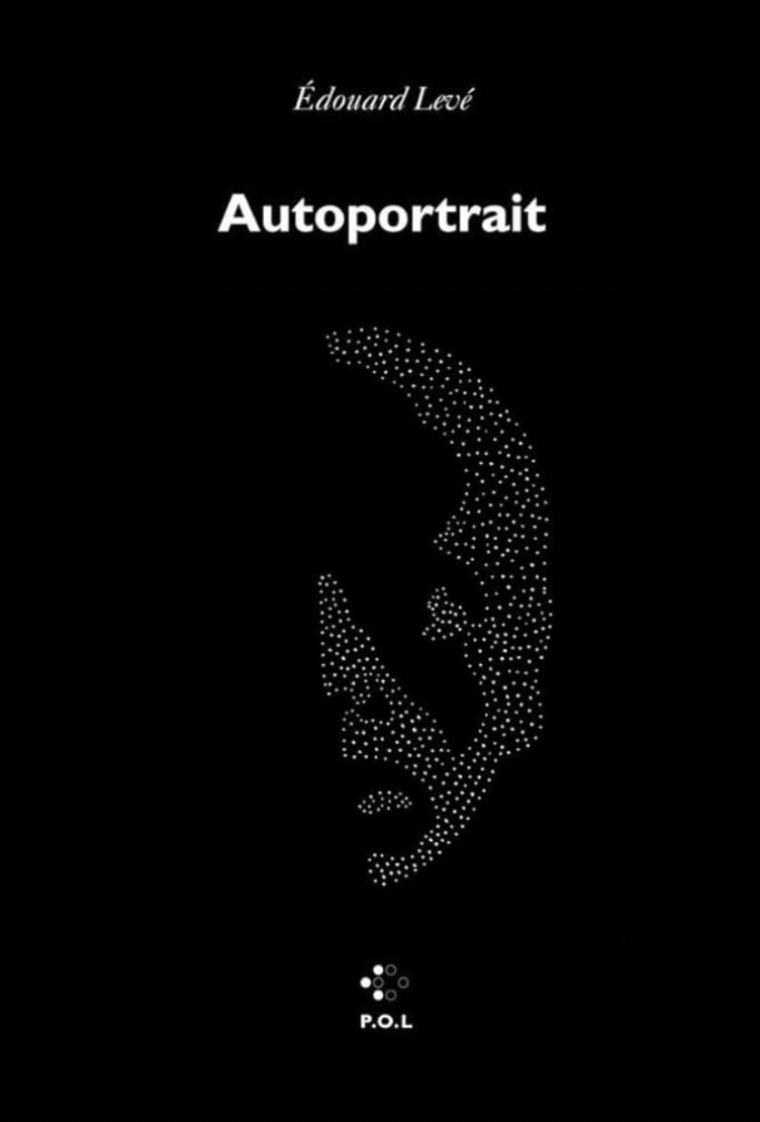
2. Edouard Levé, Autoportrait
It got back to me that someone—“this guy”—said my work is a “narcissistic self-affirmation project.” My writing is like always an explicit interpretation/homage to other people’s writing/art/etc!! But yeah I have written about my life sometimes?? (I’m generously assuming this is a genuine critique of my writing and not how I dress FashionNova on instagram.) Obviously all art is partially a narcissistic self-affirmation project, because it means forcing your stupid interiority into an immortal object, then asking other people to care about it. Certainly everything that goes “against nature” is a hubristic human enterprise...but usually only one half of humanity is reprimanded for any of this. Less glaring instances of misogyny are honestly so sad and painful and crushing to me, but towards this unknown (not even interesting to narrow down which guy it was) reader, I feel condescension and abstractly pissed off, which is very very inspiring! I wonder whether “this guy” likes the autofictional work of Huysmans…Mishima…Josef Strau…Proust… Or Edouard Levé, another male inspiration of mine:
Levé’s Autoportrait (English translation Lorin Stein) is a short book composed only of true, first-person statements about himself. The variability this simple constraint produces is stunning: the book is a time-lapse experience of content moving around in a very tight contour, meaning being created through rhythm and differentiation. Autoportrait is a new literary form, but also a tale as old as time…The truth and beauty of all autobiography is that it’s the most humbling form of literature: nothing mutilates your own subjectivity so much as reducing it to a text. It is also the most generous to the reader: nothing teaches you about your own subjectivity like the ruthless dissection of someone else’s.
But in order to learn about yourself you unfortunately first have to learn a lot about Edouard Levé, who seems like a typical guy and asshole. You learn the facts of his life, but also, more interestingly, that he believes an accurate self-portrait can be rendered only in facts. Facts, he clarifies, are unchanging truths. So he can write about his eye color and what parts of women’s bodies he has come on, but not his feelings or future. Even more suspect to me, the implication that a person/ality can exist in a void—the longer Levé’s monologue goes on, the stranger it becomes that all of these confessions lack an addressee. In a text that strives towards unsparing realism, Levé has accidentally constructed a conspicuous fiction: that he exists in a world of one.
Anyways I thought it would be a fun exercise to invent my own protocol of speech to write what I would consider a “true” portrait of myself. I did butmy autoportraitwas actually agonizing, a hysterical self-negation project!!
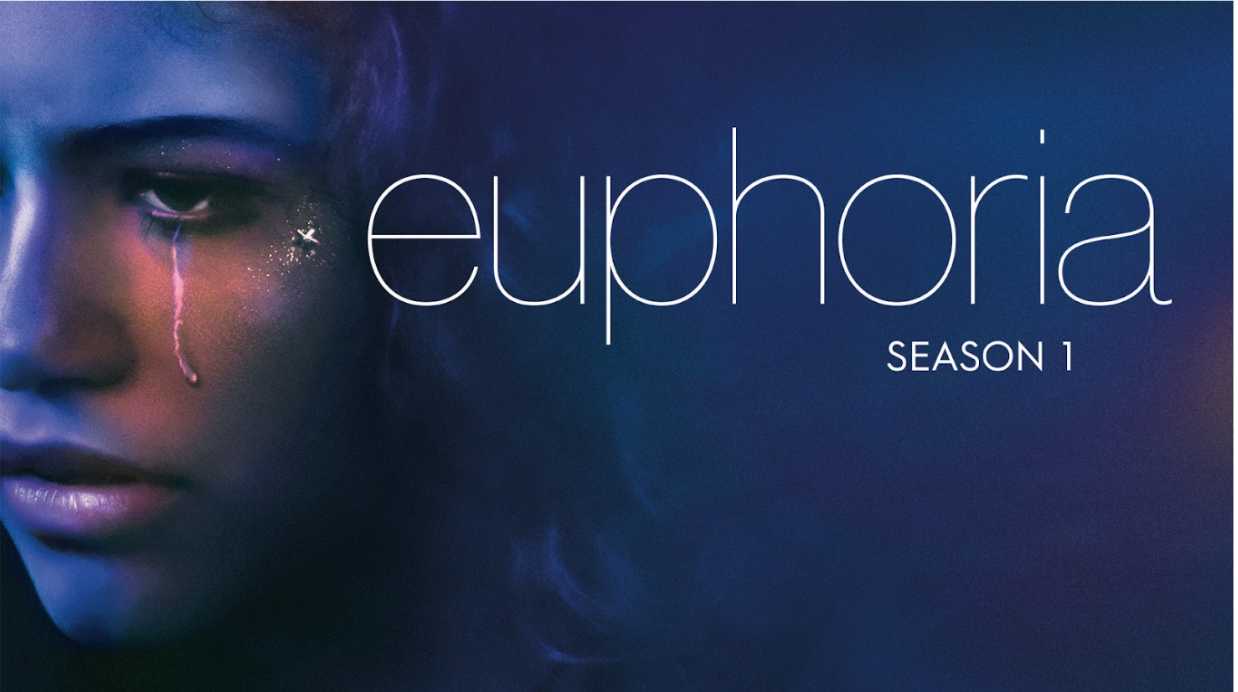
3. Euphoria
Des Esseintes also likes the other type of bad: everything that is morbid, perverse, and disturbing. One of his favorite artists is 17th century Dutch engraver Jan Luyken, whose prints show “𝒷𝑜𝒹𝒾𝑒𝓈 𝓇𝑜𝒶𝓈𝓉𝒾𝓃𝑔 𝑜𝓃 𝒻𝒾𝓇𝑒𝓈, 𝓈𝓀𝓊𝓁𝓁𝓈 𝓈𝓁𝒾𝓉 𝑜𝓅𝑒𝓃 𝓌𝒾𝓉𝒽 𝓈𝓌𝑜𝓇𝒹𝓈, 𝓉𝓇𝑒𝓅𝒶𝓃𝑒𝒹 𝓌𝒾𝓉𝒽 𝓃𝒶𝒾𝓁𝓈 𝒶𝓃𝒹 𝑔𝒶𝓈𝒽𝑒𝒹 𝓌𝒾𝓉𝒽 𝓈𝒶𝓌𝓈, 𝒾𝓃𝓉𝑒𝓈𝓉𝒾𝓃𝑒𝓈 𝓈𝑒𝓅𝒶𝓇𝒶𝓉𝑒𝒹 𝒻𝓇𝑜𝓂 𝓉𝒽𝑒 𝒶𝒷𝒹𝑜𝓂𝑒𝓃 𝒶𝓃𝒹 𝓉𝓌𝒾𝓈𝓉𝑒𝒹 𝑜𝓃 𝓈𝓅𝑜𝑜𝓁𝓈, 𝒻𝒾𝓃𝑔𝑒𝓇 𝓃𝒶𝒾𝓁𝓈 𝓈𝓁𝑜𝓌𝓁𝓎 𝑒𝓍𝓉𝓇𝒶𝒸𝓉𝑒𝒹 𝓌𝒾𝓉𝒽 𝓅𝒾𝓃𝒸𝑒𝓇𝓈, 𝑒𝓎𝑒𝓈 𝑔𝑜𝓊𝑔𝑒𝒹, 𝓁𝒾𝓂𝒷𝓈 𝒹𝒾𝓈𝓁𝑜𝒸𝒶𝓉𝑒𝒹 𝒶𝓃𝒹 𝒹𝑒𝓁𝒾𝒷𝑒𝓇𝒶𝓉𝑒𝓁𝓎 𝒷𝓇𝑜𝓀𝑒𝓃, 𝒶𝓃𝒹 𝒷𝑜𝓃𝑒𝓈 𝒷𝒶𝓇𝑒𝒹 𝑜𝒻 𝒻𝓁𝑒𝓈𝒽 𝒶𝓃𝒹 𝒶𝑔𝑜𝓃𝒾𝓏𝒾𝓃𝑔𝓁𝓎 𝓈𝒸𝓇𝒶𝓅𝑒𝒹 𝒷𝓎 𝓈𝒽𝑒𝑒𝓉𝓈 𝑜𝒻 𝓂𝑒𝓉𝒶𝓁. 𝒯𝒽𝑒𝓈𝑒 𝓌𝑜𝓇𝓀𝓈 𝒻𝒾𝓁𝓁𝑒𝒹 𝓌𝒾𝓉𝒽 𝒶𝒷𝑜𝓂𝒾𝓃𝒶𝒷𝓁𝑒 𝒾𝓂𝒶𝑔𝒾𝓃𝒾𝓃𝑔𝓈, 𝑜𝒻𝒻𝑒𝓃𝓈𝒾𝓋𝑒 𝓌𝒾𝓉𝒽 𝓉𝒽𝑒𝒾𝓇 𝑜𝒹𝑜𝓇𝓈 𝑜𝒻 𝒷𝓊𝓇𝓃𝒾𝓃𝑔, 𝑜𝑜𝓏𝒾𝓃𝑔 𝓌𝒾𝓉𝒽 𝒷𝓁𝑜𝑜𝒹 𝒶𝓃𝒹 𝒸𝓁𝒶𝓂𝑜𝓇𝑜𝓊𝓈 𝓌𝒾𝓉𝒽 𝒸𝓇𝒾𝑒𝓈 𝑜𝒻 𝒽𝑜𝓇𝓇𝑜𝓇 𝒶𝓃𝒹 𝓂𝒶𝓁𝑒𝒹𝒾𝒸𝓉𝒾𝑜𝓃𝓈, 𝑔𝒶𝓋𝑒 𝒟𝑒𝓈 𝐸𝓈𝓈𝑒𝒾𝓃𝓉𝑒𝓈, 𝓌𝒽𝑜 𝓌𝒶𝓈 𝒽𝑒𝓁𝒹 𝒻𝒶𝓈𝒸𝒾𝓃𝒶𝓉𝑒𝒹 𝒾𝓃 𝓉𝒽𝒾𝓈 𝓇𝑒𝒹 𝓇𝑜𝑜𝓂, 𝓉𝒽𝑒 𝒸𝓇𝑒𝑒𝓅𝒾𝓃𝑔 𝓈𝑒𝓃𝓈𝒶𝓉𝒾𝑜𝓃𝓈 𝑜𝒻 𝑔𝑜𝑜𝓈𝑒-𝒻𝓁𝑒𝓈𝒽.” That’s how I feel watching Euphoria! Except Euphoria is more than morbid; it is evil. Think of a greedy Hollywood man, or woman, sitting at a big desk, cutting deals, with Eckhaus Latta, with drugdealers pushing fentanyl, making teens ADDICTED to pain, making teens want to rape, wear Eckhaus Latta, and kill themselves… I wish sometimes to create a work as powerful as this.
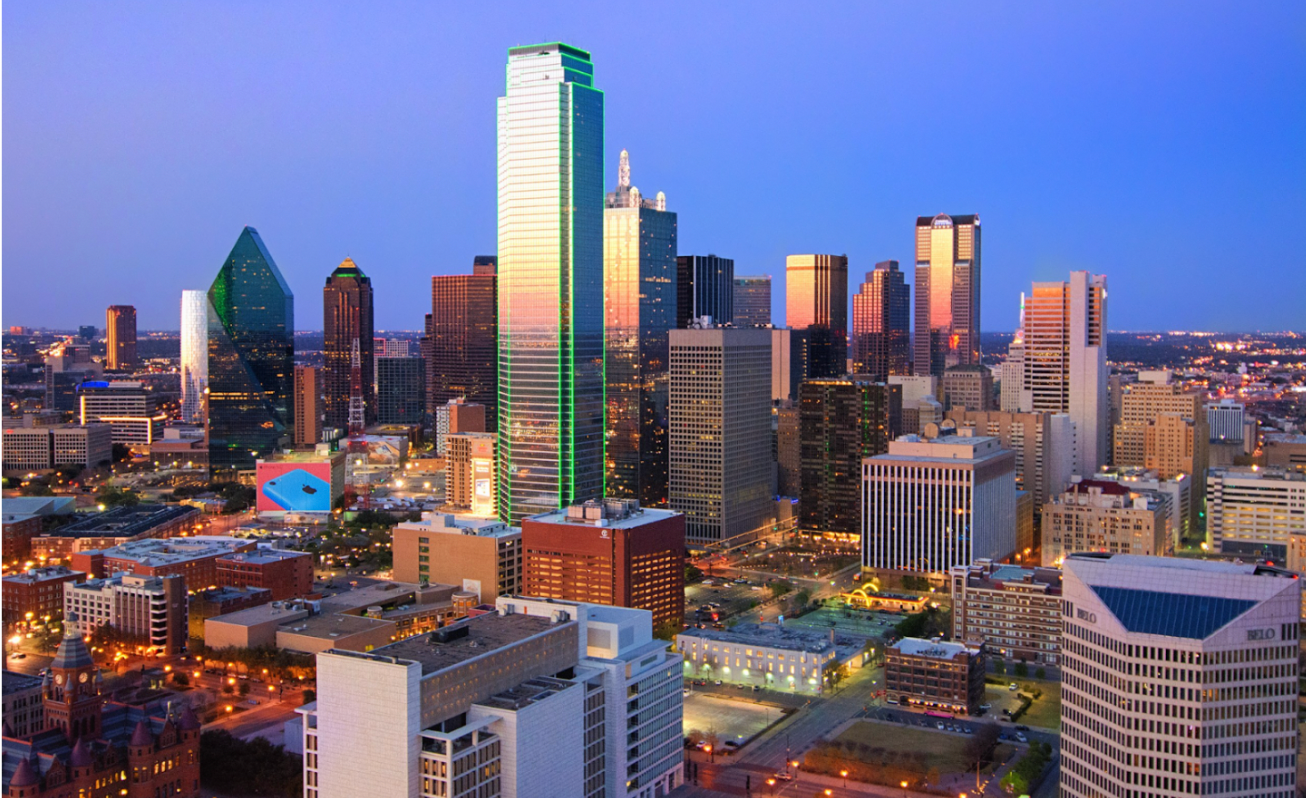
4. Dallas, Texas (George Bush Meditation Garden)
I went here with my boyfriend on his business trip. I was excited because everyone said Dallas—at least, the parts of Dallas to be seen on a boyfriend’s business trip—was the most boring place ever. I love places like Dallas because I am perverse and take pleasure from forcing a thing to give something up to my perspective against its will [[narcissistic self-affirmation]]. A curious detail, an accidental angle!—it feels good to see something no one has ever seen before. What’s there to say about Paris? But as it turns out, it’s hard to say anything about Dallas, too. It’s hard to see it in the first place. A city that has nothing hidden is the hardest to see, and Dallas has no secret from me. It is not a secret that the city’s symbol is literally the fucking Exxon Pegasus.
I went to the George Bush Presidential Library and there was nothing to photograph that would be like, “holy shit…?” Everything seemed obvious and good, like universal human rights. As a contrarian I’ve always thought Bush was subtly charming and funny, but after driving around his neighborhood in Dallas I know for real how bad being a Republican is, and how being a normie is no joke at all, because they are so fucking rich and run not just Dallas but everything. Actually, Dallas is a Democrat city with a gay rainbow crosswalk area, exactly like my hometown, which made it even worse. Dallas has a thriving LGBTQ community. In fact,Dallas seemed like a place of perfect equality. Nothing rose to attention or sank below it: an even field.
At one point I did a reverse orientalism exercise where I imagined “a Chinese person” taking note of the phrases repeated in gilded lettering across the mirrored skyscrapers and white wooden signs decorating businesses around the city, trying to come up with the occidental’s Auspicious Moment Good Fortune Golden Dragon Trading Company—something like: ᴜɴɪᴛᴇᴅ ᴍᴏɴᴛɪᴄᴇʟʟᴏ ᴘʀᴇᴍɪᴜᴍ ᴘᴀᴛɪᴏ ꜱᴏʟᴜᴛɪᴏɴꜱ ꜱᴇᴄᴜʀɪᴛɪᴇꜱ & ꜱᴏɴꜱ ʀɪᴠᴇʀ ᴄʀᴇᴇᴋ ʙᴀʀ & ɢʀɪʟʟᴇ ɪɴᴠᴇꜱᴛᴍᴇɴᴛꜱ ꜱᴛʀᴀᴛᴇɢʏ ᴏɴ ᴘʟᴀᴢᴀ ꜱᴛʀᴇᴇᴛ. But then I remembered it’s not my imagination—I technically am “a Chinese person” :(
At 5PM I walked out of the Presidential Library into the glaring sun of the George Bush Meditation Garden. The park achieves what a French theorist wrote about Chinese painting: the ideal landscape displays a perfect blandness; the eye should catch on nothing. Sitting in the George Bush Meditation Garden I realized that, in real life, perfect blandness is terrible feng shui. It is upsetting to walk around in a Chinese scroll painting, not to mention the pages of an in-flight magazine. I mean everything in Downtown Dallas looked exactly like the photos of Dallas printed on ultra-thin-shiny-paper in those magazine inserts, which are basically just real estate catalogues, that fall out of free regional newspapers or the coffeetables of hotel lobbies and bring news of local vineyards and interior design firms that look exactly like the local vineyards and interior design firms in the fake magazines trying to boost the economies of every other United State. When you’re in a car it’s okay because this flat city passes by like a movie, but actually walking around in a 2D-looking place like that gives you a kind of media-dimensional-vertigo that would have a stupid name in a Christopher Nolan movie: “the bends” or something. “It’s all wrong,” diCaprio would say, “See that?” And he’d point at a tell-tale sign like two fire hydrants placed too close together. Then he’d start getting “the bends,” a torturous mental-physical state that comes from being in the wrong dimension for too long. Dallas Syndrome is just Paris Syndrome for people with a narcissistic self-affirmation problem, like hipsters. You’re not supposed to find Paris in Dallas, Texas. I like to do what I am not supposed to. But Dallas didn’t let me!
For example, “George Bush Meditation Garden” is funny, and that’s why I had to invent it. In reality, the garden was named after a different white male politician whose name did not clash so obviously with the idea of Eastern spiritualism and therefore would not make for good writing; I cannot remember the two words at all.
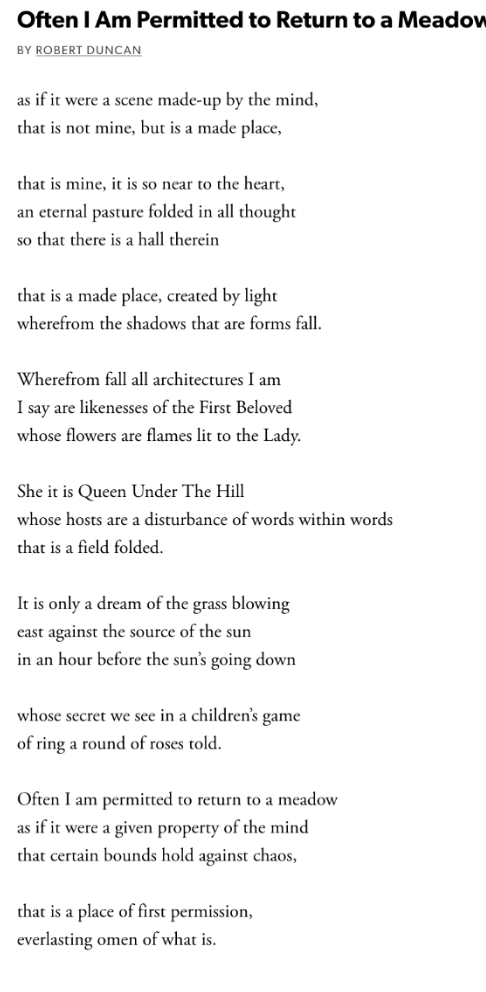
5. Robert Duncan, “Often I Am Permitted to Return to a Meadow”
I love this poem so much! I love a lot of things so much, but this is the only thing that is to me like a prayer. If you’re always going around being inspired by things (taking and using them for your own narcissistic etc etc) then what is left that is holy? I think this poem can only be holy because it’s aesthetically alienating to me; the language seems intentionally archaic (it’s 1960), which I usually find embarrassing, contrived, and definitely irreconcilable with my “pop” sensibility. Therein lies the disconnect that creates a negative space, a blank space,an emptiness “so near to the heart / an eternal pasture folded in all thought / … created by light / wherefrom the shadows that are forms fall.” The meadow is inspiration :) and this place of inspiration sounds like death.
Thirteen Images recalled the RA Summer Show in sentiment only. There was far less garish neon-coloured floral prints (Florals? For Summer? Ground breaking). From the smallest work, Robin Miro’s Hanger (2024), to the largest, I.W. Payne’s Something is rotten in the state of Denmark (2025), nothing felt gratuitous and no detail felt overshadowed, irrelevant or forgotten. It painted a picture of taste within a certain London milieu: artists who are not always full-time artists and whose practice is invariably informed by those limitations. The opening was as packed as a house party. A retrospective survey, but for now, across performance, design, photography, sculpture and drawing (there were a few paintings). The show was held in an empty flat, spanning four antechambers: kitchen, front room, dining room, and bathroom.
Gonna make a call back to Hollywood Superstars ‘17 Trends at Art Basel’ that noted the prevalence of the “Fine Graphite Fetish” at the fair. In this economy (a market barely holding on, driven by weakness, tech bros and Silicon Valley), they’re what’s most likely to sell. Ellen Poppy Hill’s No Point in Making Myself Comfortable (2024) is a mixture of Edward Burra’s post-cubist figures and early Disney animations. Her work as a fashion designer evidently influences her illustrative work - there is a level of caricature that only the sartorial eye can achieve.
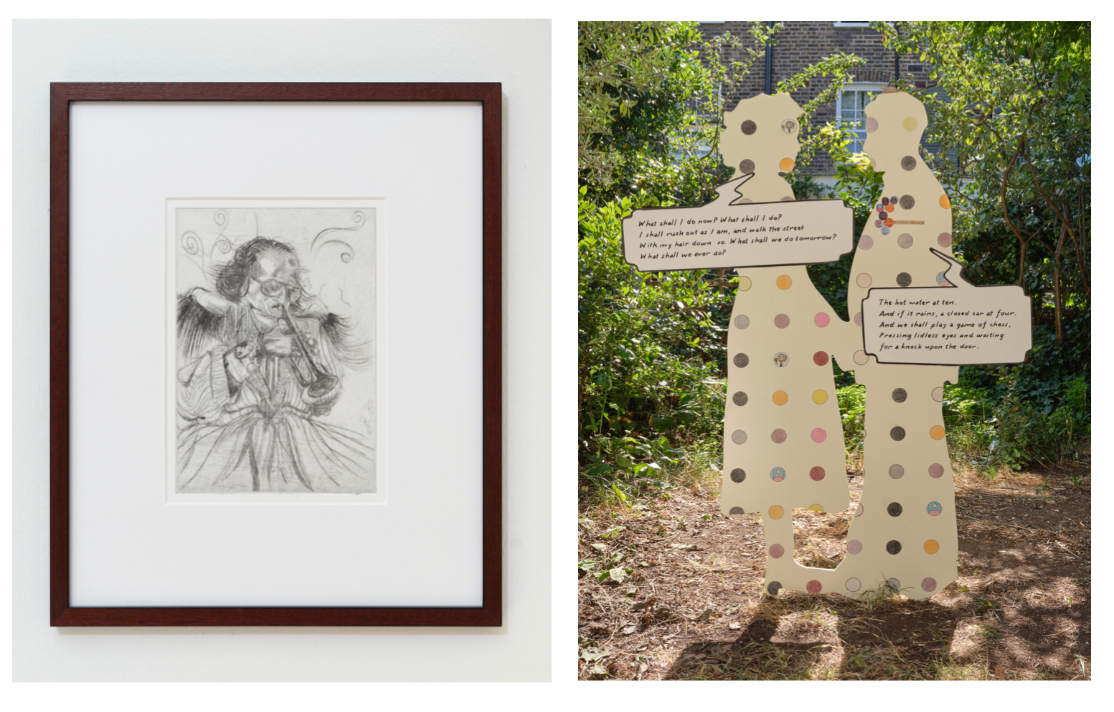
The curved, jumping caricatures are drawn on newsprint. Hill’s handling of pencil has a Lee Krasner-esque vibration: moving between scratchy, thin lines and intense, stacked shading. Building on the theme of caricature, Roberto Ronzani’s Miles Davis, 1980s (2025), like Hill’s work, incorporates fantasy with fine marksmanship. Gen Z artists, in comparison to their direct seniors (millenials) have made greater use of cartoon semiotics in their practice, drawing on a nostalgia for a time when animation graphics were a light-hearted reality visualizer, not just visual computer-generated fluff, Pepe or Wojack. I wouldn’t go so far as to use the moniker of “post-internet”. These works emerge from a place of self-containment, an analogue love of the medium of mark-making.
The contrast of works like Miles Davis and Momo Tibes “Once Upon a Time in Babelsberg” (2025), which frames a screenshot of a YouTube clip from Mockingjay (2015), part of the Hunger Games Trilogy, highlights the diversity of form in Thirteen Images. Now the art world is post-history, genre and form collapse. Screenshots emit the same palpable relatability and society-mocking rabalaisian humour as a pencil illustration. Really was post-internet, though!
``
Some items generated the feeling of a 1980s World of Interiors slightly spooky childhood playroom (non-derogatory). In I.W. Payne’s cut-out silhouettes, a male and female stand facing one another; their bodies integrated with speech bubbles upon a single MDF panel. The panel itself is covered with a large, multi-coloured polka dot pattern (not in a preteen, pedophilic Lucila Safdie style, but rather a mumsy, West London kitchen, Kath-Kidson-esque style). This theme continues in Anna Plowden’s Miladena Mirror (2025) in which a set of doll-sized blue organza underwear is pinned, Lepidopterologist-style, within a floating acrylic shelf. Miladena Mirror is reminiscent of Rosemarie Trockel’s three-dimensional collages, or perhaps the meticulously made-to-order Mary Janes that Hans Bellmer constructed for La Poupée, 1932-1945. I wondered if Robin Miro’s Hanger was a compliment to this piece - both works are akin in their rendering of sartorial objects in miniature. Baby Reni (a moniker for a designer, artist and apartment gallery) presented two pieces. Girlypop (2025) depicts a child’s white dress on a padded clothes hanger alongside a faux-naïve drawing on an apple shopping bag. Babi Reni’s Foundation saw a mannequin hand jut out from the wall, covered in foundation from a bottle cradled in its palm. The latter two works solidified the developing theme in Thirteen Images: Child’s Play or the ludic spirit.
Charlie Osborne’s work 2 Cariads Dw i wedi Syrthio mewn cariad efo ti (2024) could have been more centralised in the hang. A digital print of a blurred image is stretched on canvas, with much in common to the sample images you find in Snappy Snaps frame displays. A man and a woman, one with a 2012-Greenpeace-style headband, smile at the camera and lean into one another. Its title, in Welsh, translates to “Two darlings, I have fallen in love with you” and completed the romantic, blog-esque ideation I, as viewer, had projected onto the piece.
Osborne’s work with blurred imagery is part post-human, part mid-2010s nostalgia. It surmises how it feels to love while also forgetting oneself amid the battle against face-recognition technology and the harvesting of memory. It also looks like a Tumblr rebloggable image circa 2013, the soft distillation of form reminiscent of the focus adjustment on a YouTuber bloggers digital camera: “Hi! it’s X, and I’m here to talk about heartbreak and data harvesting”. I want to know what it was about this time that matters now - a time when the mask of liberalism was slipping, but still in place, the image carries a nïavety that online cultural production, today, does not.
Hollywood Superstar wonders if this “salon” style should continue in perpetuity - a space where one can sample taste and refract it back to a crowd “IRL” rather than “online”. I’d like to liken this show to the Paris salon of 1767, at the Louvre, which Denis Diderot criticized and praised for its great contribution to (to use an anachronistic term for his time) aesthetic discourse. In writing for Correspondance Littéraire Diderot marked the early development of art criticism, from image to word (ekphrasis) and then from word back into image. Instagram stories are the modern day iteration of eighteenth-century ekphratic writing. Thirteen encouraged Cheek-to-Cheek interactions with artwork only previously seen on an Instagram grid - forcing opinions out of the digital circle-jerk and into the remit of house-party conversing.
“Even if all the works of Europe's painters and sculptors could be brought together, our Salon would not be equalled. Paris is the only city in the world where such a spectacle can be enjoyed every two years.”
I’d like to think that London, and Thirteen Images has the potential for catalysing a series of beginning of equally reactive, or summarising, survey exhibitions. More aesthetic discourse, please, the critique of great work eventually aids the development of new formalisms.
Blog
/ 24 August 2025 / By: Rebecca Isabel Consolandi
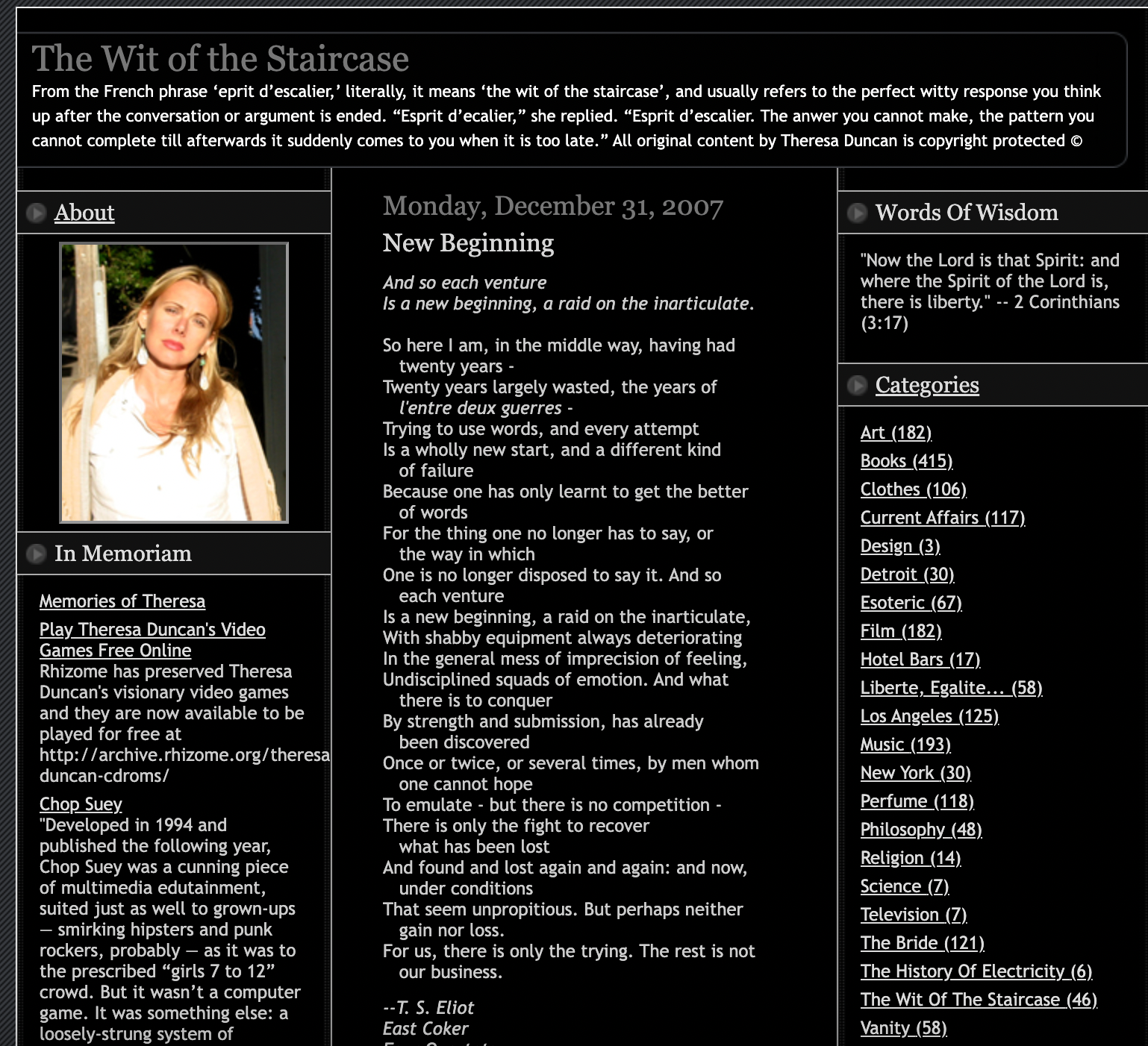
The Wit of the Staircase is the name of Theresa Duncan’s blog on TypePad.com.
From the French phrase ‘esprit d’escalier’, it refers to the perfect witty response you think up after the conversation or argument is ended. The answer you cannot make, the pattern you cannot complete till afterwards, suddenly comes to you when it is too late.
And I am now replying too late, 18 years to be fair... perfectly aligned with l’esprit d’escalier: The Last note on The Wit of the Staircase is from Monday, 31 December 2007. A cheer to a “New Beginning”:
So here I am, in the middle way, having had twenty years -
Twenty years largely wasted, the years of l'entre deux guerres -
Trying to use words, and every attempt
Is a wholly new start, and a different kind of failure
Because one has only learnt to get the better
of words
For the thing one no longer has to say, or
the way in which
One is no longer disposed to say it. And so
each venture
Is a new beginning, a raid on the inarticulate, With shabby equipment always deteriorating In the general mess of imprecision of feeling, ## ## Undisciplined squads of emotion. And what
there is to conquer
By strength and submission, has already
been discovered
Once or twice, or several times, by men whom
one cannot hope
To emulate - but there is no competition - There is only the fight to recover
what has been lost
And found and lost again and again: and now,
under conditions
That seem unpropitious. But perhaps neither
gain nor loss.
For us, there is only the trying. The rest is not
our business.
--T. S. Eliot East Coker Four Quartets
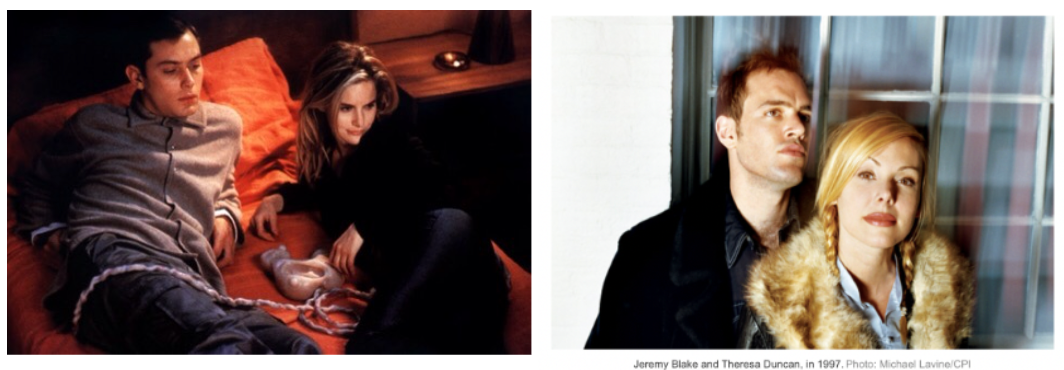
Have you ever seen the movie eXistenZ? Directed by David Cronenberg in 1999, it features as main character the iconic Jennifer Jason Leight under the pseudonym of Allegra Geller. Picture a complex, beautiful blonde woman, whose job is game design and who entertains a relationship with an equally beautiful man played by Jude Law.
Now keep this plot in mind, but to “Allegra” substitute “Theresa”, to “Ted” substitute “Jeremy” and to fiction substitute reality.This blog post, Would I Ever Kiss a Scientologist?, tells the story of a real-life game designer and her resultant suicide.
Cronenberg’s movie ends with two killings, "Death to transCendenZ!!!"; our dispatch starts with two suicides, The Golden Suicides.
With no exclamation marks at all.
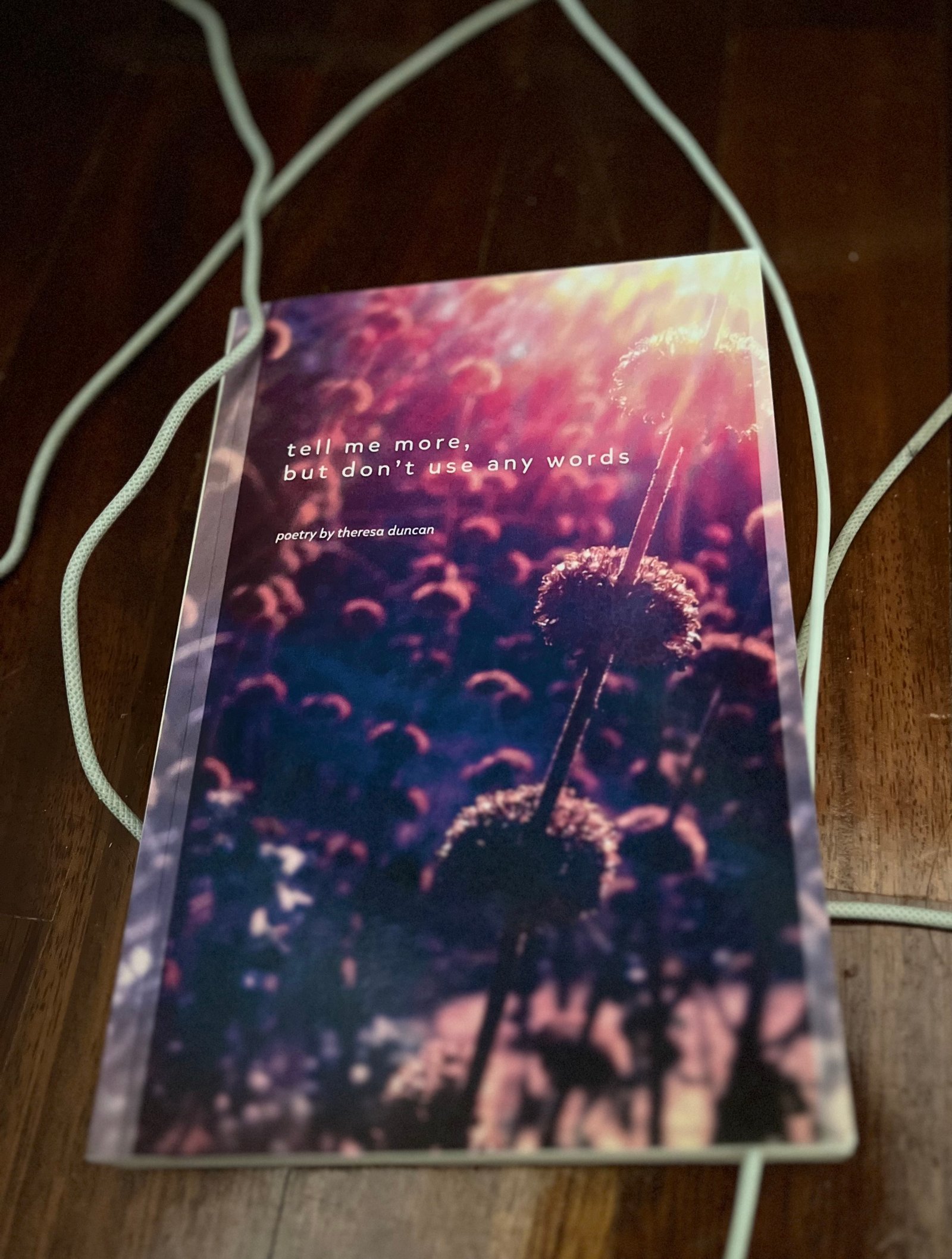
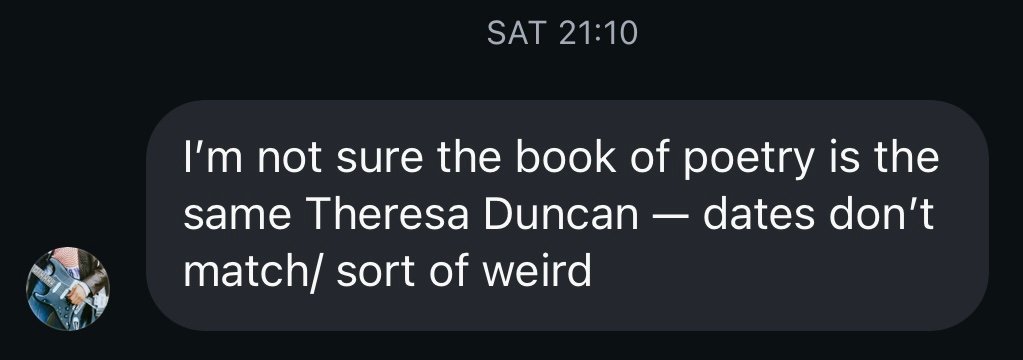
Today is Sunday, 27 July 2025. It’s 00:30 and I am sitting on my couch, laughing at myself with Theresa Duncan, just not the right one. I bought this book via Amazon sure about the fact that it was a hidden gem of hers, and I also mentioned it to Taylor (Hi Taylor), who also bought it and two days later sent me this message:
Re-browsing the book I noticed what my blind trust didn’t make me notice before: poems are from 2010. Theresa Duncan took her own life on Sunday, 10 June, 2007.
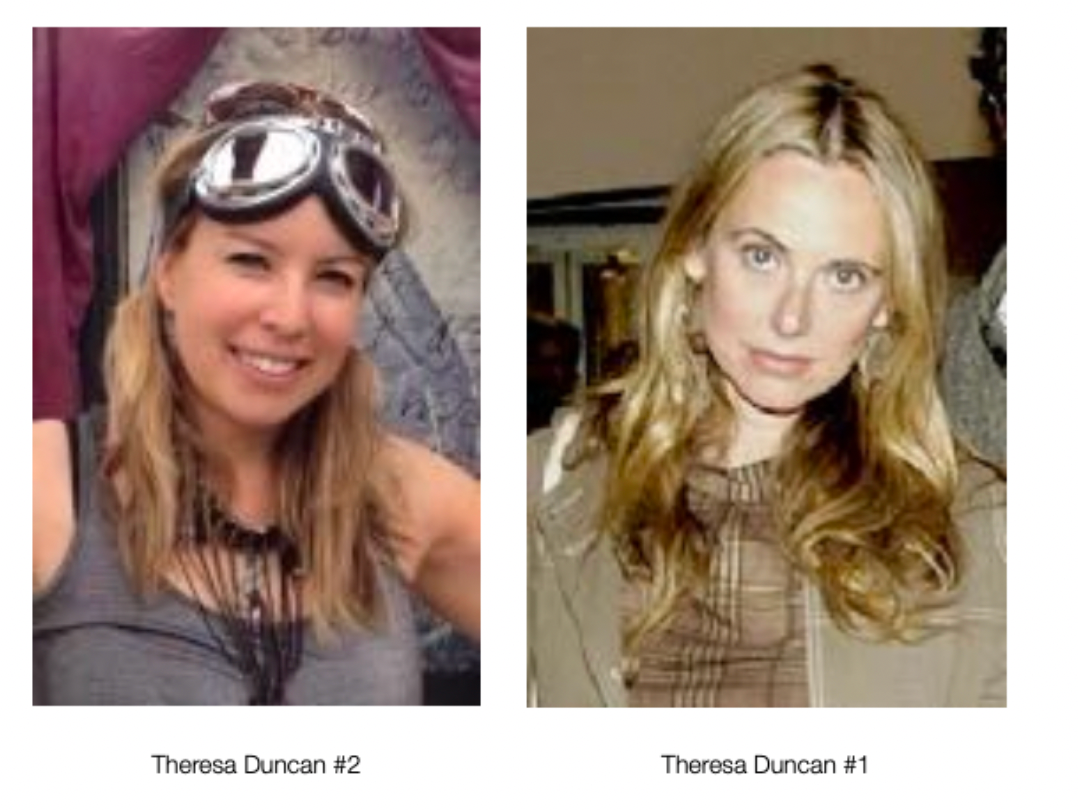
Turns out this other woman, who answers to the name of T.D., also corresponds to her facial features, having meshed blonde hair and light blue eyes. What a hodgepodge.
This is the starting point of my dispatch, a book I purchased and read, thinking it was from the Theresa Duncan on the right. I am one of the latest truly romantic human beings, and this is a love story. My very favourite field.
Year 2007, 10th Street and 2nd Avenue, Manhattan’s East Village, New York City.
A pretty, young-ish pioneer of blogging and video game auteur responding to the name of Theresa Duncan, age 40, overdosed in her infamously bohemian apartment.
For the sake of the Walgreens enthusiast: on the nightstand there was a bowl full of Benadryl pills, a bottle of Tylenol PM and a glass of champagne. For the sake of lovebirds: there was also a note saying “I love all of you”.
During the night, about a week later, witnesses on Rockaway Beach saw a man take off his clothes and wander into the Pacific Ocean: the light of the following day revealed his wallet, a note and his identity: Jeremy Blake, 35, video artist and Duncan’s boyfriend for over a decade.
They were one of those show-stopping couples of New York, both ridiculously gifted and good looking. She had an intimidating blond head of hair and a pantagruelic mind; he was an art star featuring the Whitney among his lengthy list of credits. Most importantly, they both had love. The most prized possession.
Their passion for their internal world was matched only by the paranoia of their outlook. The two would describe plots by the government, people tailing them and breaking into their home. Friends, who tried to dissuade the couple from their fantasies - that seemed to be ripped from a Tom Clancy novel - were met with anger and exclusion.
After their “Golden Suicides” people latched a lot around the possible causes of this tragedy. Sources mentioned a shared codependent paranoia regarding Scientology, and one of their leading men, the singer-songwriter Beck: easier to swallow than other absurd theories, I chose this to be my favourite and most relevant one. Reason why is I asked out a friend to the closest Scientology church.
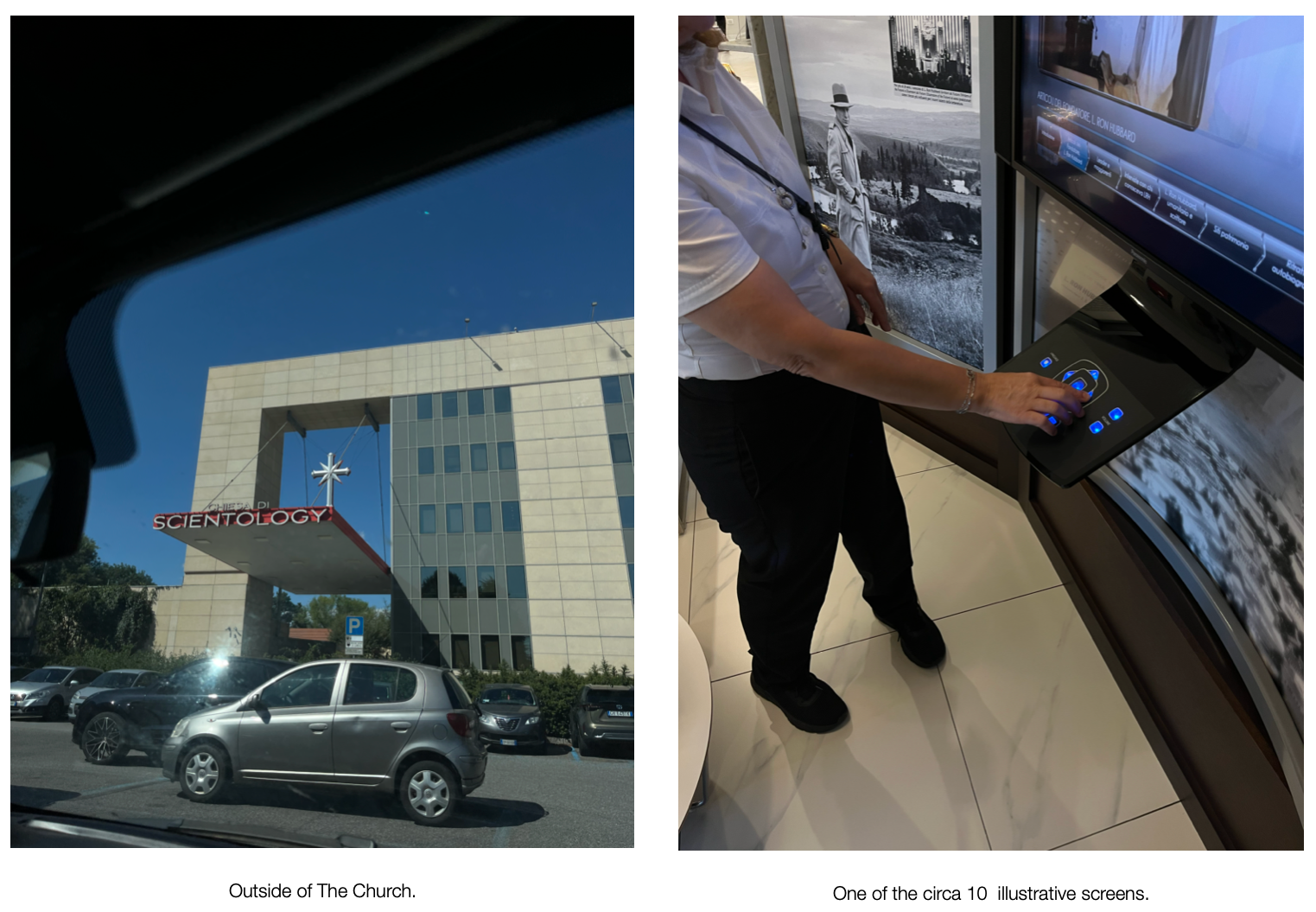
I double-blink when I see the eight-pointed cross taking the entire construction hostage on the left. Immediately below, in vermilion red sans-serif font, reigns the word ‘Scientology’. This new building, the biggest in Italy, was inaugurated in 2015, 31th October, Halloween day… dare I say trick or treat?
As soon as we approach the gate going thru it shamelessly it begins to close behind the back of the car. Safe to say we back up at light speed. In the nearby parking lot, without any gate to worry about, we park and hop off. Ten meters and we are in: ten seconds and we get approached by a woman in a white shirt asking the point of our visit with a bedazzling smile on her face. With equally bedazzling smiles we reply, ‘we are in to be into’. Follow the white rabbit.
A sliding door opens onto a tunnel whose red shade is thicker and more stomach-churning than the one chosen for the façade sign. To get to the monster's stomach, you have to go through its mouth first.
All I can remember is being swallowed by a red vortex. Sofas, carpets, chairs, candles, flowers and vases: I am now in some war field where the blood left from a mass murder has soiled the walkable and breathable space. According to the official data begging for attention from the screens all over, more than 6.5 million people have joined the movement. I see why there isn't a single spot uncovered.
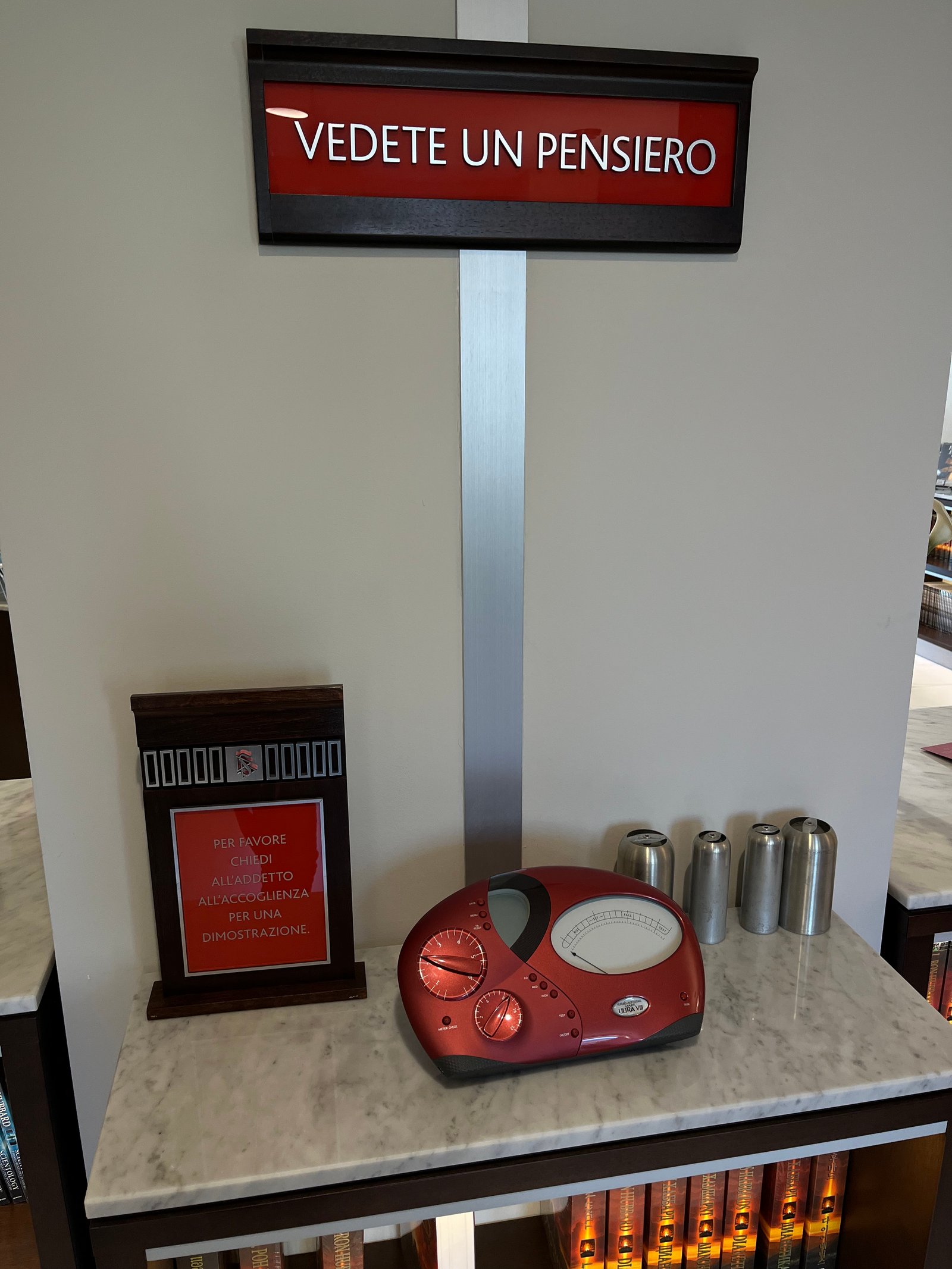
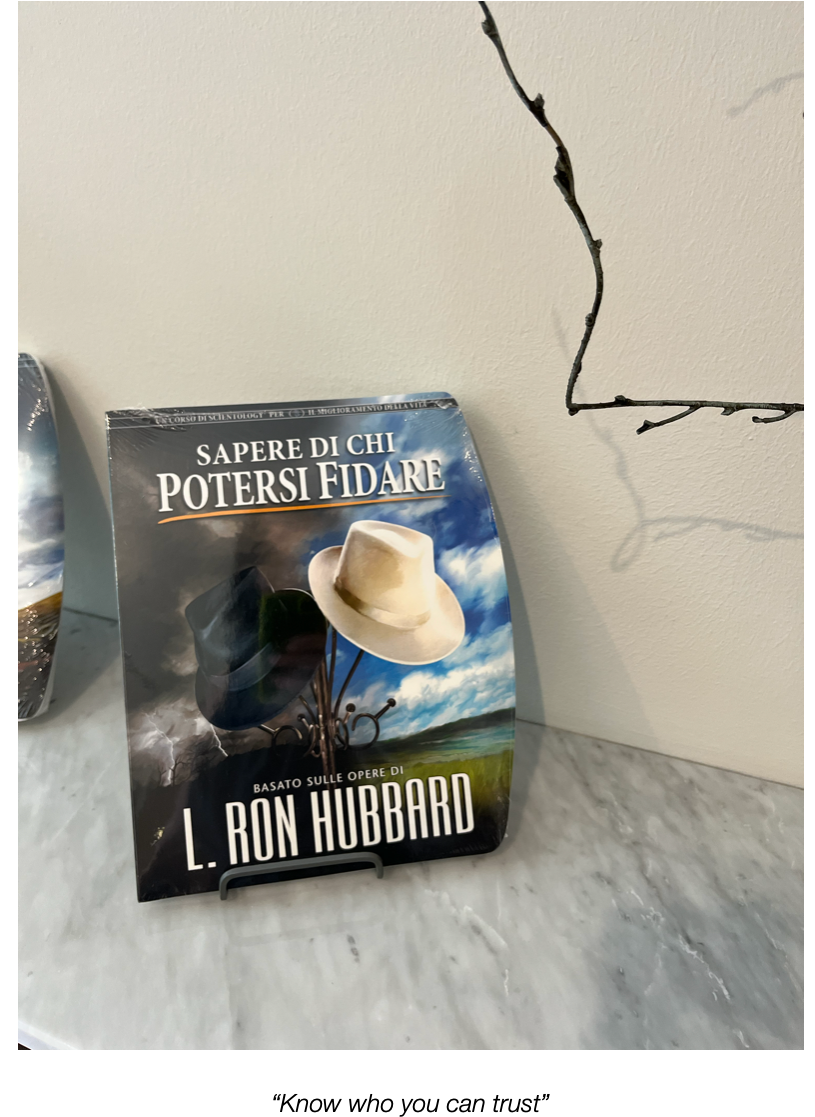
While the guide explains to us how the infinite screens and controllers displayed in a serpentine shape all around the space work, as if we had never faced some basic commands, my hungry eyes roam around. Water and fire patterns overflow from the fonts on book covers and from the cheap AI paintings on the walls: mouth-watering waterfalls, endless fields of lavender and corn, groups of smiles as big as whole faces, proud to have said no; no to drugs, no to shapes other than triangles, yes to L. Ron Hubbard!
Above a rail of burning books, a dark bordeaux stain splattered on a marbled table: “See a thought.” I immediately point at it, asking for an explanation. When the elephant is in the room, either you ride it or it stomps on you; not today that I got a new haircut.
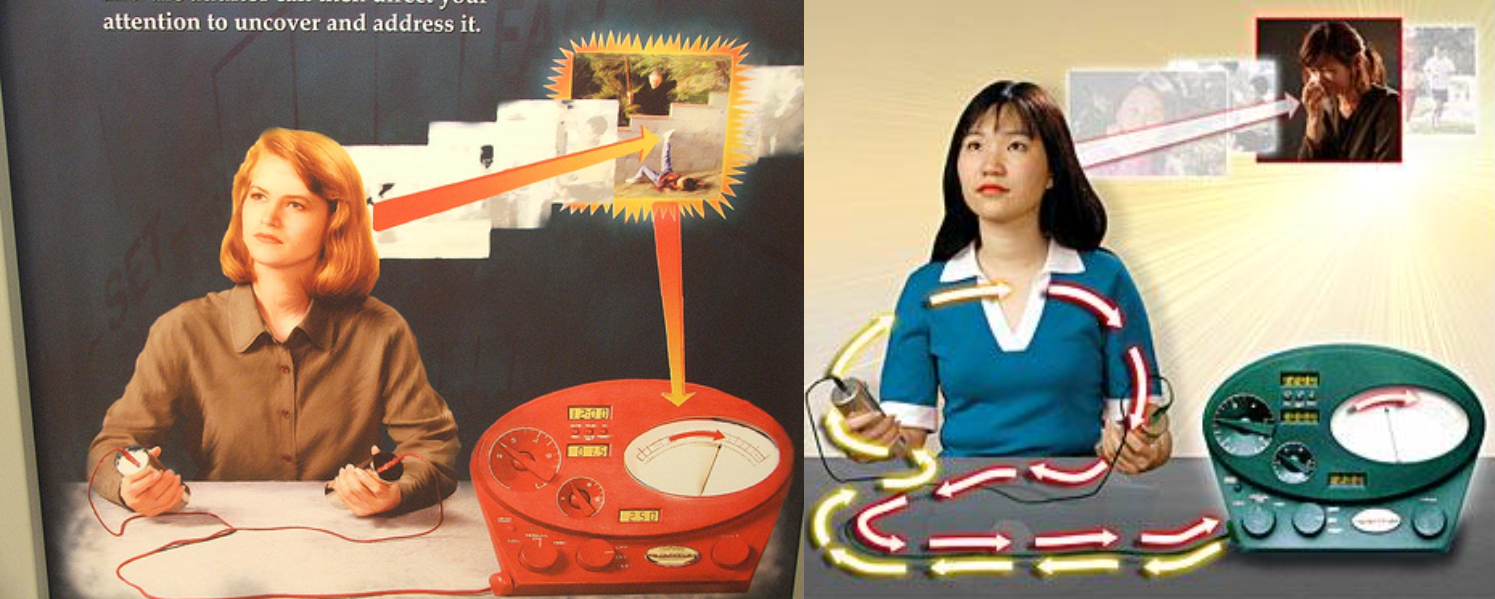
My guide makes me hold two aluminium cans and asks me about a person and a situation. Vaguely. This “ultra technology” should capture my aura frequencies and register my body response to that thought. I later, via google, find out the specific object is called 3 E Meter and it is an intellectual historical property of the Institution.
The needle oscillates and she can’t wait for me to see it. I don’t.
The needle of my energy also oscillates and I ask for a coffee. Out from the monster’s mouth, across the courtyard, behind a white door, downstairs, in the gut of the system: the canteen. Hidden from the daylight, a disturbingly and desolating vast room with a cashier rechargeable through the insertion of a coin; 2 bucks for a diet coke, a smarter version of the coffee I asked for: quick, take away, uncontaminated. And of course, red.
Lots of lost faces around, looking at me looking at them looking at my red lipstick. I sense they might be hypnotised from this very specific shade and that's why they all keep coming back to this place. If this Scientology site was a perfume that would be Hypnotic Poison by Dior: red, bordeaux, timeless and poisonous. As a woman in red lipstick. Would I ever kiss a Scientologist?
I’m not gonna write what I’ve seen during the very last moments of permanence under the surface of the visible, into the very core of the place, where the stomachs are fed and the minds starved. My guide made sure I wasn’t taking pictures and escorted me upstairs, back from the dead, alive again. I’d say I haven’t been digested, more like bulimicly puked out.
In this certain way, I must say a Scientologist saved my life. And my wallet.
I wish Theresa could write the same, on her blog, like it was all a game of hers in which she has been trapped for too long. Paraphrasing Cronenberg’s Allegra: "Death to transCendenZ!!!".
Alive again, at the enthusiastic speed of an exclamation mark.
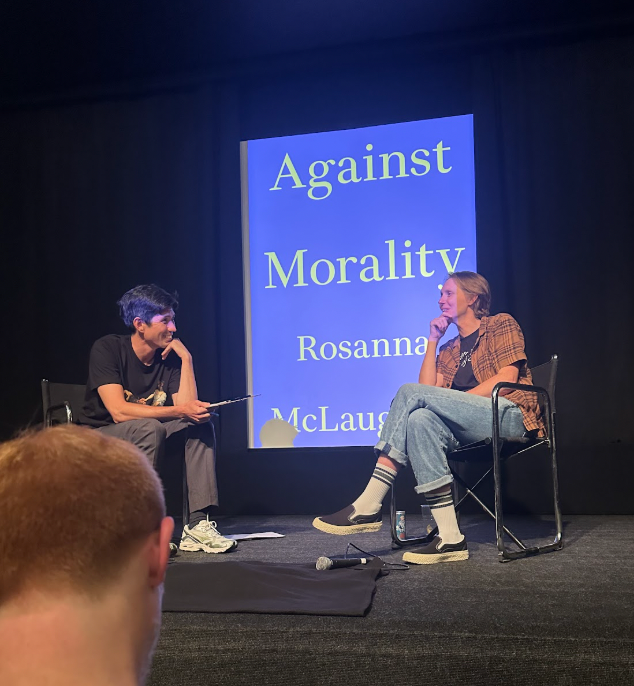
Our very own correspondent goes to see Dean Kissick speak to Rosanna McLaughlin on the eve of her book launch, the surreptitiously named “Against Morality”.
Rosanna McLaughlin, a two-time published author known for her heavy flow of surgical takes dissecting poignant topics within art criticism, is back with another banger. McLaughlin, rocking Vans and flannel, channels a combo skaterboi Lydia Tár and young Paglia.
Her latest work Against Morality takes on the art world’s current mandate to platform only artists whose work centres the tenets of DEI: “I am of X identity, and that experience is like Y, about which I have made this art.” McLaughlin is saying this is the basic axiom that everyone from the Barbican to David Zwirner wants to see in their programmes, which results in press releases comparing George Rouy to Francis Bacon.
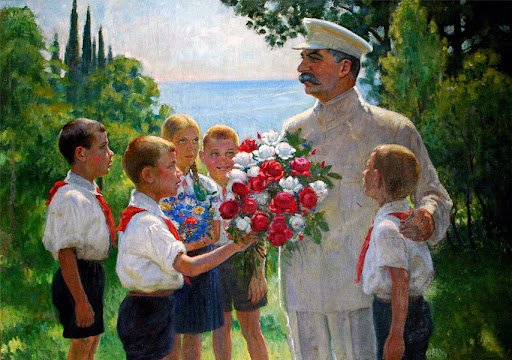
McLaughlin calls this tenet “liberal realism”. It weaponises the conceptual inseam of Soviet Realism, where a set of moral virtues, hard work and self-sacrifice, prescribed the aesthetic model for a country’s propaganda. McLaughlin complains that Western art institutions have entered their own era of authoritarianism, which, to her, is just when you are, like, very particular about something. Much like the title of her book, Against Morality, the use of such blatantly sensationalist language to describe a still very niche phenomenon within a small societal margin feels a bit like a broke, left-field musician’s last-ditch attempt at writing a breakout pop song. It is pop-punk and hard to watch.
Interviewing her about this is, of course, cultural marksman, Spike magazine’s golden era’s golden boy and human Grok, Dean Kissick. Amid McLaughlin’s very subdued and very British attempts at transmuting her agginess at the art establishment, Kissick’s job is to ask the smart, complex and nuanced questions about her work.
“Are you a liberal?” Kissick begins.
“Dean has spent too much time in America, it seems,” McLaughlin snaps back quickly, to merry laughs from the audience. “Are you?”
“Yes, of course I am a liberal,” Kissick replies honestly, hoping his contrarianism is a knife. Instead, the audience erupts in genuine cheer.
And now we are locked into this slurry of ever-swelling internet slop. Kissick reads from a review of Against Morality published in Frieze that is mostly about his cannonball, “woke-destroyer” of an essay, “The Painted Protest”.
He unloads his personal beef and brotherly love with Jerry Saltz, all of it over DMs. He quotes the messages.
McLaughlin remains politely transfixed in her place.
“I have this beef in the DMs with Jerry Saltz,” says Kissick.
“You know, Adam Curtis really wants to talk to me,” says Kissick.
McLaughlin tries to make a decent pastoral point about how anti-racism, anti-ableism, anti-etc. are great principles to apply in interpersonal relationships, but, when expected of art production, prevent us from letting difficult ideas exist within the moral greyscale. She does try to make that point, but with her populist book title behind her, glistening in giant yellow letters like a chicken shop menu, and Kissick trying to start a wildfire with his mouth, no one takes that seriously.
Time for the Q&A:
1. A complaint about how, apparently, DEI art is anti-Beauty (in the Platonic sense). Example cited? The Renaissance. A question that could have been asked only by a twink and my Russian mother.
2. An actually good question about why, according to McLaughlin, art institutions have sought to prioritise IDPol-based art (mine). Largely unanswered. A joke is made about how egg pots at Pret had a Pride flag stuck on top of them this past June.
3. At this point, something actually fun happens. A man, from here on known as the Unabomber, pipes up. He accuses McLaughlin and Kissick of opportunism and says that they both secretly know the only art worthy of mention is formalist, so should they pack up their discourse business, or maybe, even better, kill themselves.
I am by no means paraphrasing.
We pour out into the rest of the ICA, where the discourse, said on stage to be “over-legislating art production”, continues.
As the Unabomber (a friend of Kissick’s) towers over me, emanating high-powered yap and the general vibe of an over-tuned cello, I clock an immutable truth. While the art industry may move in swings and roundabouts to accommodate the flow of capital, the actual artists and art groupies (critics) will be forever guided by the instinct to repel the latest set of expectations. To evade understanding in favour of getting drunk on the feeling of otherness they experienced in their suburbs. Of New England, or of London.
Is it like this? No, it is actually more like that. Like that? Well, actually, now that you said it is like that, it has become like this. And, just like that, I am once again intentionally stuck co-loitering with the hurt children of the contrarian bohème.
I snap back into reality from these life realisations and yell at the Unabomber, “Maybe Proust wasn’t the ultimate formalist, but just the ultimate worst editor?”.