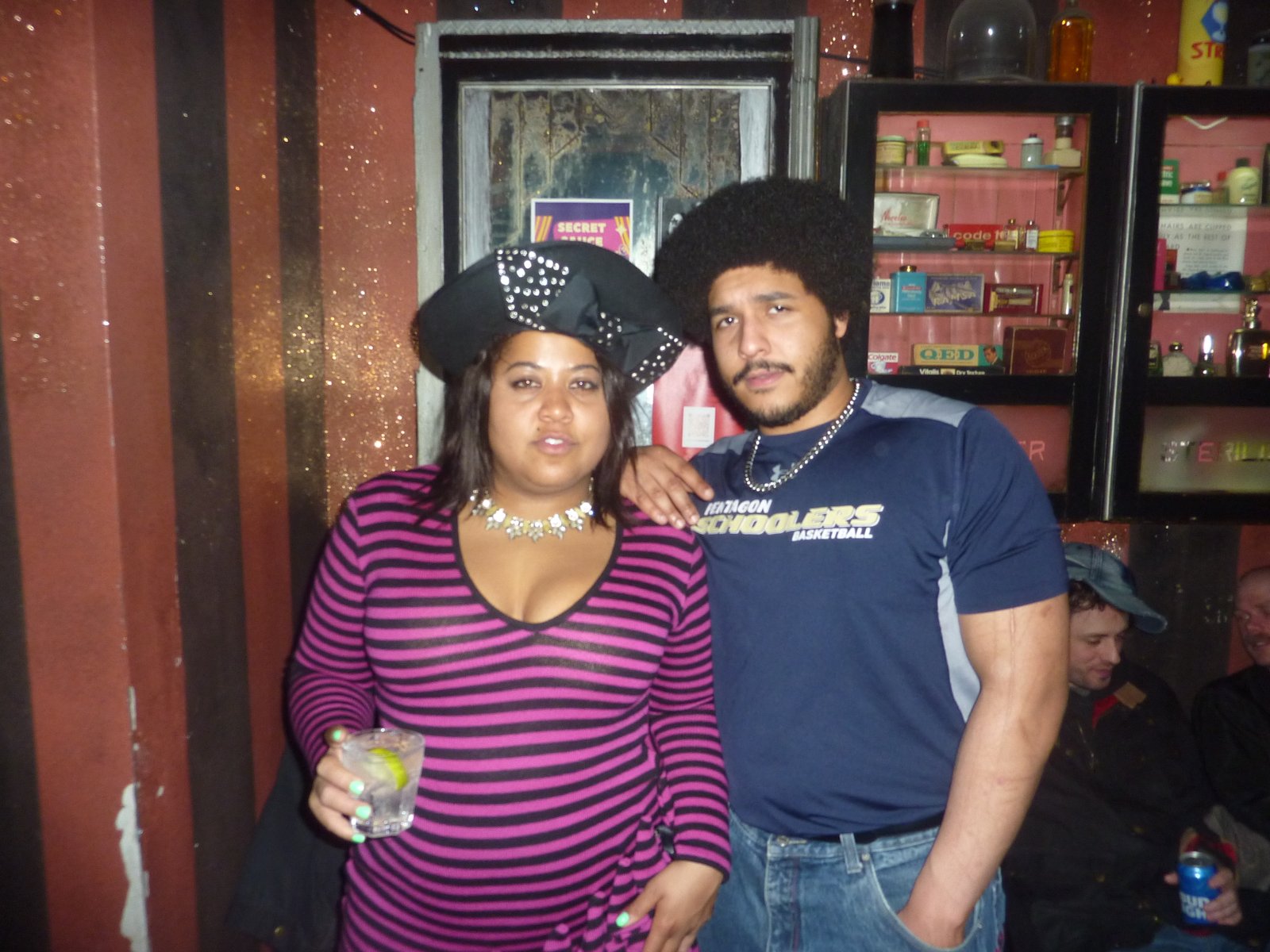
The Jaded cosmopolitan multiculturalists long for the orientalised pseudo-monoculture of ‘the north’, and what they come up with is “Club Nite” at Village Underground. This is not so much a review of Clubnite as a club night; Olivia Twist turns her attention to the club decorations, courteously provided by the so-eminently-crap-it-almost-goes-without-saying artist Corbin Shaw. What was the deal with this ironic nationalist boy’s club of a club night? - HSR
It's not often that people actually talk about the decoration of clubs anymore, since unfortunately we as a culture have succumbed to the plain black quasi-warehouse: boring bland and industrial. The idea that an artist would collaborate with a club night to decorate their walls is therefore an appealing idea. However, the delivery makes me wonder whether its worth even hoping for good things to happen. To think! at the time, the world cup was still a month away.
A note on the aural/oral before we get into aesthetics. The sets were good and fun: Mysrry (DJasianbarbie) made her debut set. A big highlight was Taylor Richardson’s featuring a mix of esoteric computer guided remixes with cassö, RAYE, D-Block Europe - Prada (STAR SEED & PIERCE Remix) and an EsdeeKid-4 Raws Budot edit, Rihanna Hit List (Bassline Remix) and I have Nothing, Big G. Drunk in Love Diplo Remi; Lancer Victorious Honey Buns; Murder Club Nirvana & Cardi B Remix, a set list rooted in the online, or as he likes say: “I just play music”. Big up Paritos’s set and organisational verve.
This was promptly followed by BoyPillow (1 of the three founders of premier e-girl and -boy clubbing event, Maxxxing) who downed a bottle of Henny while playing his signature High BPM High bass tracklist. The eminent if-you-know you know Bailey Holmes Music’s USB was corrupted, so the same track kept running back, over and over again, until he MC’ed over Jenny Spark’s dope two-hour set. The act of inviting memes like OGMeathead (who didn't even turn up) and mixing them with other artists smacks of this weird exotica-approach that people from London have about Bradford MC type music. It’s annoying.
I have been to insanely good MC type nights. I have seen Marky B kick the soundguy in the face after only one song. But these kinds of things do not happen in hipster-adjacent spaces.
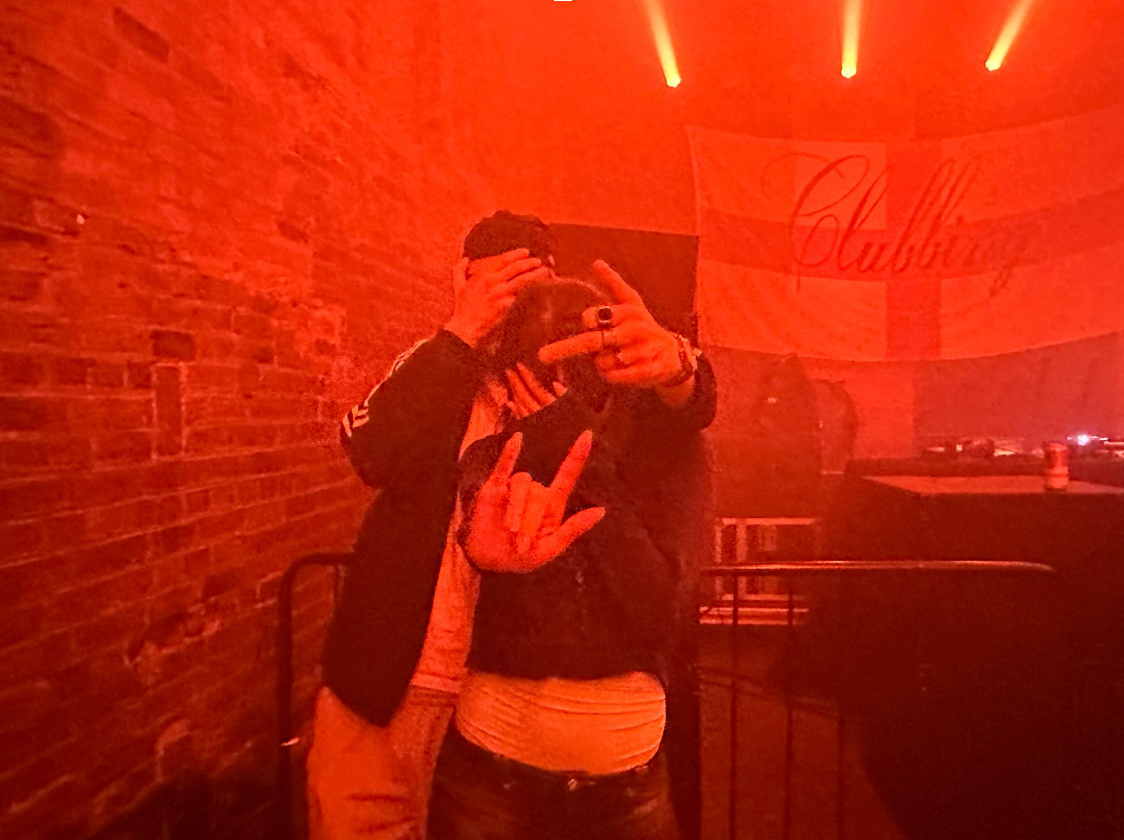
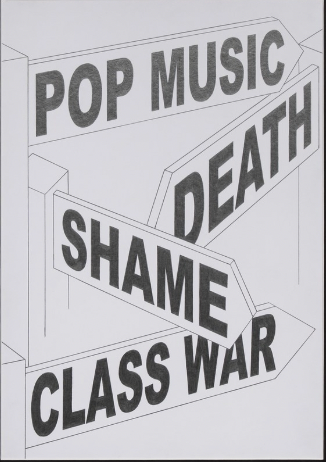
So yeah, the Corbin Shaw Flags. The club was filled with them. One huge one behind the decks that said “Clubbing” then a bunch of others dotted throughout Village Underground emblazoned with phrases like “tart”, “Filler”, “2014” and “Klarna”. It was unclear if the DJs got briefed that they’d be playing beneath twenty St. George’s flags during a historic upswing of the Xenophobia-fuelled Reform party that is threatening to ‘deport’ or exile hundreds of thousands of our loved ones.
Corbin’s flags remind me of those nihilistic affirmation instagram accounts littered with phrases like “my country is so psychologically stable” or words like “lit” overlaying AI gen rainforests and squashed pics of Ed Sheeran. AI’s evolution from the visuals of DALLE-1 to realistic deep fakes relegated these affirmation pics to the internet graveyard. But these flags summon them back, reading similarly to Corbin’s recent AI-influenced campaign poster for SXSW festival that reads “REEL LIFE” over an image of Stone Henge filtered through the “impressionism” prompt on Adobe Express. They give nostalgia for recent years swiping at instagram affirmation images on an iphone 5c fused with some kind of affirmative pseudo critique painted on a crusader knights shield.
“Nobody knows what it means, but its provocative.” – Blades of Glory
What is more provocative is perhaps the feeling of being on drugs in a club with sexy people, in a sexy environment. Instead we were mired within empty, basic irony because of the flags, which people kept looking at, feeling weirded out by.
Exemplary of the power of instagram to give soft power to the most shallow and unresearched work, it sanitises the violence, suffering and anxiety endemic to contemporary British life. Shaw smoothes down anger into the barest of worded signifiers. Using the same dumbed-down visual language of his object of critique speaks to Corbin Shaw's poverty of imagination, that starves the brain like a nitrous oxide balloon, except in a bad way. In his world, we are fed only the rehashed codes of an easy liberal target: ‘nationalism’. Whatever that means for England, satellite state of Palantir.
It doesn’t help that Village Underground has the shape and feel of a WW2 bunker.
Not to labour the point too much, but it felt ketty-fascistic.
I love tarts and I love clubbing. Clubbing tarts should have far more power in this country. As concepts they shouldn’t be sloganised and put on a crap piece of bonehead art.
Superstar leaves you with two messages: Justice for my tartiness! AND, let’s respect clubbing! Leave St George out of it.
If you haven't already got with our flipping program, there is a 16 year-old spectre haunting the most tasteful musical events in London and abroad- it's Nico.
He took a trip to Paris to review an Atomiser show (oui!) but its our reporter's hilarious review of the mire of FakeMink that really set hearts alight across the globe.
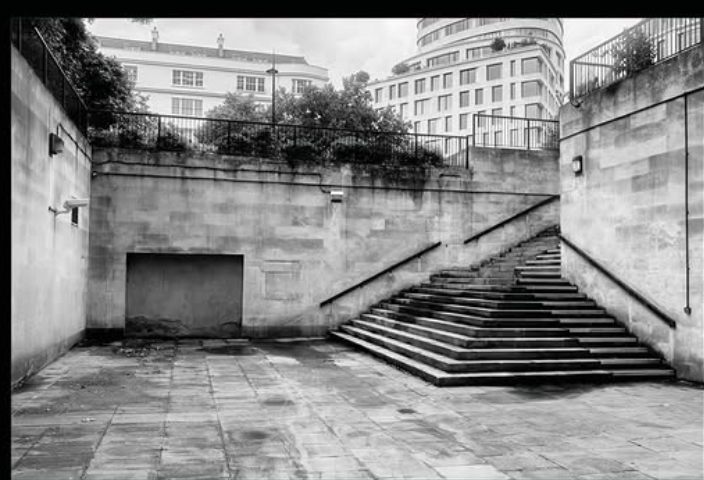
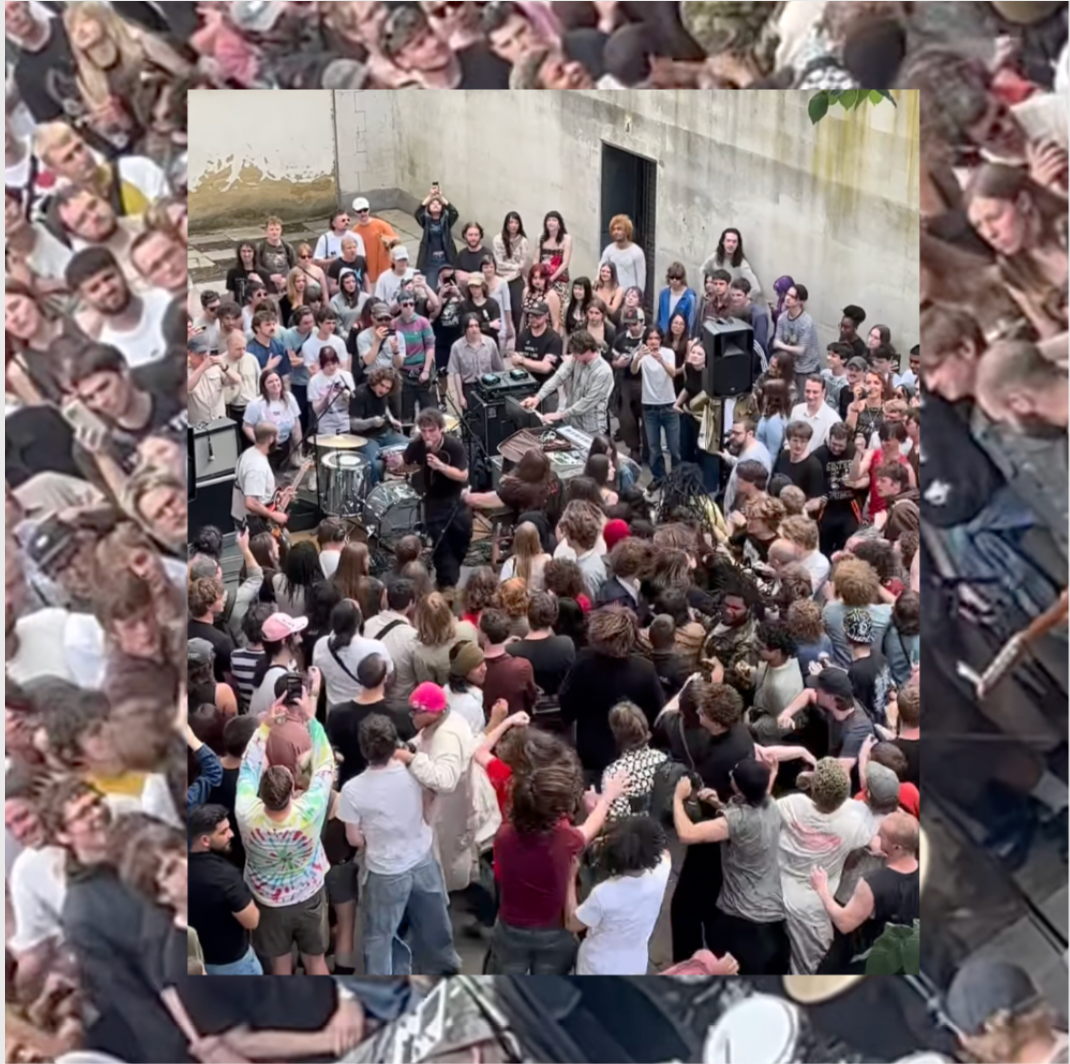
The courtyard below the Marble Arch fountains has been fenced off since the year I was born, so it’s a nice alignment of the stars that Hollywood Superstar suggested I report on its Westminster council-approved return into the civic for one afternoon. London is still waking up as the orderly queue of longhairs in band tees descends into the disused exit to the train station; a stage has been set up in the centre of the pit, but everyone stops in front of it despite the staff’s innocuous requests to fill the whole space.
Two metres away from me, Lolina rises onto the stage wearing sunglasses, a thrashed leather jacket, zebra-print trousers and white air forces; it looks like she put on whatever she found littered around Marble Arch. Her mega hit single Gg (remixed by New York) starts playing and she’s already asking cold and daring questions on the concrete dancefloor. She’s expressionless while delivering the hook, “Who’d you throw under the bus? Who might you run over?” Her set is amorphous, covering a range of UK Bass sounds (also briefly recalling Chicago’s footwork) tainted with her trademark Londonese Hypnagogia that is as nauseating as it is ecstatic. If not a smoke filled basement, this dingy pit feels like her home ground.
YHWH Nailgun fist bump each other as they take their positions, only to dillydally with leads and microphones for five minutes. A screeching feedback needs fixing and the singer is teasing us with adlibs. The frontman begins to twitch and wave his mic around like a wand, casting the band to run through their fresh 11-minute album Magazine.
I’m immediately flinching at the drums which are appreciably louder than on the mix of the album. The pitched down rototoms give the drumming a primal feel (he’s also not wearing shoes) that reminds me of binging videos of early Death Grips shows- I saw at least two drumsticks snap throughout the set. The vocalist is certainly matching this ferocity, manically quaking with every unintelligible croon and roar.
It would be nice to see the other two members resemble the outrage of their instruments a bit more; the guitar and synth parts are indistinguishable, combining to resemble sharp sirens and hums of machinery, also merging with the industrial sounds of central London. In The Art of Noises, futurist Russolo hypothesised the modern ear would come to crave the sounds of the metropolis in music; indeed, the quieter moments in which this fusion is apparent feel surreal!!
I think these four New Yorkers should be an urgent reminder, for some of today’s rock bands, that you can still make compelling music when guided by pure intention rather than image (not naming names.)
Fifteen minutes is not yet sufficient to appease an audience and so the band play some old songs, setting off a mosh that carries a few crowd-surfers. The most eager call for an encore I’ve ever heard ignites the one-minute throwback of Hawk Violence which ends at five on the dot, precisely as promised by NTS.
A free show is an irresistible way to lure Londoners back into the exponentially unapproachable circus that is the city’s centre.
When we covered the show at the cause last year, a week after LV Sandals came out, we predicted the invasion of the UK underground into the mainstream. A year on, we have seen the mixed results of this success, epitomised in the success and unsuccess of Essdeekid post-Capitol records deal, and here with this alternately banging and uncertain, slightly pretentious release from Fakemink. We can hope for a British invasion, but we have to fear the possibility that Britain becomes a site of cultural extraction in service of the empty American imperial core.
Thank god we have Teo to guide us. Find here, the return of our high school music reporter. Here he dishes his opinions, as the superstar does: with panaché and natural online research-habitus.
Terrified is fakemink’s synthesis of the terror beneath the pride with which he lives his self-prophesied life. The Essex boy faked it till he made it; the fantasies of Hollywood and fragrances he seduced my generation with are real now.
Between the opening instrumental and spoken-word finale, he revisits his older sound – hazy beats, ranty verses and hypnotically jarring hooks – but with a confidence that was absent from the angst-punctuated songs he blew-up with. Retard Angel drowns a Tirzah sample under, like, a million layers of effects and bass; the haunted trap beat on Wrong Relief feels terrifying after the danceable fyp anthem Night, Blooming Jasmine (not-so-politely taking its name from Lynch’s grave); and 51 Ttashpel Pony Ave proudly recalls the jerk-beats the rapper used to release in industrial quantities. But underlying the aesthetic sensibility and chaos that mark the prodigal rapper so distinctly is an eerie feeling of fame-induced apathy. His unrelenting flex of having “lived out the chateau” testifies the extent to which he has been consumed by the LA lifestyle.
The occasional confessions, “Miss Marmont driving me crazy” and “fuck Sunset, really miss Mayfair” remind us of how distant the London Saviour has become. Essdeekid got an eye-watering deal when he entered the LA Capital Records deathstar and his music payed the price. He was immediately paired to prop up the acts of yesteryear aka. the floundering Yeat, dropping a god-awful track from a Rap Caviar type producer. Almost instantly, the vitality of his image became like the hair care gummies plugged by an ex-love island reality tv star. It’s a cautionary tale that Mink has yet avoided, but still creates a bad taste in the mouth by association. Indeed, there is a jarring contrast between the phone scrolling in a dark room night-time feel of Mink’s music and the much-publicised awkwardness of his bright sun-lit performances on the post-millennial mainstream festival circuit. How long does it take to get back from Rolling Loud to London Fields?
With Terrified, fakemink tries to evolve beyond the single, which he has mastered over the last 2 years, and arrives at a broader scale of storytelling - one which fakemink places Victoria Davidoff at the centre of. The 9-fingered Soundcloud princess clutching a pole and hiding behind the curtains of Chateau Marmont in the cover is a muse in fakemink’s tragedy. Her demented dance and grin at the end of the Like A Virgin music video reminds me of the Virgin in Jean-Luc Godard’s Hail Mary, who achieves liberation and transgression in the final scene by putting on lipstick. Victoria is a figure of fantasy in his Mulholland Drive-esque dream, and like Dante’s Beatrice, a remote crush deeply written into his lament.
It’s no surprise the self-proclaimed genius has directly named Lynch and Dante’s Inferno as inspirations. Comparisons are certainly not warranted, but they signify fakemink’s ambition which, much like the album, treads thin ice between visionary talent and self-indulged redundancy. It feels like fakemink has a tendency to be infatuated with things he can’t quite grasp, whether it be art, fame, Victoria Davidoff or himself. This perplexity is glaring on the sadistically titled Retard Angel, perhaps the most discordant moment on the album narrating a love story turned rotten as mink cries foul play.
Despite his claim that the tracklist simulates Dante’s Divine Comedy, beginning in hell (lustful subject matter etc.) and resolving in enlightenment (naively signified by the erasure of low frequencies and drums), the conflict at the core of terrified is not so easily resolved. The final song “Etna .” replaces Enzo’s bars with Victoria Davidoff’s uncanny attempt at a British accent, who warily considers:
“So here we are, a little older, a little wiser, and slightly embarrassed about the theatrics, but alive, which all things considered is not a bad outcome right?”
You wonder how self aware fakemink is of his own image, to invite both a muse and a creative director to collaborate with him so closely on an album that de facto ends up hiding its more thoughtful, introspective poetry behind her mystique. While hits scattered across the tracklist recall the swag the savant-level rapper bulldozed into the scene with, it feels like fakemink is asking himself questions he can’t answer as he takes a hubristic leap and, in the end, finds himself stuck mid-air.
"Costume Art" is on view through January 10th, 2027.
Read her review of the Met Gala here, where she outlines that...
"I will review the costume institute show at face value, they got blood money and from what I can tell they used it to buy and display the best."
N.B.
—
On the second monday in may, I trekked to the upper east side, home to the most fabulous of art hoes of yesteryear (old angry wealthy ladies with puffy lips, hair teased high, and the tiniest frames being engulfed in Miyake’s Pleats Please) to the Metropolitan Museum of Art, whose facade and grand steps just a week before had been transformed into the backdrop that makes up the internet-drenched playground that has morphed into the celebrity/corporate-ego-orgy known as the Met Gala. As it has done since 1947 (although once a humble affair), the 2026 gala (spectacle) was held to celebrate (ego-gorge) the opening of the Met Costume Institute’s May exhibition Costume Art: ‘fashion is art’.
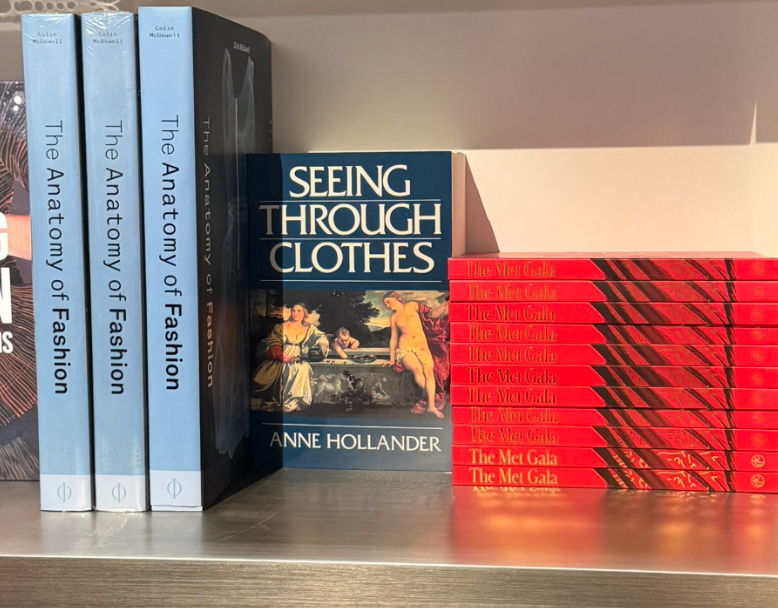
So let’s get into it… First and foremost highlighting the importance of the discussion that is Costuming Art. It has formed the crux of many artists' practices and works over the decades, myself included. First grounded officially in language with Anne Hollander’s Seeing Through Clothes aka a Fashion History 101 textbook and also my own personal bible: my copy a tattered, dog-eared-to-oblivion old thing, replete with highlights and embarrassing notes left in the margins by a girl in her early 20’s. I was pleased and surprised to see it in the giftshop, here she is in all her glory:
For the first time ever, the show pulled from the museums’ 15 other departments, juxtaposing works dating back as far as 5000 BCE, using said works to prop up (metaphorically, the overworked conservators would never!) the clothing displayed, instead of the usual other way around.
I must admit, despite the promise of a face-value review, I was still donning my hater cap, a grey felted beret with oversized deco hat pin, upon my arrival. The show was oversized with goods — a gluttenous display of pockets so deep, you had not 1 or 2 but EIGHT examples of tattooed garments. I could not shake the knowledge that the Costume Institute had blood money, which they so fittingly used in the display of a whole section of blood-related garb entitled the ‘Vital Body,’ (love…) from the second richest man in the world, Jeff Bezos along with his wife Laura Sanchez Bezos, to make the exhibition possible with a donation of ten million dollars to the institute. This amount is the Bezos-equivalent of finding change in your pocket, just saying! Anyways, I guess it is a discussion we can’t count on fashion to fix– but I think if we are trying to make a show that hoists fashion out of the realm of the superficial – the exhibition establishing itself alongside a new wing of the met — it's a pretty damning start.
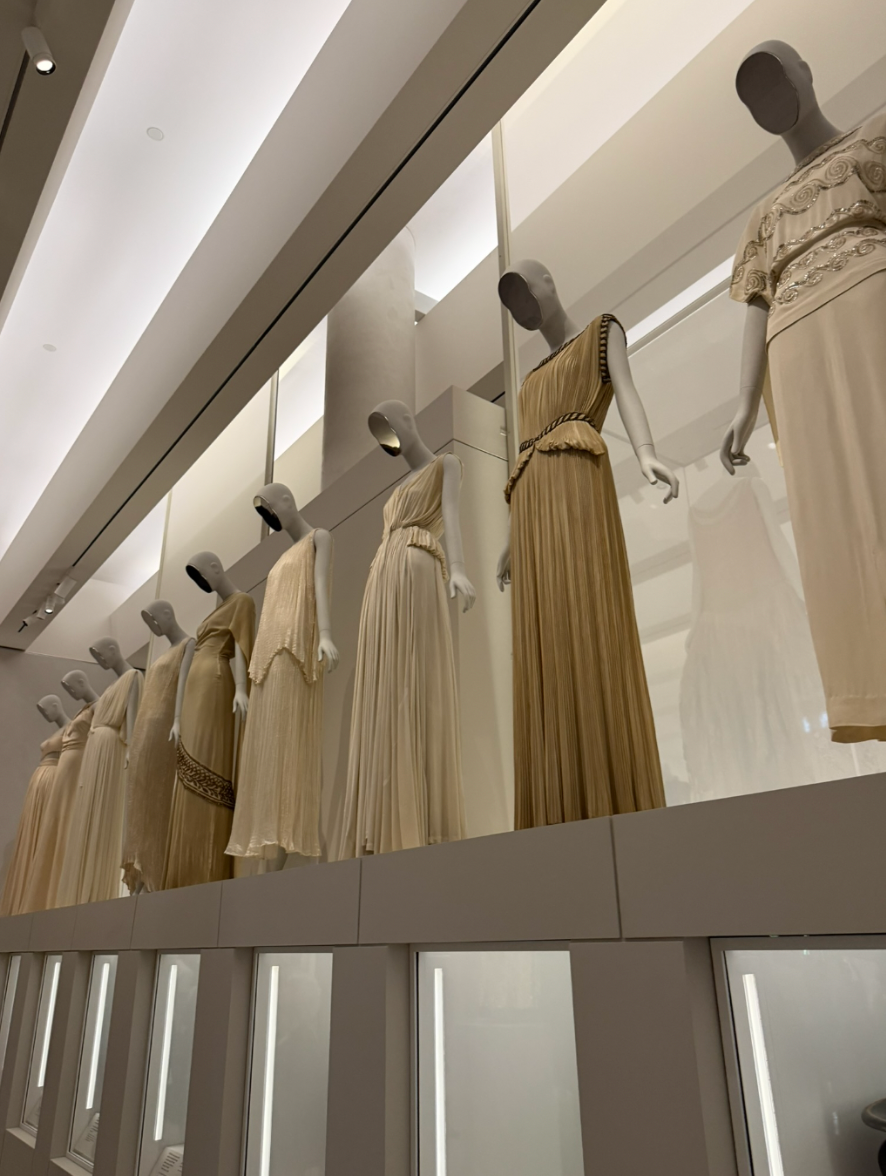
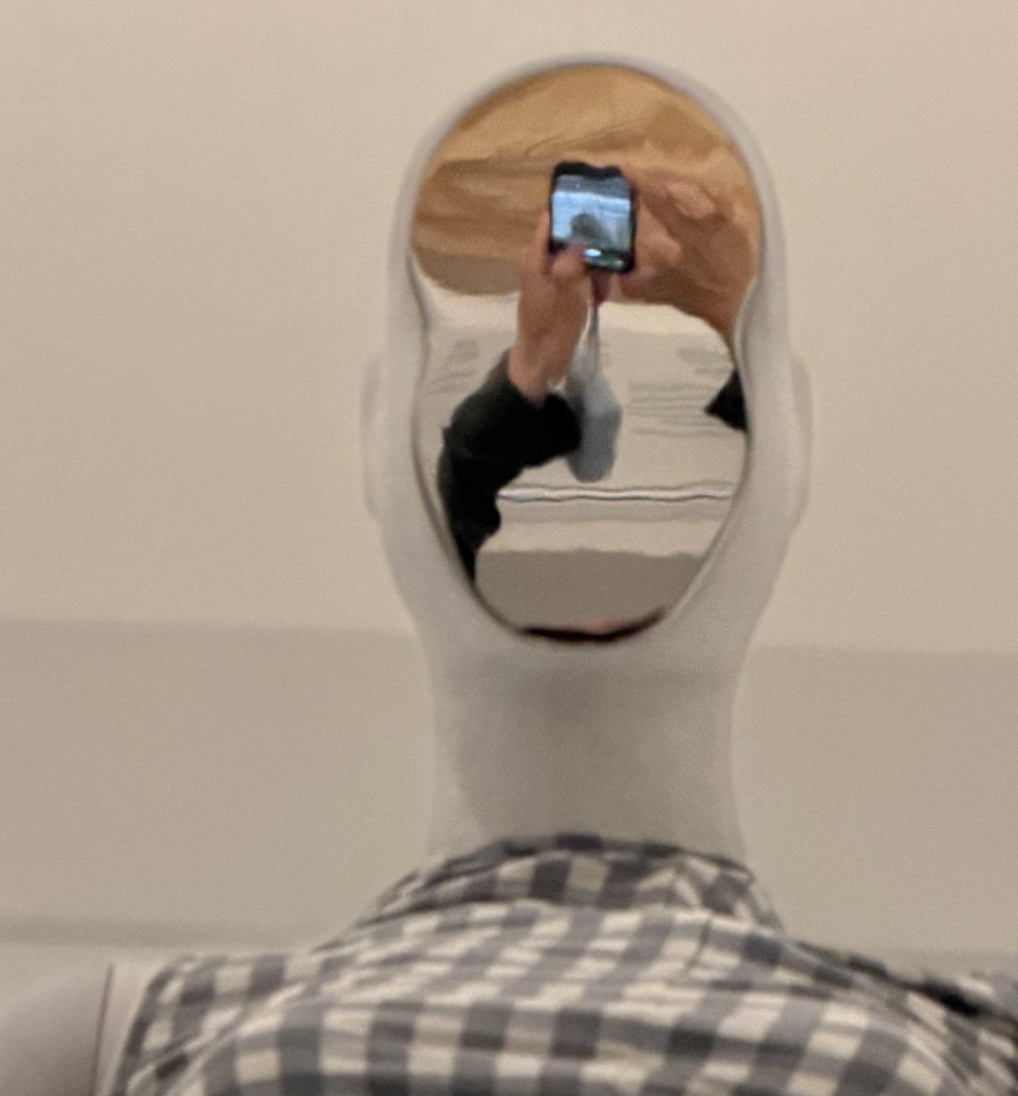
In case you have not had the privilege of diving into this nerdy ass textbook from the 70s, upon entering the main gallery, there is an automated speaker a la robotic voice overhead, announcing “PLEASE STEP AWAY FROM THE ART,” anytime a viewer got to close to something… which was every goddamn five seconds because it's so crowded in that place. So yes, Fashion is Art, and security agrees. Speaking of surveillance, the mannequins are 1984 chic; something about their presentation-height combined with the chopped off profiles replaced with mirrors, that gives you the eerie sense you are actually the one on display, and those mirrors are, in fact, two way (or two-faced?). What was the conceptual decision for these over-the-top mirror faces? A physical manifestation of the way we project our own societal ideals and ideas onto dress and the dressed body? Sure, but there are pages and pages of pretentious placard text throughout the exhibition that really hammers this idea into your skull for you. It felt gimmicky… and creepy within the framework of amazon money.
Sidenote– drinking game idea: go through the exhibit with your friends: take a shot every time you see the words: liminal, allegorical, abstraction, allegorical abstraction, transcultural, temporal, dialectic, transcend, externalize… leave obliterated. I mean, I loved the text sometimes, but it was a bit much– not to mention even my seasoned in fashion-theory-reading brain had a hard time consuming the word salads with a robot yelling in one ear while simultaneously bopping and weaving between the very thick crowd, this type of culture ingesting is not for the faint of heart (or potentially for the sober).
Vionnet, Adrian and Madame Gres-clad surveillance systems watching down on you plebs!!!!!
Ok ok I can continue to nitpick.. Or, I can show you my favorite parts. I adore and learn so much from looking at fashion through the context of art history; I was a child, and the proverbial candy in the store was archive Vionnet, Madame Gres, 19th century undergarment structures, Archival Mugler, Iranian Iron-age sculpture, a whole section dedicated to the Grecian Stance, 15th century italian temperas, 18th century anatomical drawings, Albrecht Durer, old school Yves Saint Laurant, Miyake, a TON of Undercover, Victorian Mourning mementos, Mcqueen, 4th century BCE Etruscan Armor, and a lot of each. The pockets were DEEP and the show was massive. Please regard some of my own personal highlights- details that made full use of the limitless possibilities Andrew Bolton had to work with; So, I cordially present…. moments that had me forgetting that I was a hater:
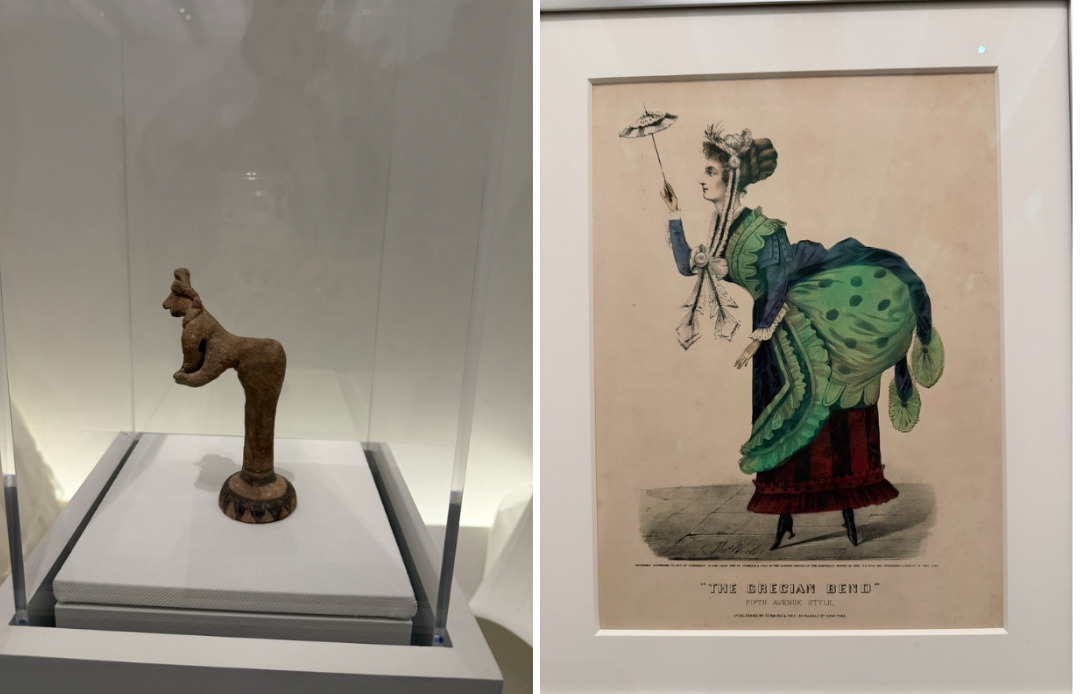
Female figurine kneading dough(?)
Cypriot
ca. 600–480 BCE
The section on the Grecian Bend, a by-product of the freaky late 19th century. The lithograph is fabulously juxtaposed with a grecian sculpture from ~500 BCE. There is an entire section on the grecian bend and bodily apparatuses that helped women achieve the booty-as-shelf aesthetic synonymous with this fashion period, hotness is fashion is circular!
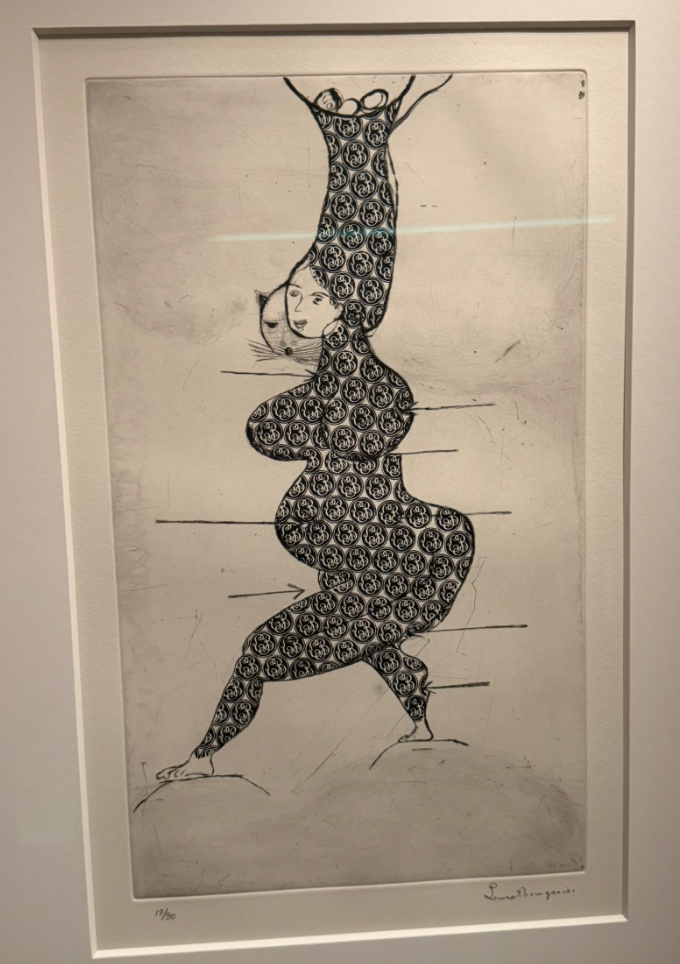
This Louise Bourgois Drawing paired with a Marine Serre body suit, I don’t think Louise would have liked Marine Serre Body suits very much… but I do think they were starting to scratch at something here.
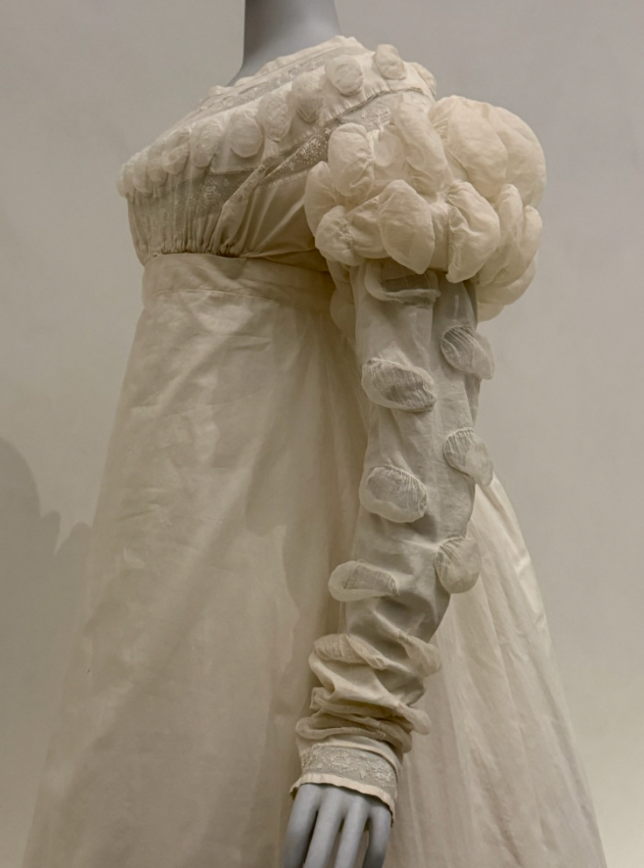
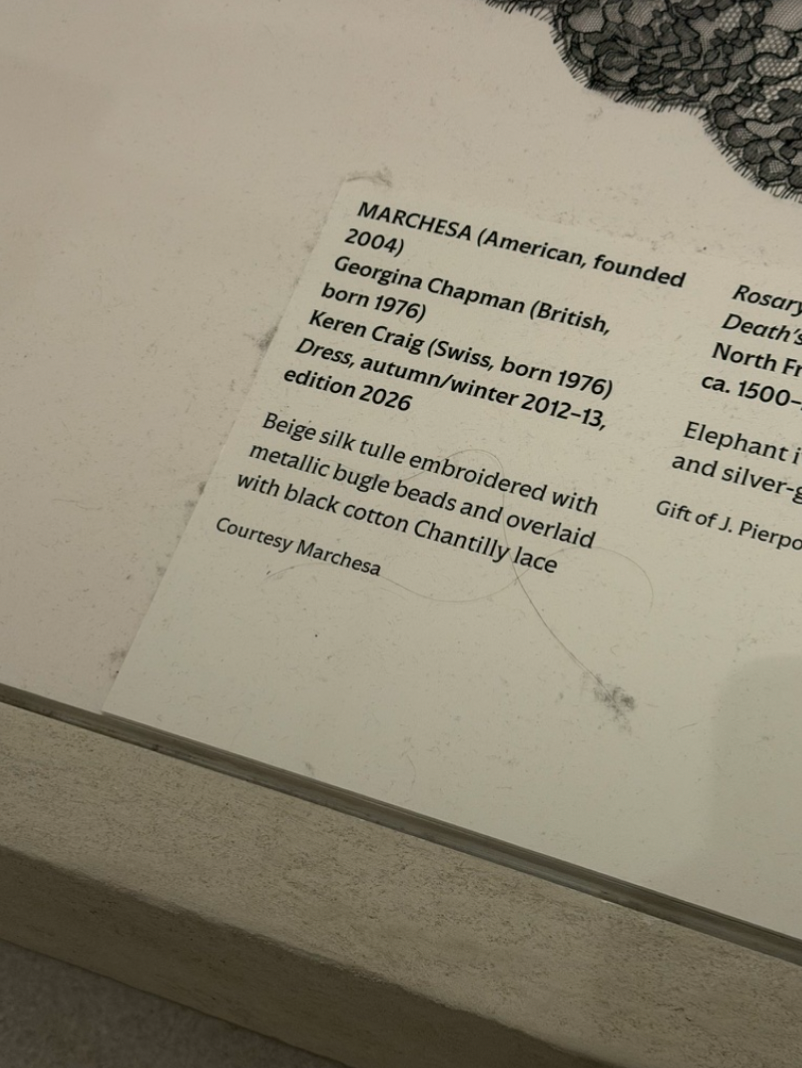
This ultra special boil-chic cotton muslin number from the early 19th century, god bless you all for letting this 1981 acquisition see the light of day!!!
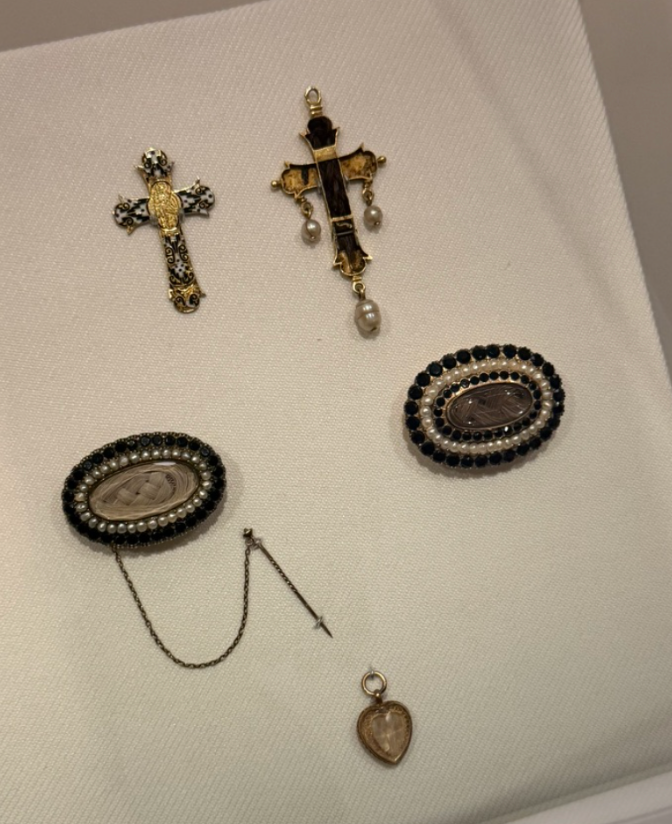
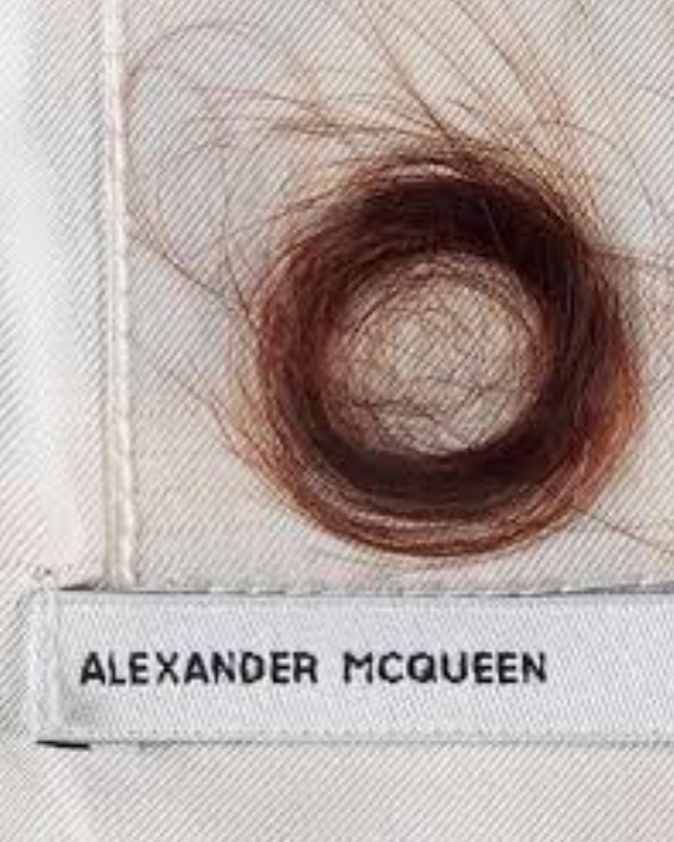
Victorian hair mementos; Victorians were true freaks (Valerie Steele writes extensively on their horny weird freak-ness if you are interested), and one of many death-obsessed rituals that came out of this weird time/place are hair mementos. Missed opportunity to incorporate the Mcqueen line from the 90s where Lee incorporated locks of his own hair into the garments, BUT I love any opportunity to see these high drama mementos in real life.
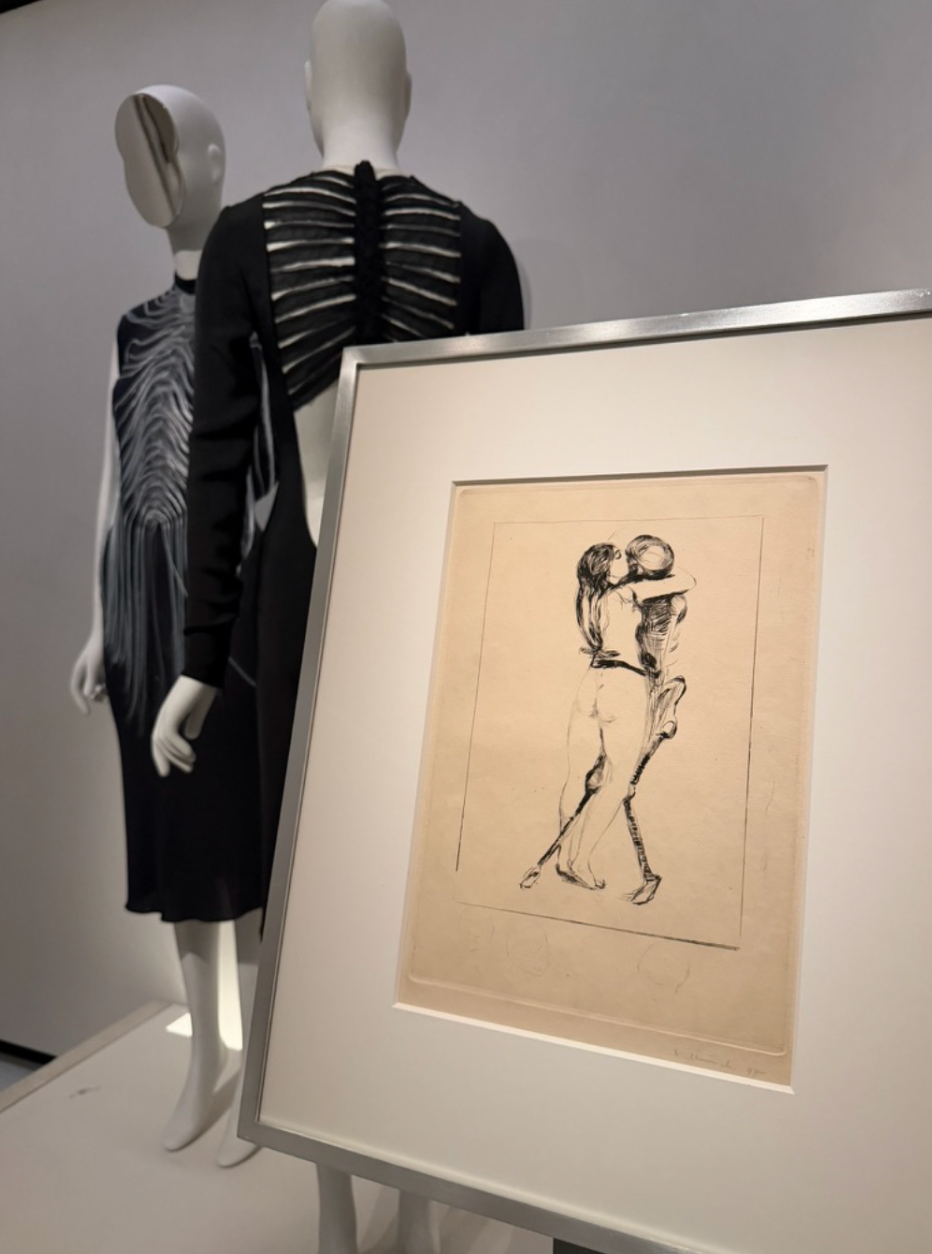
Pairing Munch with fashion… I think Evard would have LOVED the Dress and Psychoanalysis show at the Museum at Fit last year, but I think knowing his work was propping up the fashion lords in the skull section at the Met Fashion exhibit would have the expressionist absolutely furious!!! Which I find charming.
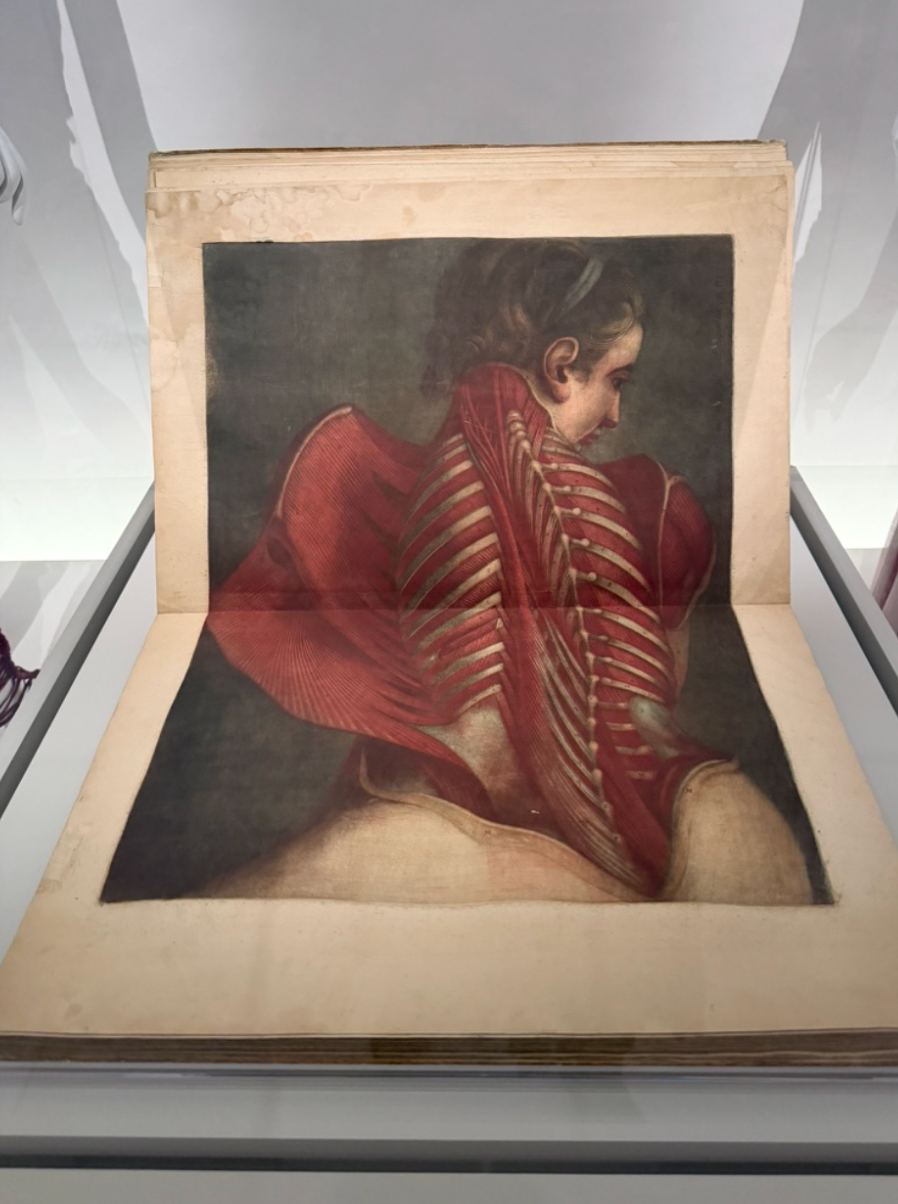
Jacques Fabien Gautier Dagoty (French, 1716-1785)
Plate, from Joseph Guichard Duverney's Myologie Complette en Couleur et
Grandeur Naturelle, 1746
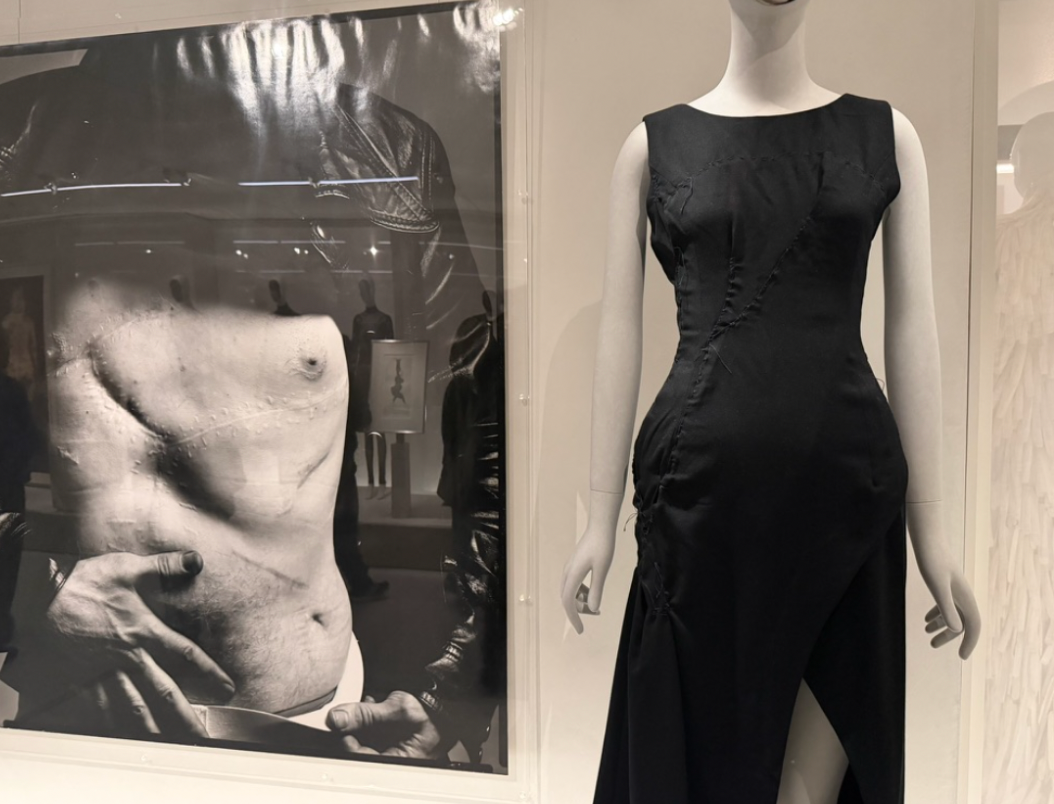
Andy Warhol's torso shot by Irving Penn juxtaposed with a dress by NY contemporary Susan Ciancolo. The scars from surgical sutures mimicking the hand-basted work done by the seasoned artist/designer was highbrow new york.
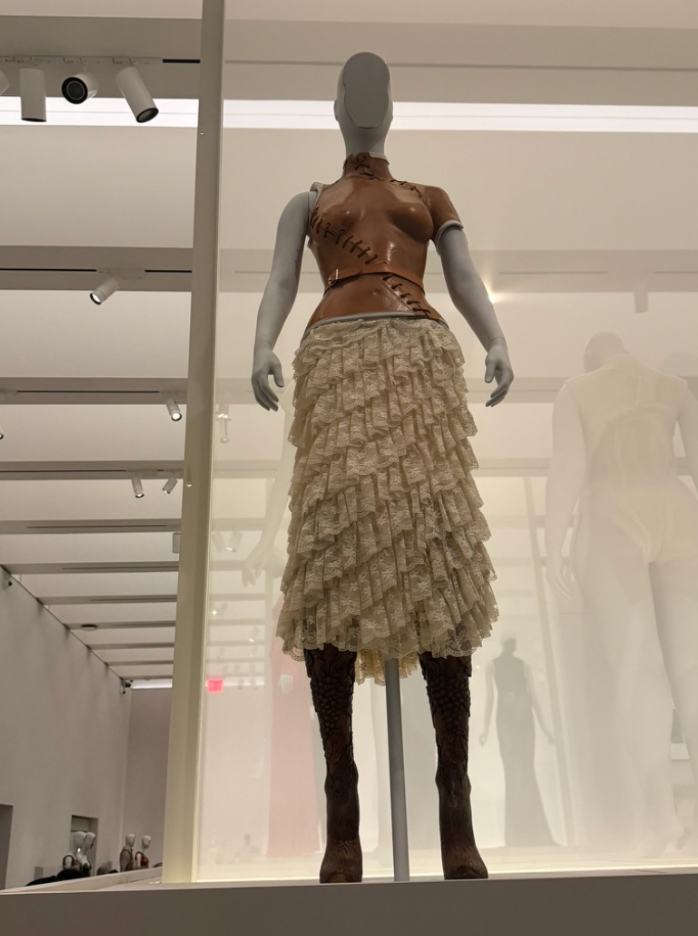
Wooden carved prosthetic limbs by Alexander Mcqueen
There were lots of beauties not making it into this image carousel- custom Michaela Stark, a plethora of contemporary designers, mannequins displaying underrepresented bodies in fashion, a section on the corpulent body educating one on fat theory- all great things saturating the internet if it's sparking your interest.
The Chopping Block
Ok time to put my hater hat (black cloche adorned with rooster feathers) back on, for just a couple things that I need to get off my Kamali-Clad chest.
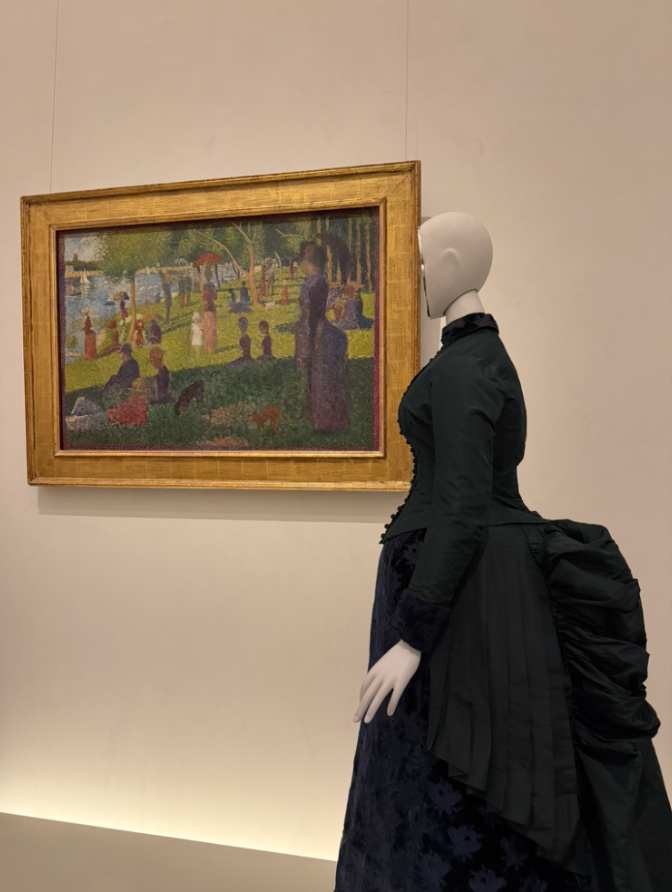
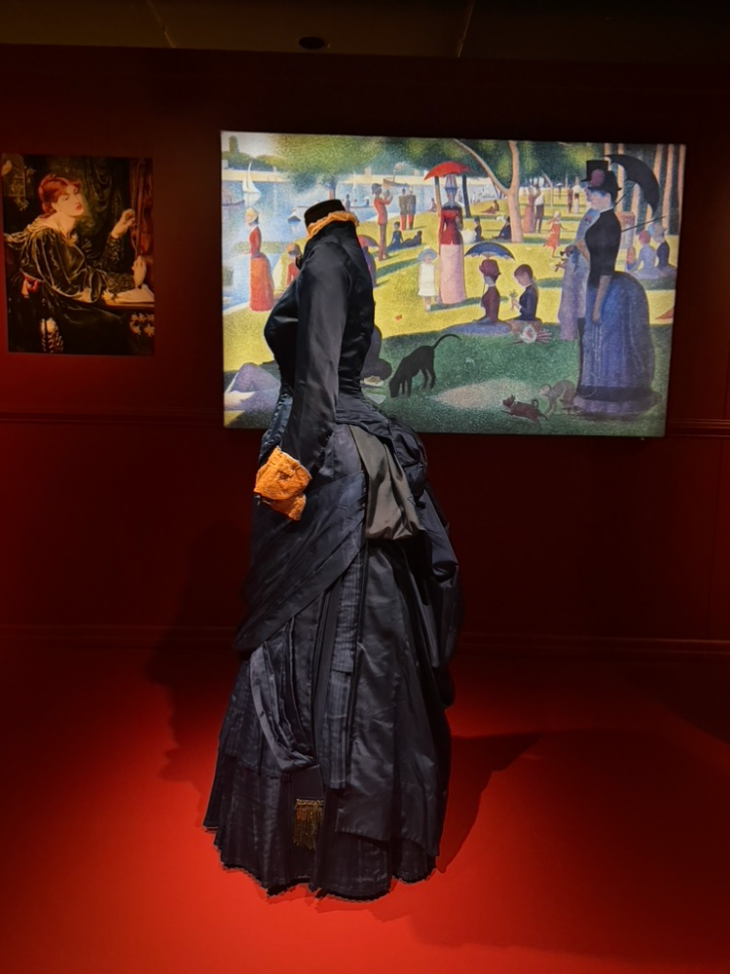
Starting with the most literal chopped, how can you show a silhouette like this with a profile like that?? It was so close to being so good. The lack of a profile/face from this victorian dame is in an attention-argument with the shelf-like derriere synonymous with 19th-century dress and a focus point of the Seurat work. In my humble opinion, NOTHING should be distracting from the majestic booty-popping of the bustle.
I also wanted to share an interesting parallel of this display from a mere month ago at the Museum at FIT Art X Fashion show:
Although I do think the victorian dress the Met chose to parallel the painting was much more successful than the Museum at FIT’s, I am most likely hating on the Met’s display because, as my work was curated into the FIT’s show, I am biased and potentially jealous that the Met got a real study from Seurat, and we got an LED display. Alas.
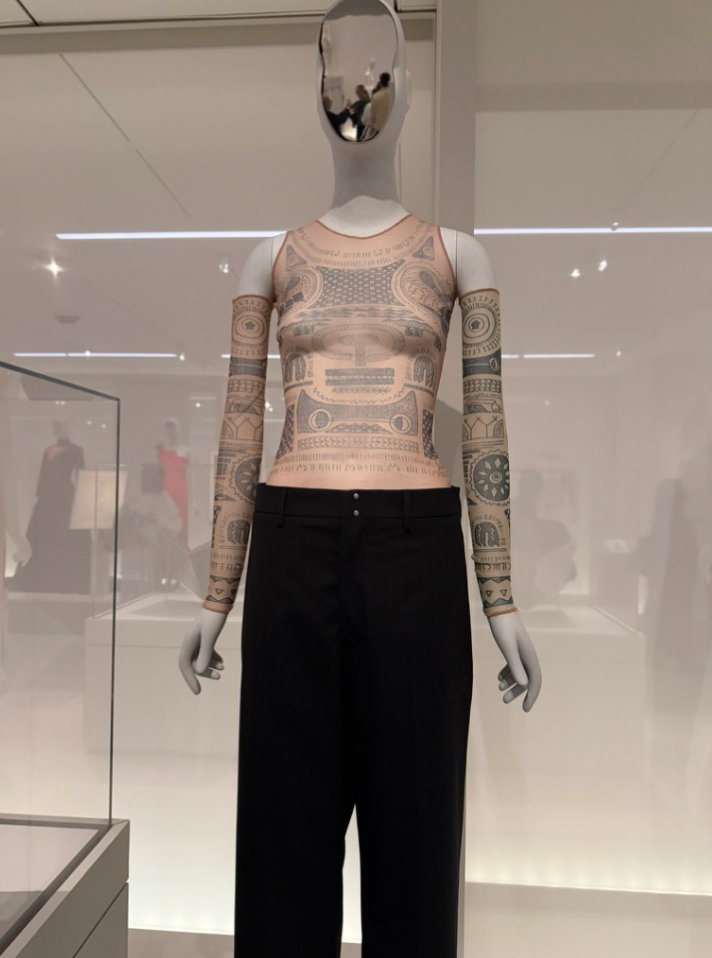
This iconic Margiela tattoo top from 1989 had the CI using the term “liminal space” (drink) to describe the area of skin between arms and shoulders.
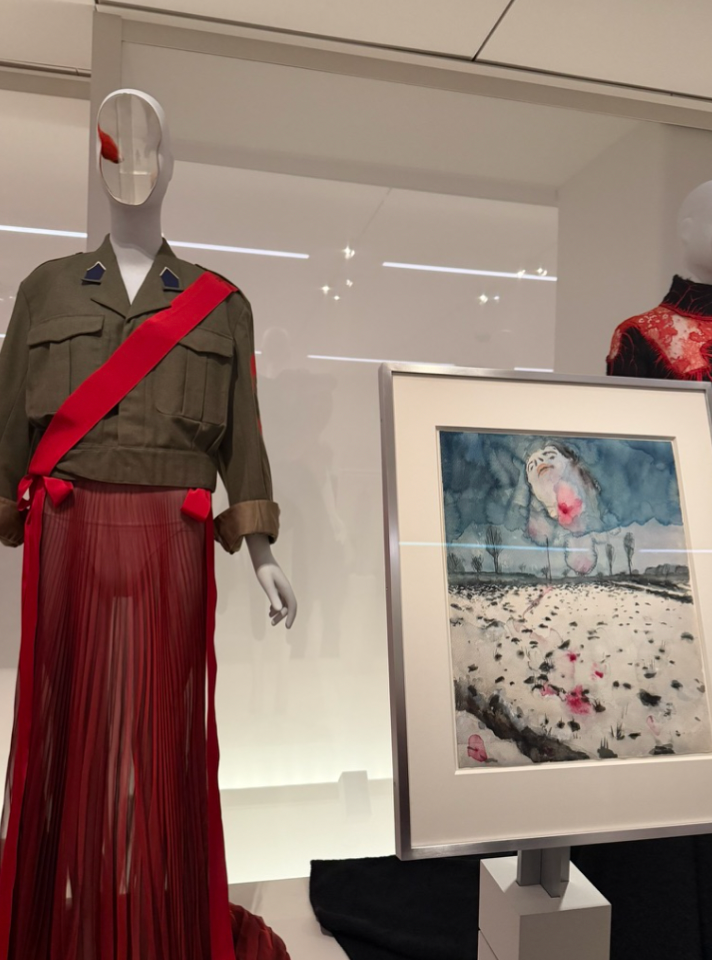
Nobody asked them to show Anselm Kiefer paired with Joseph Thimister’s collection addressing the lasting effects of WWI on modern society. You really want to go there? With a current war raging and genocide we are witnessing real time through our phones? To include this, almost as an afterthought, as an element/way to look at the mirror that fashion holds up to society, rips whatever it was you were trying to do right back down, in super-sonic speed, to the superficial realm. Maybe this mannequin's face was chopped after falling flat on it.
Typo alert– Quote from placard on this dark pairing: The disembodied female head emerging from the permafrost suggests a chthonic haunting, recasting the land as a vessel for historical indictment. Yikes.
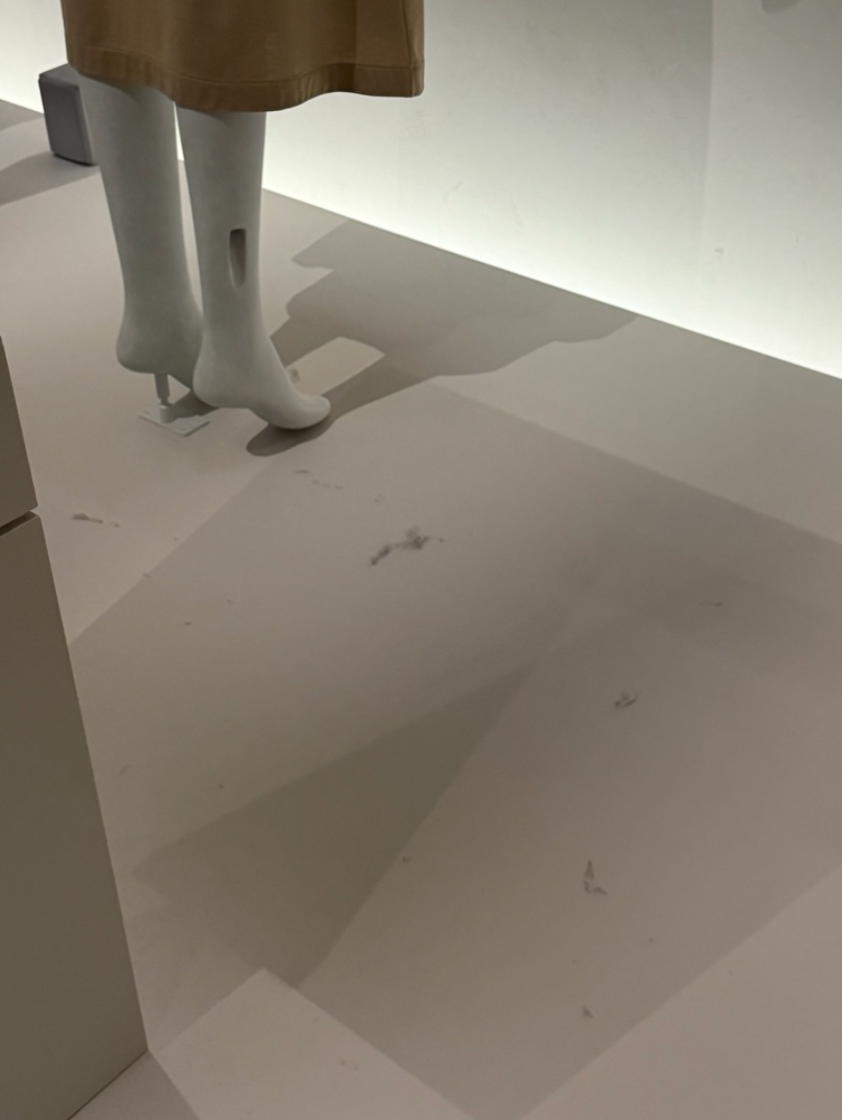
The copious amounts of dust everywhere… The Costume Institute accomplishing dusty in every sense of the word
The Skims Section
The last room the exhibition ended on was the “Epidermal Body” aka the skims room. This room looked at fashion recontextualizing what the term or color “nude” represents- shifting away from a singular (and white) definition mainstream fashion has adopted for hundreds of years, to one that takes on the multifaceted meaning that it should, seen here for example with Louboutin's “Nude collection.” Also featured were different nude colorways of Telfar Bags. I thought it was extremely interesting to not include Skims, the entire room looking like it had been plucked from the brands’ instagram. I think the Skims brand holds enough cultural relevance in terms of what a contemporary interpretation of undergarmenting looks, the history of “second skin” being one that dates thousands of years, and Skims being the most prominent reflection of how we as a western society approach our once-unmentionables. Certainly not a tragic oversight, just an interesting one is all.
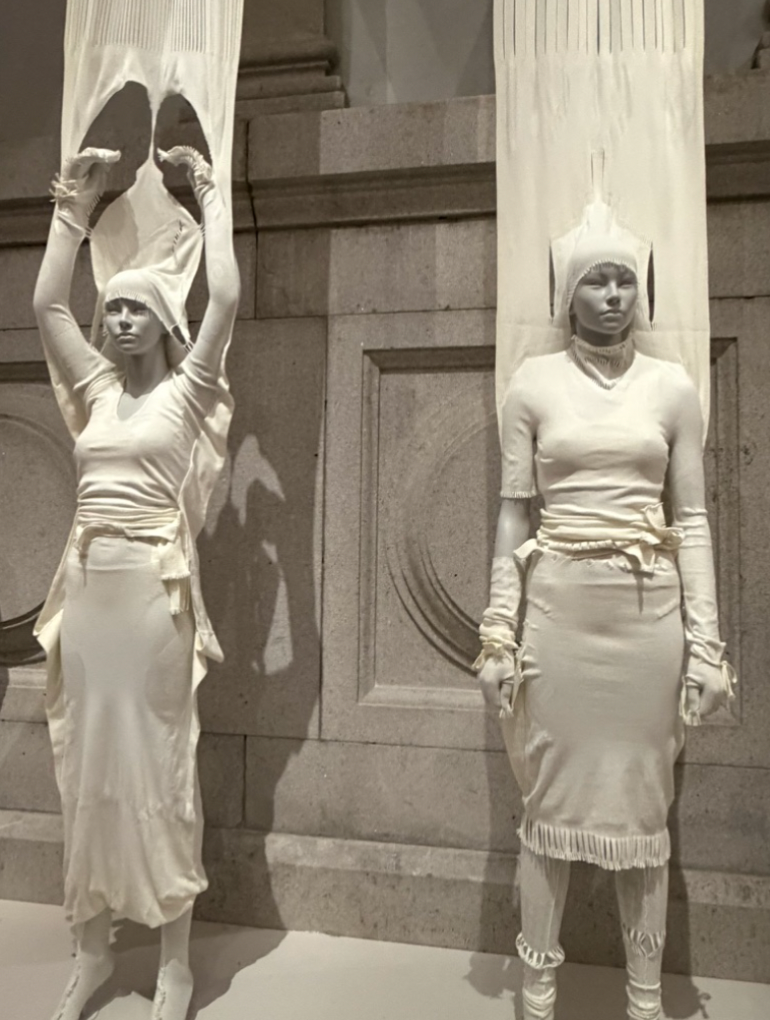
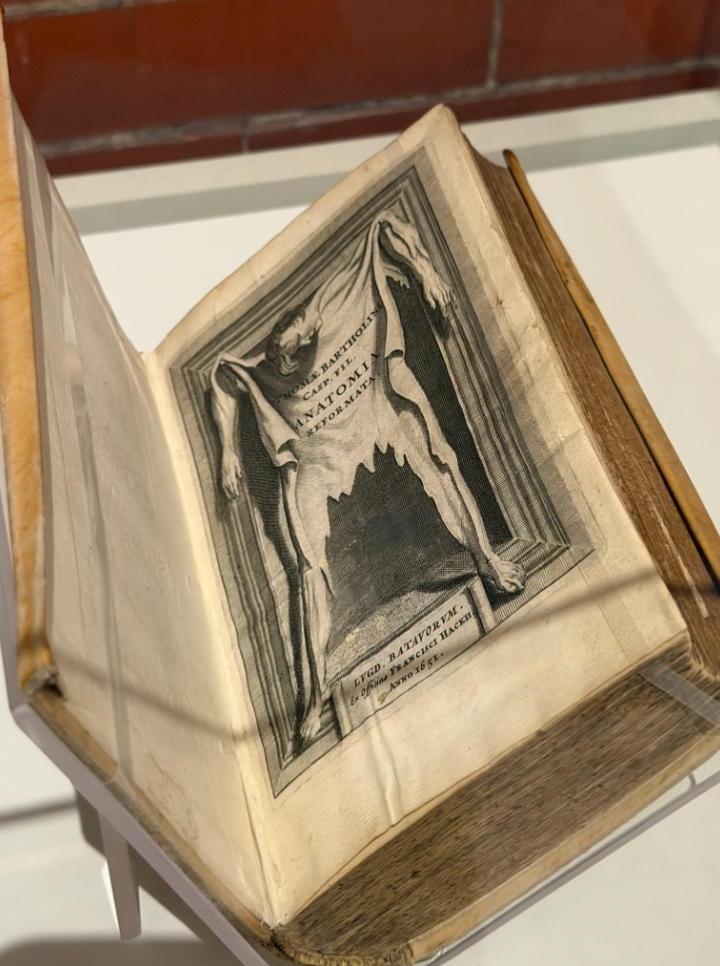
But, I will say, with the “Epidermal Body” room, they did end on a beautiful installation of Miyake’s brand, APOC (or A Piece Of Cloth), and this mid-17th century sketch, so it I was immediately distracted by said shiny object before being ejected back into the museum lobby.
Author Caspar Berthelsen Bartholin Danish
Editor Thomas Bartholin Danish
1651
Martina Cox reviews the event on the first monday in May, celebrating the opening of the costume instiuttes Spring exhibition, from the perspective of fashion historian, a fashion designer, an artist and an all-round fantastic seer of sartorial history.
Proposed timeline for the Met Gala in coming years —
Fashion is Art (2026)
Fashion is AI (next year)
And then, group suicide (2028)
While Billionaires for a dead planet gathered in May, in the City Capitol donning no budget replete with massively heavy ballgown trains and the peasants that carried them (queue video montage of peasant train-movers, including the five masked models Madonna hired to carry hers, and the unforgivable walk of shame back down the steps they were forced to make when she reached the top, we see you masked angels!! But also Madonna I still love you), I gathered with my lovely studiomates (shout out to Robbie Stinchcomb for many of the one-liners and title) to watch and belligerently shout at the television “FASHION IS ART!!!!!!!” while piled onto a couch giggling and eating Cheez-It Duoz Sharp Cheddar & Parmesan Crackers ™ (we may not have healthcare but this kind of joy is something money can not buy). Sidenote, did you know Ozempic was developed from a hormone found in a Lizards saliva?
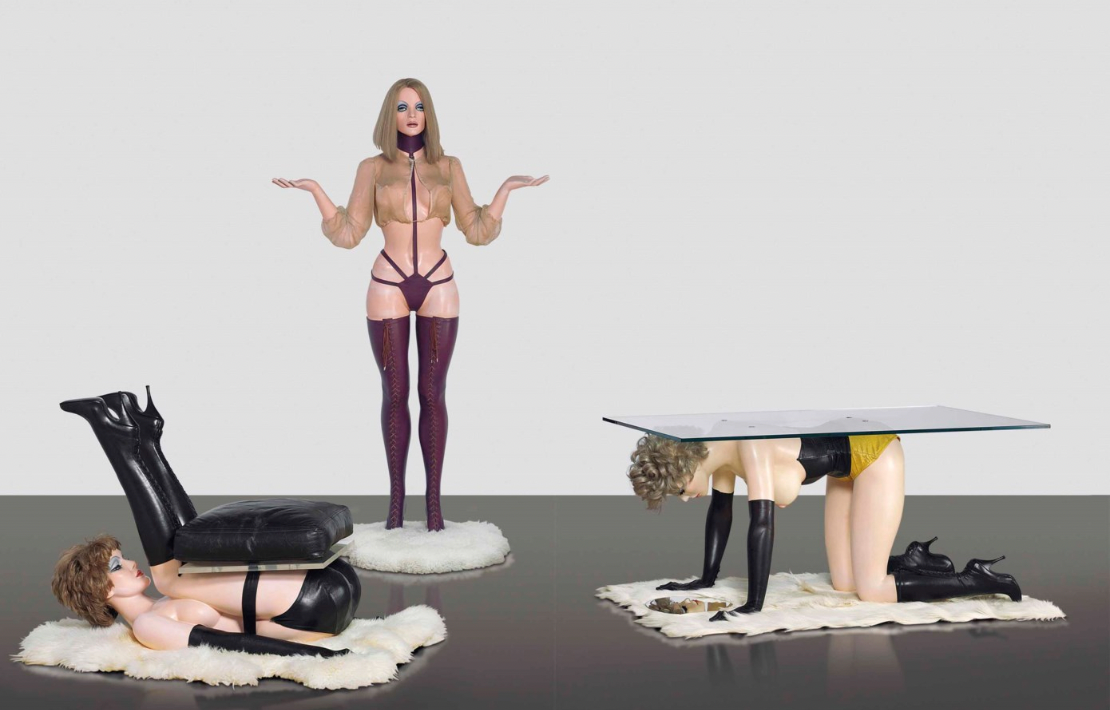
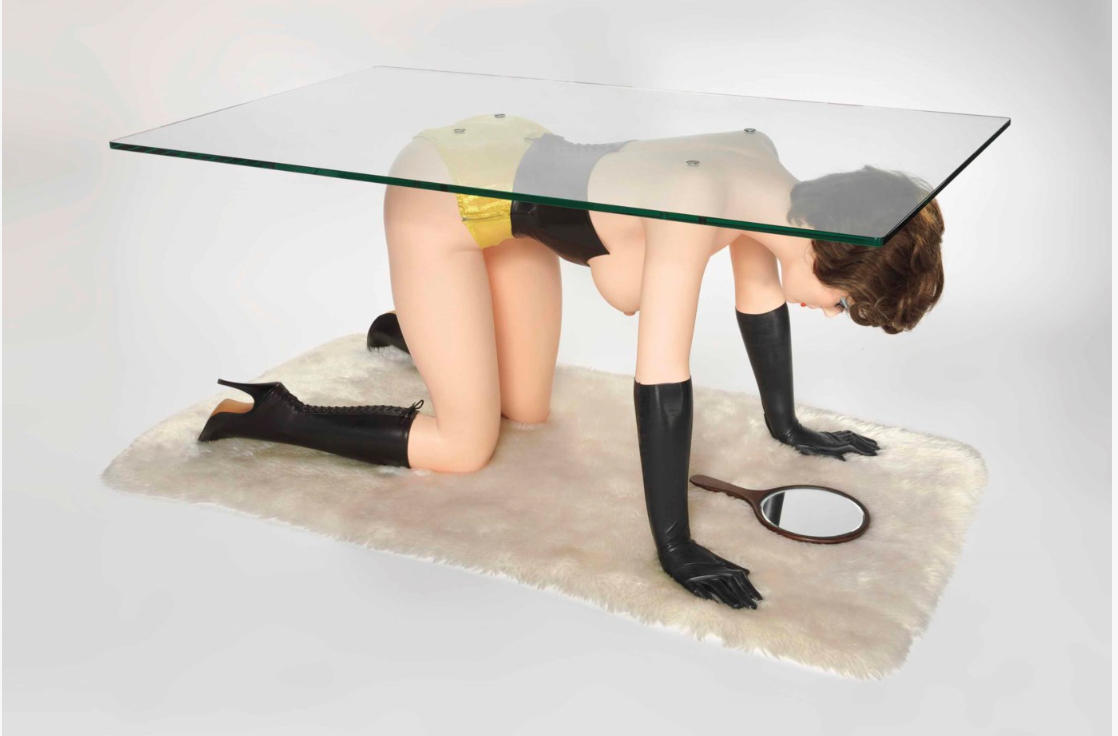
Allen Jones (b. 1937) *Hatstand, Table and Chair (i) Hatstand (ii) Table (iii) Chair
Allen Jones (B. 1937), Table, Acrylic paint, glass, metal, mirror, mixed media and tailor made accessories Executed in 1969, this work is from an edition of six plus one artist's proof
The theme licenses that you can literally wear anything. I am a fashion historian, I can historicize and artify the sweatpants I am wearing to write this (but I am also at an unfair advantage because said sweats are 80s Norma Kamali sweatcouture). Some celebs had lovely little anecdotes about paintings their look referenced no matter how abstract, some looked like they were going to kill a dog when they got home, and many had multiple additional limbs mounted atop their person. So I will throw ONE bone- Kylie Jenner was my favorite look.. The look is Schiaparelli (RIP Elsa, if Mae West’s bust-to-waist proportions shocked you, I suggest you look AWAY). Ky’s dress was ripped off (ode to bodice ripping perhaps?), the top half of the dress folded down over her waist, a surreal tan flesh-colored torso emerging hard nips ablaze- a pertinent nod to the Skims dynasty. Another sidetone, the nips of all three sisters are an active part of their looks; I think I freed the nip first when configuring this algorithmic workaround to the automation of nipple detection (See here) but I am glad these girls have caught up and found a way too. The inside of a couture dress, aka the guts, is by far the most beautiful and interesting part, to have it on display while simultaneously wearing the gown, is the craft equivalent of having your cake and eating it too, so Daniel Roseberry I commend you, but also you dress fascist billionaires so you might be going to hell.
Speaking of, another Roseberry look worth mentioning is that of the lady of the hour, the madame who fronted the bill, Mrs. Laura Sanchez Bezos. The gown is in direct reference to Madame X by John Singer Sargent, Sanchez-Besoz’s dress an ode to the ORIGINAL painting that had one sleeve falling off, this suggestive detail painted over post-salon, after Paris was up in arms about it, pun intended.
Vergenie Amelie Avegno Gautteau aka Madame X was a fierce american born parisian socialite who powdered her skin lavender, hennaed her hair and eyebrows and rouged her ears, need I say more? I am probably eager to think this homage to Virgenie is referencing the shared outrage they both sparked, but whether intentional or not, the parallels are certainly there. The comment section of any costume institute social media post is absolutely gorged with malice since the sponsors’ announcement, and similarly to stand in front of the portrait in the 1884 salon was to hear every profanity/vulgarity/obscenity uttered under the sun in the french language. Singer Sargent is a god send in capturing the ephemeral nature of the stuffs known as textile— and in this case freakishly pale skin— but it was the scandal that propped up the success and history making of a decent painting. The outrage of the Parisian public in 1884 was one of a canonized art history phenomenon: Singer-Sargent was ahead of his time, after 20 years in hiding the painting was brought out to the adoration of a new public, ready to face what it hadn’t been able to do before, embracing it with unexpected hunger too. There is something about looking back a generation to see what upset everyone so much— what had everyone’s metaphorical or literal panties in a bunch— and laughing in the face of it. See, this is where the two diverge: will we be looking back in 20 years to laugh? In a fever dream in a parallel universe is this the fate of Sanchez-Bezos and her contribution to the art world? Certainly not. The only canonization I foresee in her future is of the literal kind, from the impending revolutionaries.
But what if the work doesn’t get to enjoy the privileges of time? Fastforward to London in the 1970s, and we have the public in an uproar again— Allen Jones's Hatstand, Table, and Chair were exhibited;
In 1978 his work was attacked by stink bombs. Unlike Madame X, 40 years later and our reactions to these sculptures have not softened, time has not packaged them with a neat little bow of adoration. He said what I was trying to pointpoint with Madame X far more eloquently:
“Fetishism and the transgressive world produced images that I liked because they were dangerous. They were about personal obsessions. They stood outside the accepted canons of artistic expression and they suggested new ways of depicting the figure that weren’t dressed up for public consumption.”
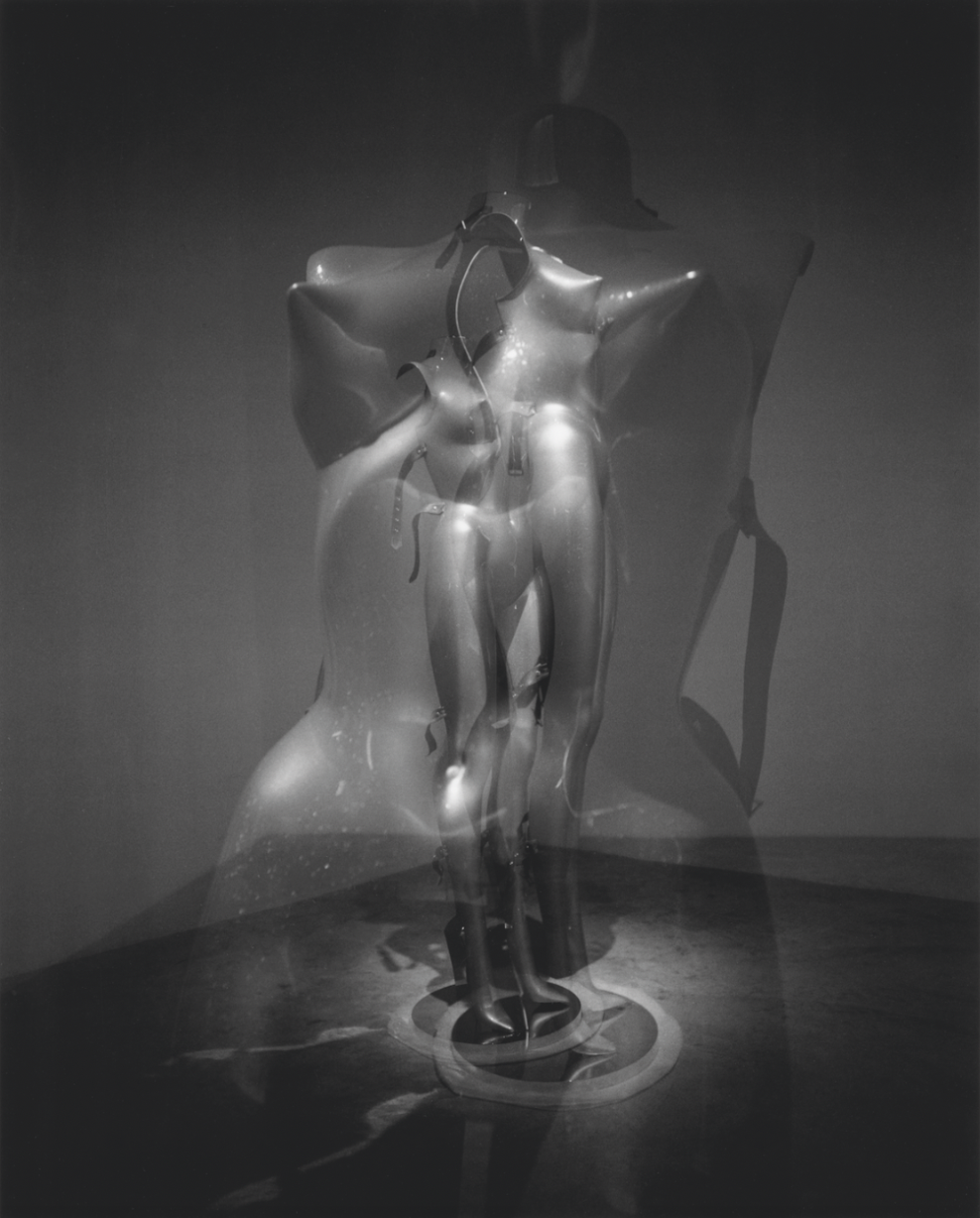
In the interview, Jones cites his favorite word as ‘Grabbable.’ Enter Kim Kardashian, donning the pinnacle of pointy boob a la Allan Jones, her life diligently documented on camera, and one that is far from grabbable. People have rushed to the internet full speed to comment on the shared imagery and references her eskimo sister Bianca Censori has been mining through Allen Jones-esque performance art. But for Kim, she gets to triumphantly step over (stepstool style) Bianca fixed as a furniture object and mainline the OG artist himself. Kim's legacy of exploring sex iconography through an insatiable capitalistic framework leaves much to unpack (will not open up this can of worms here but rec the IG page @kardashian_kolloquium for more), and working with artists like Nadia Lee Cohen or Jurgen Teller warrants a complexity and level of cultural engagement that, whether you like it or not, is aligned with the art world. Bianca’s performance work comparatively is one of shock and silence, saying little to back up a life that can be compared to one big performance piece. I think there is more nuance, conversation, and years of honing that backs up what Kim’s (and Nadia’s) collaboration with Allen Jones does. Kim has been doing this since Bianca was in the womb, taking hit after hit from a patriarchal public like a cyborg walking through a battlefield, and she still infuriates us, at least now from the top.
Allen Jones, Stand – By Me, 2024, Patinated bronze outline with acrylic infill, patinated bronze head, 165 x 58 x 58 cm. Courtesy of Almine Rech Gallery / Photo credit: Manuel Obadia-Wills.
We project our fears, angers and frustrations about the femme torso, sex and power onto these sculptures, honestly, much in the way we have towards Kim over the past two decades as well. This fear is the threatening what society is comfortable with, the objectification of the femme, subverted through using sex, autonomy, and literal casts of the femme torso to turn conservative and deeply objectifying norms onto itself. And at the end of the day, society’s fury over S&M furniture or the suggestive fall of a strap, indicates tragic horseblinders are on– don't look over there at the gross levels of resource hoarding off the backs of thousands of injured amazon workers, free the nipple, just not too much…
Ok, I have spilled the vitriol that are my feelings towards the gala, thank you for bearing with me as I did so, I am a garb lover and like many feel that this event is devoid of magic in the face celebrity delusion and a burning planet- we are in a war, committing a genocide, and here in USKKKA Amazon web services has a contract with and provides the platform ICE uses to store its data…. the people are pissing in bottles at work for christ sake. But, I will review the costume institute show at face value, they got blood money and from what I can tell they used it to buy and display the best.
Artist Take
/ 5 May 2026 / By: Pregnancy and Sydney Sweeney
Dirk Diggler reportage-d their mega cafe oto gig here. Pregnancy are going to lead the roaring 20's, as Chloée says, the evil warlocks and the supernatural are dragging away the world, so we must scream and make a new one! Lfg! Pregnant with ambition, verve at the forking paths of art and music...
Is life what you expected when you were a kid?
G: yes. I was aware that i’d have more responsibilities and life would get more stressful as i aged and that happened. i think that’s a neutral thing and somehow i still feel like the summer of my life has yet to begin.
C: As a child, I was immersed in playing with Barbies, creating stories and entire worlds. I also grew up with a lot of ghosts in my house, so there was this supernatural element that seemed to participate in the world around me—an invisible layer of the unknown. It gave me the sense that anything is possible, even if we can’t see it but can still feel it.
My first day of secondary school was cruel and bizarre. The world I had created in make-believe—once colorful and beautiful—shifted into a dark folklore, painted with nightmares and warlocks. Even then, I knew there had to be more to life than this and there certainly is. But again, it is a world that I have created through the act of making art and music - it's definitely a form of resistance to it all.
However, I didn’t think that, when I grew up, the world presented to me would resemble the one we’re living in now. I dreamed that after hardship, there would be a light at the end of the tunnel for everyone—a future filled with peace, warmth, and sunlight. But instead, it feels as though the evil folklore of warlocks and the underworld that I had feared has become our reality.
Still, I hold on to hope that the world will eventually heal.. as the sky falls and the day breaks.
Did the mix of the driven hyper pop sound and punk/hardcore vocals happen immediately when you started working together, or did it evolve over time?
C: I sort of had this sense of knowing beforehand... I don't know. I just knew it would be a good idea when Governor Vomit and I joined forces... we live not too far from eachother so it was an organic partnership.. we would listen to music all the time and show one another a lot of different things.
I used to perform a lot more, but I focused behind the scene as a director over the last five years.. which i love with all my heart. But I returned to it when working with Nkisi in 2024 unlocked performing again - felt more urgent somehow, that it has been important to create a direct response to the world we are currently living in in a live way alongside film-making. its been a cathatric experience.
G : At first Chloée was just gonna do guest vocals for one of my shows - so it was mostly a sound i was already doing- as i’ve gotten to know her more and we’ve shared musical influences it’s really expanded what i felt like i could do with the beats. i feel like a lot of the production is me trying to impress chloée and make beats that are worth her vocals.
C: Reject All latest mix on NTS & Katie Shannon NTS shows <3
What do you wear when you want to be comfortable onstage?
G: A belt
C: Barefoot
Exhibition curation with anyone, dead or alive.
G: I don’t like art
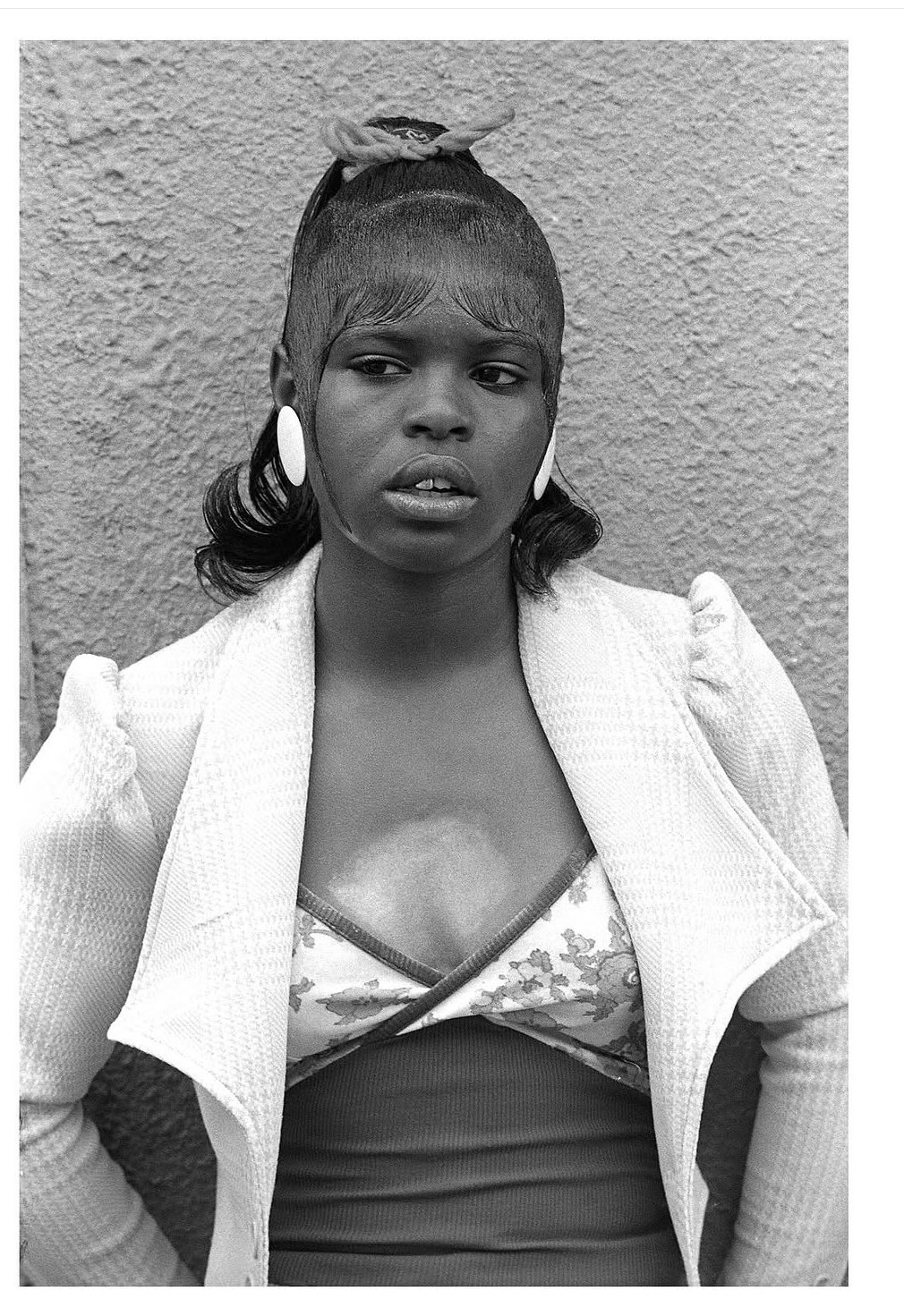
C: Ruth Angel Edwards, Adam Gallangher, Solomon Garçon , Dan Mitchell, Abella D'adoro , Keira Fox, Derek Ridgers, Chelsea Young, David Hoyle, Mike Kelly, Andy Warhol, Sylive Flury, Valie Export, Liz johnson Arthur, Steven Cuffie, Eric Kroll, Ivana Vladislava and myself - would be a pychedllic exlopsion.
Why should people come to your gigs?
G: I'm fun, and the music is good.
C: If you're in the mood for love... and some unadulterated, hard hitting yet beautiful production...
Worst to fave artwork?
G: I don’t like art
C: I wish I could find a picture of the worst painting, it is, in fact, my own painting. Truly diabolical...I dont think I can find a picture but I have it imprinted in my mind... forever. It is shocking artwork I made at art school that I presented to a crit and it was soooo shit... I was kidding myself... I remember I made after this comment by a tutor - 'not everything has to be epic' and tried to do something minimal... it was rotten... truly rotten. Imagine pigs flying but shit.
I can only do artists I love not really ones i don't lol
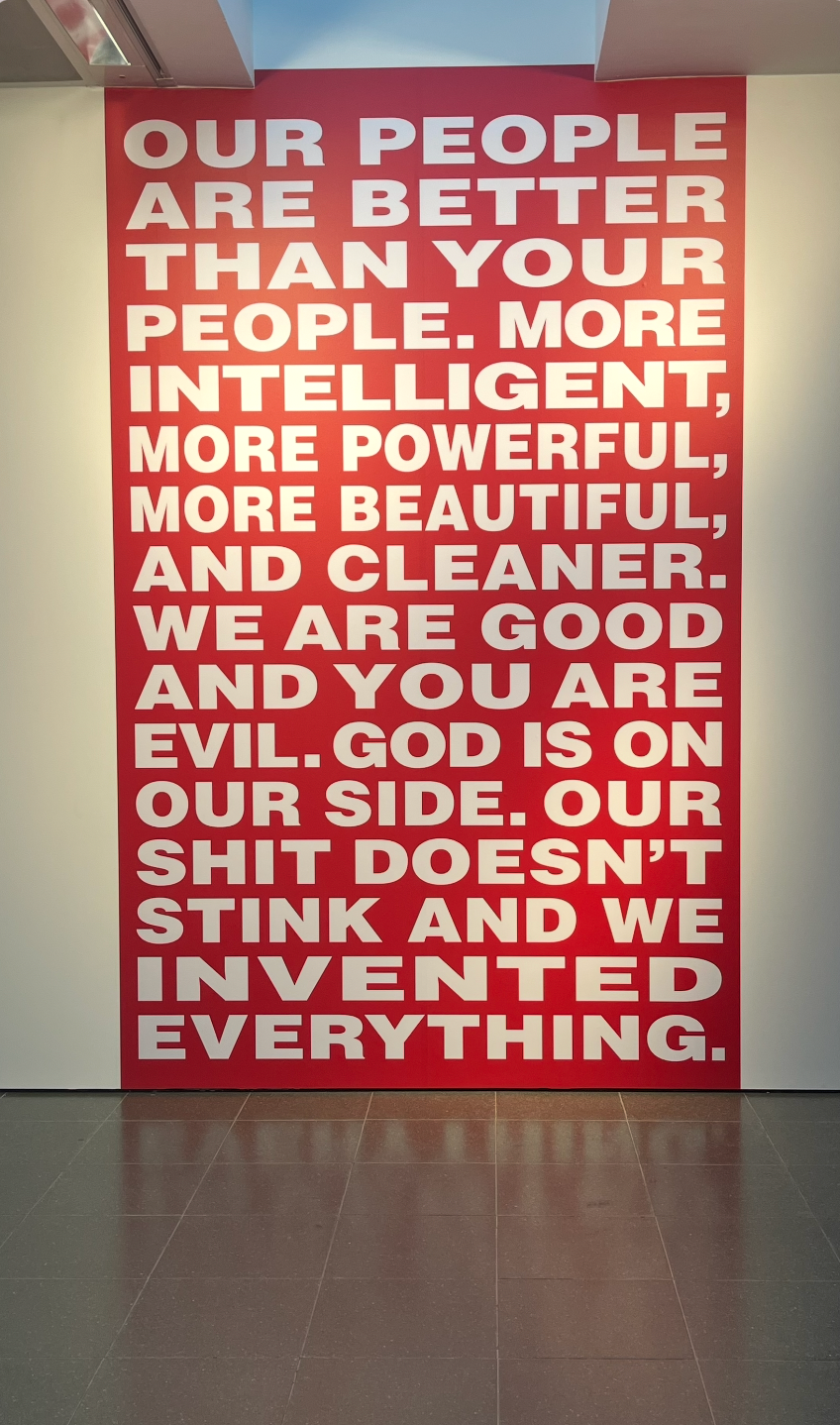
Barbra Kruger; Jenny Holzer; Stephen Cuffie Portraits, Matt Gess, Ruth Angel Edwards, Alice Fraser
A historical figure you’d dom?
C: King Henry the 8th
G: Ulysees S. Grant
Did you have Tumblr? If so, what kind of image would you reblog? Did u use it to watch porn or not?
C: Yes, I did - probs some unknown from the 80's with a lot of make-up on and cool hair, smoking
G: Yes, mostly Simon Pegg
We gotta ask the question....... I mean, we don't have to, but we are going to.... How did you name your band?
G: Chloée was doing guest vocals for my show. We got really merry, i really had to take a piss, and while taking a piss i thought we should keep doing stuff after that show, and pregnancy would be a really good name for us.
C: We usually rehearse and make our music in Governor's studio in the basement... and we always have a good time... I remember Governer Vomit returning from the loo and, in pure ecstasy saying PREGNANCY!!! pregnancy is the name... it was genius and totally made sense. i think he fell pregnant in the loo or something... we were both pregnant that day... the rest is history.
Is there much of a difference between the NYC audience and how things go down in London?
G: Not really. It was really fun.
C: I would say its not fully different but its more how nyc is different to london in terms of the art music scene... in london its merged in nyc its seperated with a few cross over.. but the feeling is very similar in both... <3
Did u have to give Governor Vomit a do's and don't's guide to London?
C: I wanted re write the urban myth that London and the Uk has bad food...I know it's not true but it has a bad rep in NYC and governer also was believing it... the food in london is wicked. and yum!!! So gave a lot of recommendations to him and we had some delicious food from greggs to french house lol...
G: Chloée guided me really well with where to eat. Turns out black pudding is amazing.
What's next in your pregnancy?
G: actually release music.
C: We are going to make some wicked music videos... to go alongside those releases...
Nico, our teenage MUSIC reporter, ventures across to Paris... to attend an Atomiser gig! Many such cases.
You know what they say: you can take the boy out of London but you can't make him listen to shit music!!!
We're trying to expand our music coverage and he appeared like a guardian angel referencing Branzi's writing and talking about hurdy gurdy's and shit. He's writing part diary and part research- we couldn't have asked for a better music nerd if we tried.
Go off nico!!!!
HE NOTES: "Valentin Clastrier does not play. He is the best."
Before we met nico online these were our notes on music:
So far on my 3 day vagabondage of Paris, I have reunited with old friends and cousins that have accompanied me on wanders around the lovely and bait spots of the city’s centre; but on this rainy Sunday, I embark on a solitary expedition to the musical underworld of the city - which on this occasion, assembles in a garden.
It’s 4 when I arrive (ticket unchecked) and B2E are playing with an ipad for their soundcheck.
It feels like I’m intruding on a family function as the early-comers politely and quietly lounge in the veranda outside the main hall. This is a foreign, initially awkward dynamic to a London night-concertgoer like myself, that I will soon reconsider to be a charm to Atomiser’s afternoon.
Considering Italian designer Branzi’s writing on “Contemporary Music and Space”, Le Sample can be seen as an example of musical territory rather than specialized space; an ex-industrial ground, claimed and repurposed by artists, that is void of acoustic function and impositions- granting musicians and curators like Atomiser the artistic freedom today’s music needs.
A Chinese-whisper goes round warning the music will begin shortly and so we enter the main room where B2E stand on a carpet, ready to perform. You can tell the back2egg shell is just starting to crack as their presence gradually shifts from shy to sly. Persevering through a streak of technical difficulties, the band perform cloud-rock ballads over chops of speech and field-recordings that seem to marry the loud rainfall, acting as a convenient low end. Boy-girl two pieces are the most beloved acts right now and B2E is a cool French variant.
Around 6, Daisy Ray opens her set by larping as a bee; does some impressive looping; raps over her guitar (used as percussion) and then camouflages back into the crowd. Occasionally silly, sometimes very fun - as outsider music tends to be- the performance felt warm and clearly stated the unrestrained nature of the afternoon.
The flux of tension, comic relief and awe makes the sequence of acts into a circus. Atomiser’s project to conceive seemingly implausible conglomerates of artists is the reason I always feel an urge to buy a ticket - it has atmosphere, regardless of the execution.
Interrupting Lucia Kagramanyan’s clubby remixes of Armenian music, we applaud as Valentin Clastrier climbs onto a stool and - with chivalric prowess - arms himself with his ridiculous weapon of choice: an electro-acoustic hurdy-gurdy. The French luminary used to kick it with the likes of Jacques Brel as a guitarist in the 60’s, before getting bored and deciding to become one of “the great masters of the hurdy gurdy”: title of his 1987 album.
Within the first minute of music, it sounds like a whole orchestra is evoked by the single instrument. Using his right hand to generate either a ceaseless groove or drone, his virtuosic melodies played by the left, blaze through, achieving that real Dionysian effect. Valentin’s resurrection of a medieval folk instrument with his own electronic amendments is magical to witness live, as the success of a life long mission.
I am sitting on the Eurostar back to London as I finish writing this souvenir for my trip. Somewhere along the English channel I ask myself: What has the weekend taught me?
I note:
It’s nice that venues like Le Sample are still kicking (bittersweet as it is being forced to close)
Valentin Clastrier does not play. He is the best.
Blog
/ 18 May 2026 / By: Hollywood Superstar Review
For those who say we only write about Reena Spaulings, here is another stick with which to beat us with, and then yourself. What would you rather hear about, Marcel? Josef? Bloody, Jordan Wolfson? Charles Ray? Semi-abstract figurative painting by slade graduates?!?!? No, you're right. We're naughty. This is the last one, promise x sorry reena.
No, in all seriousness, please point to our floors. We are all ears to the подполья.
No, just kidding - this review was pitched and it was really good - sometimes exhibitions, by virtue of their strength, actually enclose into a worthy review. Equally true of bad shows, harder to say for mid shows.
Anyway, with Jeremy, we have taken an unprecedented leap and allowed him to employ footnotes.
FOOTNOTES:
- The pretends of NYC group shows to install gallery backbenchers alongside new, trendy consignments.
- The identification of Post aspiration and post-professionalisation artists in older figures such as Seiji Inagaki kind of reflects what it is to be just any unrecognised artist. Just graduation is post-aspirational, a non-act.
- People always have, and always will, love Jean Genet.
Sydney
“By linking my production to your production, the curator also disconnects us both”: I kept returning to that old, half-remembered line – drawn from an old, half-remembered John Kelsey essay – while viewing On the Never-Never, a group show at Reena Spaulings, curated by Tenko Presents. (1) Exhuming shopworn pieces from the depths of Reena’s storage (Stephan Dillemuth, Danny McDonald, Josephine Pryde) and suturing them to works representative of the roving Tenko program (Thomas Cap de Ville, Seiji Inagaki, Sabina Maria van der Linden), On the Never-Never positions the group show format as a sort of Frankenstein’s monster, an experiment toying with spare or dead parts. Can they all be brought together and restaged, and ultimately imbued with new life? If the show indeed comes alive, it does so by way of devices intrinsic to the artworks themselves: through shoddy assemblage, tasteless juxtaposition, and rough-hewn montage, through forced combinations redolent of a bad skin graft or a rejected organ transplant.
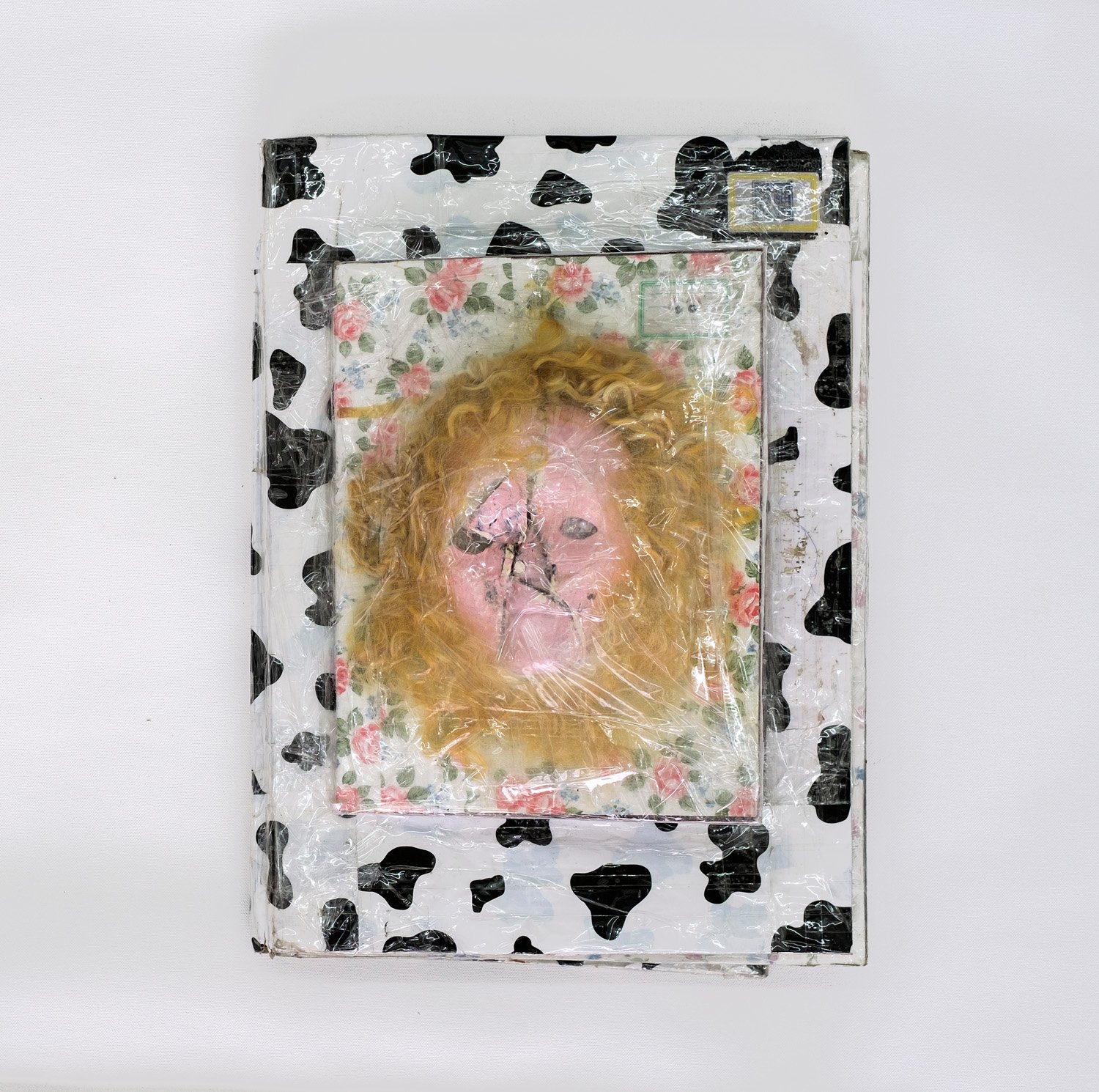
Poor things – “unproductive, wasted meaningless, excluded from historical narratives, endangered by the prospect of complete erasure,” as Sabina Maria van der Linden’s undated poster states – these works remake Frankenstein as a kind of kitchen sink drama, a no-budget Mike Leigh film. The storyboard is provided by Thomas Cap de Ville’s Book 1 and Book 2, both 2017, a pair of oversized scrapbooks arranged on a clothed card table. With the tactile feel of a duct-tape wallet, Cap de Ville’s books document a gritty, heroin-shaped life we were promised by the exhibition’s title (an alternate title, playing on both US and UK definitions, might have been On the Nod.) They are composed of disposable camera prints and digital images printed on copy paper, print-outs of aughts-era horoscopes and dating webpages, sometimes framed by tacky patterned craft papers; chronicling a misspent youth at the advent of social media, but also comment upon it humorously in retrospect. The noon-until-noon binges, the stupid pranks and long-forgotten acquaintances, compiled years later, in a form evoking the mild-mannered family album. At least one page, featuring an image of a dreadlocked Cap de Ville, is completed by a cigarette burn. Yet in prizing unruly formal experimentation over careerist common sense – folding terrific standalone photographs, for example, into a far less saleable form – these scrapbooks also supply the exhibition with its overarching ethos of poignant anti-ambition.
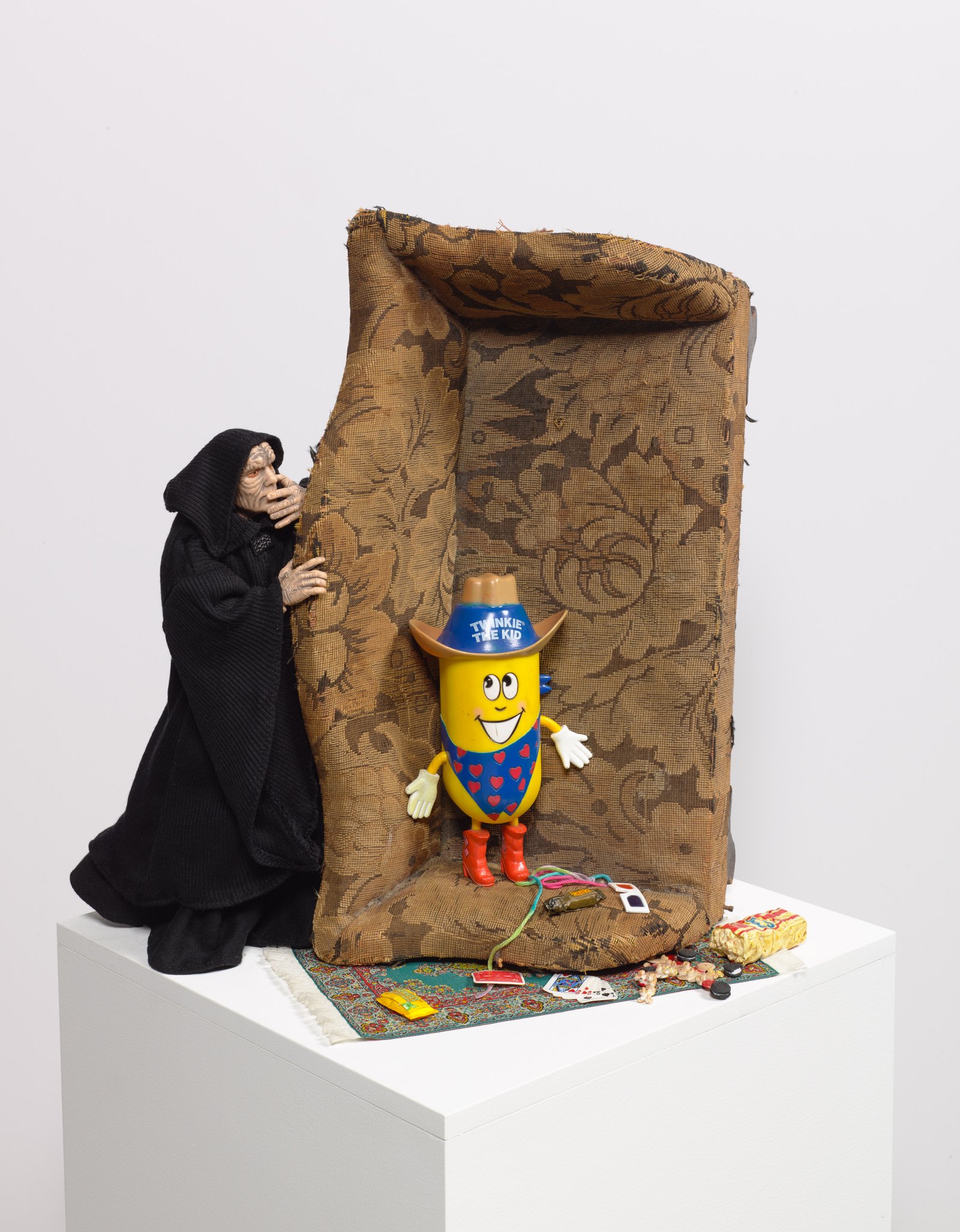
If we’re still in mind of the monstrous mash-up, there’s Danny McDonald’s Midnight Snack Encounter, 2014, which reads as a counter to the current vogue for conceptual sculpture. An Emperor Palpatine figurine leers at another of Twinkie the Kid, ensconced in a distressed sofa reminiscent of the after-after party. But the Twinkie figure carries a secret – he holds an actual Twinkie, by now possibly twelve years old.
Like any good artist right now, McDonald lists every material in the work’s details, including the long inventory of ingredients deployed in the Twinkie’s production and (maybe eternal) preservation. (2) There are also two assemblages from 2015 by Stephan Dillemuth, who once ran the storied Cologne space Friesenwall 120 with artist Josef Strau. Both sculptures are grounded by plaster cogwheels, and both are interrupted by a number of self- or scene-referential objects – the cast of a forearm, a burner phone affixed to a “bad” golf-leafed painting, the 2014 Gallerists issue of Texte Zur Kunst.
All of these things are embedded in the middle of the cogwheels, rather than between the gears, indicating that they aren’t really disrupting anything, not least in the present. Like the mostly reclusive, mostly middle-aged artists of On the Never-Never, these objects are closer to vestiges of an evaporated discursive zone, haunting the system once again through reappearance. Likewise, in a suite of exhibited photographs, taken from Josephine Pryde’s series Just What is Aura Anyway? (2006) a young girl is presented as a Victorian maid on Boxing Day, if the yuletide setting is to be believed. As in Jean Genet’s play The Maids (1947), Pryde’s role-playing maid serves here as an ambivalent figure, even a stand-in for a certain type of identity-fluid (young/old, rich/poor, now/then) artist LARPing faintly at systemic upheaval.
Although most of the artists included here have by now settled into a post-aspirational, post-professionalised groove of artistic production, one outlier might be the illustrator Seiji Inagaki, whose pervy, noncey, Pierre Klossowski-summoning drawings from the 1980s and 90s, for early Japanese gay magazines like Barazoku, have been tastefully framed and effectively upcycled, recirculated within a quainter, more “bohemistic” – to borrow a phrase from Dillemuth – economy of objects and images. We might spend some time thumbing through the original magazines, too, and lament, as with Cap de Ville’s books, a rich visual culture lost to the flattening effects of social media, a culture taken from us, in this instance, by Grindr. Variously presaging the more recent practices of Julien Ceccaldi, David Rappeneau, and Shogo Shimizu, Inagaki’s illustrations, and the queer culture they emerge from, derail us from the show’s predominant concerns while proposing yet another clever detour.
All of this, of course, runs counter to the reigning paradigm of the New York group show, which seeks to elevate the staid offerings of gallery backbenchers by smuggling in a few elder or late statesmen on consignment (a different, more optimistic type of never-never). A Harun Farocki video here, a Karen Kilimnik painting there, maybe a minor piece by Andrea Fraser or even Peter Hujar, and suddenly the inherent vacuity of the commercial group show is absolved, or at least optimised for dissemination online.
Such conditions seem ripe for a moment to reconsider Josef Strau’s essay “The Non-productive Attitude,” 2006, exemplified to some degree by many of the artists on view, alongside other models of artistic “badness” more broadly. (3) What could it be like, conceivably, to revisit these strategies today, for the Tenko generation? “So embarrassing,” Strau preemptively concludes, although this show gently suggests otherwise.
1. The pretends of NYC group shows to install gallery backbenchers alongside new, trendy consignments.
2. The identification of Post aspiration and post-professionalisation artists in older figures such as Seiji Inagaki kind of reflects what it is to be just any unrecognised artist. Just graduation is post-aspirational, a non-act.
3. People always have, and always will, love Jean Genet
1. John Kelsey, “Unclaimed Bags Will Be Destroyed,” in Rich Texts: Selected Writing for Art (Berlin: Sternberg Press, 2010), 221–234.
3. Josef Strau, “The Non-productive Attitude,” in Make Your Own Life: Artists In and Out of Cologne (Philadelphia: Institute of Contemporary Art, University of Pennsylvania Press, 2006), 1–4.
Review
/ 20 March 2026 / By: Dirk Diggler
/
★
★
★
★
½
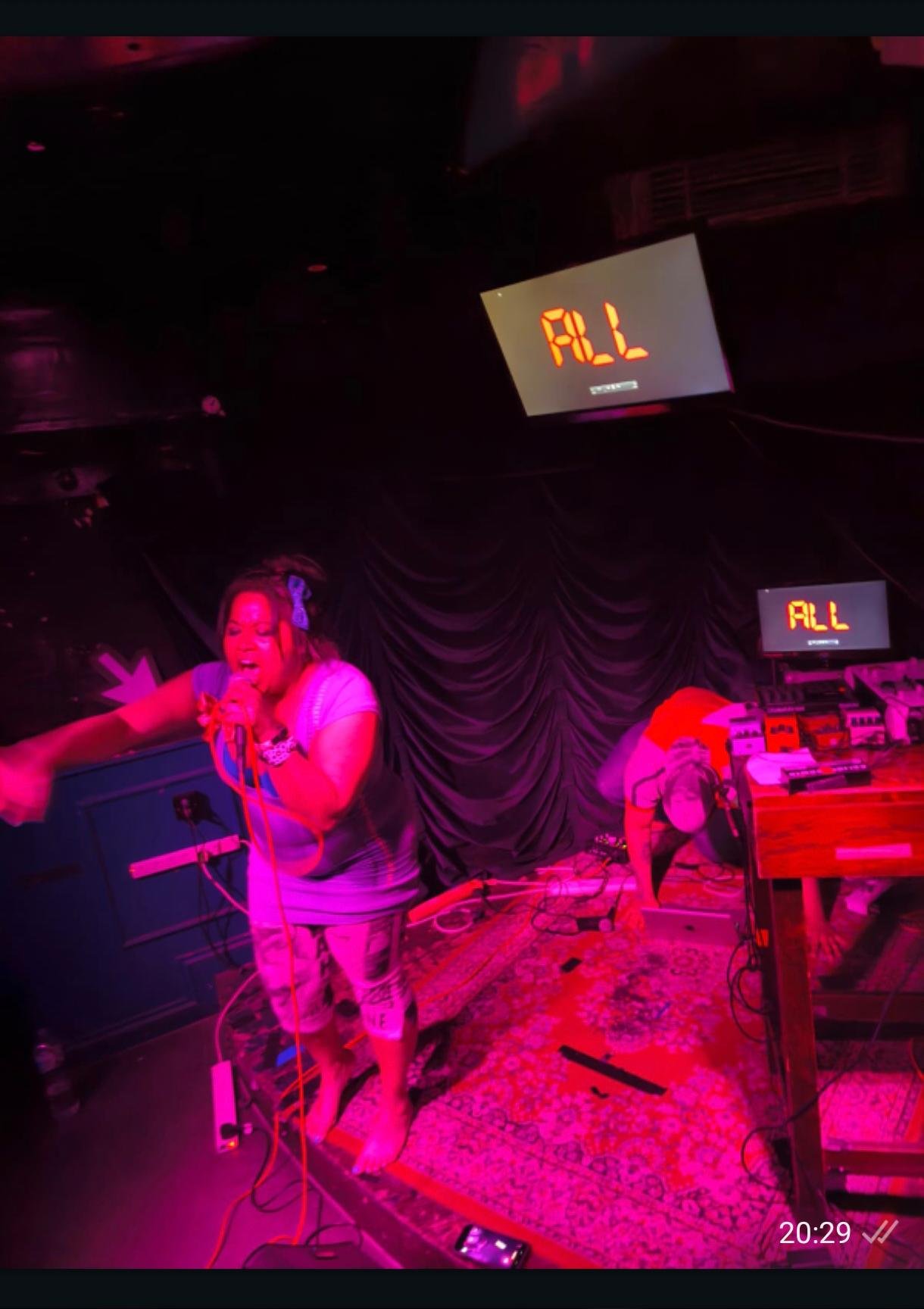
Dirk Diggler is a man about town. He was #there with Laura Les. Crimes. Etc. A time when Hollywood Sups were still watching nickelodeon. But he's back now - for the return - and he says it's angry. Pregnancy is pissed, not abortive. Chloe is wearing a tam o' shanter with ultra maximalist yelling piercing screaming barely breathing takes. Governor vomit is sat on the ground with a pedal as she chest bumps the crowd.
Thanks dirk, another stinger from the diggler.
Pregnancy are fucking sick btw.
Currently sitting in an airport lounge, in many respects the epicentre of western civilisation, waiting to go into the sky, all is wipe-clean, smooth, 100% surveilled. Everyone has been x-rayed, scanned, recorded, photographed and ID'd, so I can be very sure this is me, sitting here, alone, it's utterly peaceful, boredom is total, the apex model of how society is becoming. I have time now to reflect on one of the most urgent, stimulating, hectic, angry, stunning gigs I've been to, well since the last time I saw Pregnancy at Reject All, organised by Ruth Angel Edwards and Adam Gallagher, the week before.
The Cafe Oto gig, hosted by the always brilliant TLC23 (Keira Fox and Katie Shannon) took place on good Friday, we dont need Jesus's suffering to stand as a representation of sacrifice. The current world view of horrific slaughter in Gaza, Lebanon, Ukraine, Iran is way more than enough. The murder lovin' billionaires are inflicting their selfish desires for yet more unimaginable wealth, their greed is our suffering.
Anger is the mood, the age of rage is now. Pregnancy boil this fury down into 3 minute bursts of frenzied hyper punk pop. Maugile and Governor Vomit have crafted their sound from what may have been left over from the semi demise of Hyperpop's mini era of the 2010's culminating in the outstanding Haunted by Laura Les in 2021. But Pregnancy take things further, much further. All the recent musical cores get condensed down into unrelenting hammers of rhythm and throbbing synth blasts that don't stop hitting, the feelings of terror and joy combine under this relentless pressure to force the mind to let go and release all concerns. Chloée leaves it all on the floor, so much so that by the final track she is literally glitching like a broken mp3 file, but it's in time with Governor Vomit's industrial strength barrage of ultra mega hyper maximalist total ear storm. The crowd can't help themselves, their willing madness bursts into deranged freedom, almost epileptically rejoicing in the totalpermission to not give a fuck. Not since the days of Sunrise raves or Butthole Surfer gigs have I been forced so urgently out of my own canister to join with the other souls with my sweat, screams, and rapture. Cafe Oto, being the considerate venue, hands out free ear plugs, I thought this was funny, condoms for the ears to avoid pregnancy? I recommend going comando, nothing should ever get in the way of such fucking brillance.